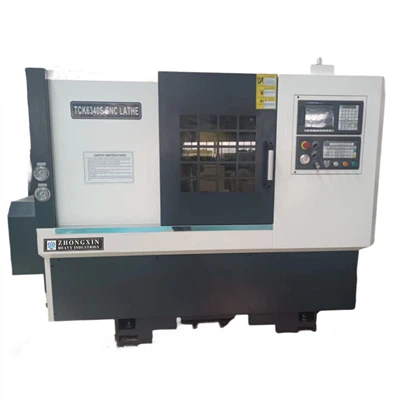
Hey there, machining enthusiasts! I'm a supplier of New Vertical Lathes, and today I wanna dive into how these bad boys handle heavy - duty machining.
1. The Basics of Heavy - Duty Machining
First off, let's talk about what heavy - duty machining actually is. It involves working with large, tough materials like high - strength steel, cast iron, and even some exotic alloys. These materials are often used in industries such as aerospace, automotive, and energy. Heavy - duty machining typically requires removing a large amount of material in a relatively short time while maintaining high precision.
In heavy - duty machining, the demands on the machine are extreme. The cutting forces are massive, and the machine needs to be able to withstand vibrations, heat, and wear. That's where the New Vertical Lathe comes in.
2. Design Features for Heavy - Duty Machining
2.1 Robust Structure
Our New Vertical Lathes are built like tanks. They have a solid base and a rigid column. The base is usually made of high - grade cast iron, which provides excellent stability. This stability is crucial because it helps to absorb the cutting forces generated during heavy - duty machining. When you're taking big cuts, you don't want the machine to wobble or vibrate, as that can lead to poor surface finish and inaccurate dimensions.
The column, which supports the cross - slide and the tool turret, is also designed to be extremely rigid. It's engineered to resist bending and twisting under the heavy loads. This ensures that the cutting tool stays in the right position throughout the machining process, resulting in precise cuts.
2.2 Powerful Spindle
The spindle is the heart of any lathe, and in our New Vertical Lathes, it's a real powerhouse. It's capable of delivering high torque at low speeds, which is essential for heavy - duty machining. When you're cutting through thick and hard materials, you need a lot of force to turn the workpiece. The high - torque spindle provides that force, allowing the cutting tool to penetrate the material effectively.
Our spindles are also designed to operate at a wide range of speeds. This flexibility is important because different materials and machining operations require different spindle speeds. For example, when roughing a large workpiece, you might want to use a lower speed and high torque. But when you're finishing the surface, you can increase the speed for a better surface finish.
2.3 Large Tool Turret
The tool turret on our New Vertical Lathes is another key feature for heavy - duty machining. It can hold multiple cutting tools, allowing for quick tool changes. In heavy - duty machining, you often need to use different types of tools for different operations, such as roughing, finishing, and drilling. With a large tool turret, you can have all the necessary tools at hand and switch between them rapidly.
The tool turret is also designed to be very rigid. It can withstand the high cutting forces without losing its accuracy. This ensures that the tool remains in the correct position after each tool change, maintaining the precision of the machining process.
3. Cutting Performance in Heavy - Duty Machining
3.1 High - Speed Cutting
Despite the heavy - duty nature of the work, our New Vertical Lathes are also capable of high - speed cutting. Thanks to the advanced control system and the powerful spindle, we can achieve relatively high cutting speeds even when working with tough materials. High - speed cutting reduces the machining time, which means increased productivity.
For example, in some aerospace applications where time is of the essence, our New Vertical Lathes can cut through titanium alloys at speeds that were previously thought to be difficult to achieve. This not only saves time but also reduces the overall cost of production.
3.2 Chip Management
In heavy - duty machining, chip management is a big deal. When you're taking large cuts, a lot of chips are generated, and if they're not managed properly, they can cause problems. Our New Vertical Lathes are equipped with an efficient chip management system.
The chip conveyor is designed to quickly remove the chips from the machining area. It transports the chips away from the workpiece and the cutting tool, preventing them from interfering with the cutting process. This helps to keep the machining area clean and reduces the risk of chip - related issues such as tool breakage and poor surface finish.
4. Automation and Heavy - Duty Machining
4.1 CNC Control
Our New Vertical Lathes are equipped with a state - of the - art CNC (Computer Numerical Control) system. This system allows for precise control of the machining process. You can program the machine to perform complex operations with high accuracy.
In heavy - duty machining, the CNC system is especially useful. You can program the machine to make multiple cuts at different depths and angles, all with the push of a button. This reduces the need for manual intervention, which not only improves efficiency but also reduces the risk of human error.


4.2 Automation Features
We also offer various automation features for our New Vertical Lathes. For example, there are automatic tool changers, which can switch between different cutting tools without the need for operator intervention. This saves time and ensures that the machining process runs smoothly.
There are also automatic workpiece loading and unloading systems. These systems can handle heavy workpieces, which is very important in heavy - duty machining. They can load the workpiece onto the machine, position it correctly, and unload it once the machining is complete. This further increases the productivity and reduces the labor cost.
5. Comparison with Other Lathes
5.3 Comparison with New Slant Bed Lathe
While New Slant Bed Lathe is a great option for many machining applications, our New Vertical Lathes have some advantages when it comes to heavy - duty machining. The vertical design of our lathes allows for better chip evacuation. In a slant bed lathe, chips can sometimes accumulate on the bed, which can cause problems. In our vertical lathes, the chips fall directly into the chip conveyor, ensuring a clean machining area.
5.4 Comparison with Small CNC Lathe with Live Tooling
Small CNC Lathe with Live Tooling is ideal for small - scale and precision machining. However, when it comes to heavy - duty machining, our New Vertical Lathes are in a different league. Our lathes are designed to handle large and heavy workpieces, while the small CNC lathes are more suitable for smaller parts.
5.5 Comparison with Precision CNC Lathe
Precision CNC Lathe is known for its high precision. Our New Vertical Lathes also offer high precision, but they are better equipped to handle the heavy loads and large workpieces associated with heavy - duty machining. The robust design and powerful spindle of our vertical lathes make them more suitable for the demanding conditions of heavy - duty machining.
6. Conclusion and Call to Action
In conclusion, our New Vertical Lathes are a top - choice for heavy - duty machining. Their robust design, powerful spindle, and advanced features make them capable of handling the toughest materials and the most demanding machining operations. Whether you're in the aerospace, automotive, or energy industry, our New Vertical Lathes can help you increase productivity, improve quality, and reduce costs.
If you're interested in learning more about our New Vertical Lathes or if you have specific heavy - duty machining needs, we'd love to hear from you. Reach out to us for a detailed discussion and let's see how we can work together to meet your machining requirements.
References
- Machinery's Handbook, 31st Edition
- Modern Machining Technology by David A. Dornfeld, Steven Y. Liang, and Nikhil Sharma