



Other Products
What is Sheet Metal Machine?
Sheet Metal Machines are generally used in various industrial sectors and applications. Several kinds of machinery are readily available such as CNC machines, pillar press, punch press, hydraulic, conveyor, disc type, and belt press. Some varieties run on electrical motors and are known as ‘automatic machines’ such as lathe, saw, and reciprocating saw.
Why Choose Us
Compliant With Standards
Most of our products comply with CE and EAC standards
OEM and ODM Orders
We also accept OEM and ODM orders and look for agents around the world
Excellent Service
Dedicated to producing higher intelligence, higher quality machine tools, and excellent after-sales service
High Quality Service
Make machines simpler, smarter, and smarter, always online, always with you, always serving you.


Benefits of Sheet Metal Machine
High Precision
A sheet metal machine can perform various techniques at a high precision level, enabling you to form various manipulations without sacrificing quality. Popular metal fabrication methods such as cutting, bending, shearing, and blanking can all be expertly achieved with a sheet metal machine. In other words, if you want to maximize your ability to manipulate metal, investing in the proper equipment is crucial.
Increased Production
Another benefit of adding a sheet metal machine to your shop is the opportunity for high-capacity production with minimal manual labor. With a sheet metal machine, you can efficiently supply businesses with large quantities of metal products at a fast rate. Since you can provide the client with their components in a shorter time span, they can begin selling their products as soon as possible.
Durable Materials
Sheet metal machines are made from durable materials, helping you feel confident that your equipment will hold up over time. These machines are designed to resist corrosion and degradation in a wide variety of environments. As such, if your machinery is exposed to persistent sun or moisture, it will still be able to perform at a consistently high level.
Parts Of Sheet Metal Machine And Their Functions
For smaller quantities (1 part – 10,000 parts), the parts will be created using a blanking and shaping technique. A blank sheet is cut using a punching or laser cutting process and flexed to the finished state with a brake press.
At a rather high level, sheet metal punching is identical to a hole punch on a sheet of paper. The top tool locks the material against a properly shaped bottom tool and forces it through, forming a hole. And in the situation of metal sheets, though, the content is up to a quarter-inch of steel, and the hole punch is a multimillion-dollar, numerous-ton, high-precision work of machinery.
Industrial laser cutters are the larger, more powerful counterparts of lasers. Rather than shop-friendly scale and power, output lasers are multi-thousand-watt behemoths able to steaming half-inch steel plates with a precision of 0.05. These devices also have self-loading capability and flickering rapid cutting rates.
At low volumes, flat punch or laser blanks are curved using a press brake – a hydraulic press that pulls two jaws together with thousands of tonnes of pressure. They can be built with a wide range of equipment to create various bends.
Types of Sheet Metal Machine
Swaging Machine
The industrial forging presses are used to adjust the scale of the tubular or plain metal sheets used for clamping and wiring.
Bending Machine
The most commonly used machine tools in the sheet metal industry are folding machines. Manual, hydraulic, and electrical systems are possible to achieve the appropriate bend.
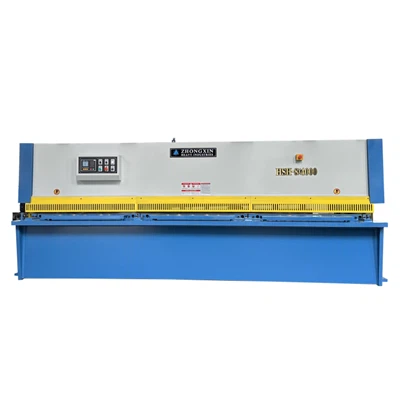
Hydraulic Shearing Machine
Sheet metal bending devices, like manual luggage folding devices, plate bending machines, and flying presses, simplify and speed metal bending processes in metal manufacturing plants.
Swaging Machine
The swaging machine is a forging press that changes the size of plain or cylindrical metal sheets. The sheets are then utilized for wiring or crimping. They’re an inexpensive way to efficiently point, reduce and form rods, tubes, or wires.
What Is The Purpose Of Sheet Metal Machine?
A sheet metal machine is used to cut, press, bend and form sheet metal into various shapes and sizes. These sheet metal machines help to easily, quickly and effectively; perform a wide range of tasks, such as cutting, stamping, bending, perforating, ironing, spinning, deep drawing, roll forming, press brake forming, rolling, decambering, wheeling, etc.
Sheet metal machines can be classified into various industrial applications such as shearing machines, sheet metal cutting machines, bending machines, rolling mills, and bending machines.
Sheet metal machines can also be operated through various types of systems, such as hydraulic presses, NC control machines, CNC control machines, CNC synchronous machines, and guillotine machines.

Tips for Sheet Metal Machine Maintenance
Keep Machinery Clean
An essential component of machinery maintenance is keeping machinery clean at all times. If machines get a build-up of rust, debris, dust, or metal shavings, this affects the proper performance of your machines, which in turn can affect the performance of your workshop. When thinking about cleaning machinery, it is essential that you consider all the necessary safety precautions that must be adhered to before cleaning can occur. When these have been taken into account, you can utilise appropriate methods for cleaning these machines, such as the use of compressed air, vacuuming, and soft brushes.
Create a Maintenance Schedule
Implementing a thorough maintenance schedule is an important part of ensuring the longevity of your machinery. It is critical that you adhere to the manufacturers guidelines for maintenance, as this will tell you the intervals at which to schedule maintenance. Create a calendar that will indicate when to conduct routine maintenance, inspections, and cleaning procedures. Having a schedule for these important tasks creates a solid foundation and sets the right tone for the workshop when it comes to proper maintenance.
Document All Maintenance Activities
This is another important component of maintenance for longevity – it is essential to keep proper records of all maintenance activities. This detailed documentation is essential for keeping and recording the history of your sheet metal machines. It is critical to record maintenance tasks that have been carried out, inspections, parts that have been repaired, and cleanings, along with any concerns and observations about the machinery. This is important documentation to have when it comes to getting assistance from manufacturers, as well as maintenance and repair experts.
Training and Involving Machinery Operators
When employees such as machinery operators are involved in the tasks related to machinery maintenance, they can create help promote machinery longevity. The whole workshop team should be involved in machinery maintenance efforts, and that’s why it is necessary that every member of your team has the relevant training. When you make an investment in training, this means that you can rest assured that all operators have the knowledge they need to report any issues with machinery immediately, so that they may be addressed. Properly trained employees should be able to identify machinery performance issues, as well as any unusual vibrations or noises. This, in turn, should help to keep the machinery running smoothly and prolong operation time without major breakdown issues.
Make Sure to Replace Parts When Necessary
It is normal for machinery to experience wear and tear. Parts that may need replacing over time include components such as dies, blades, punches, and filters. It is critical that these parts are replaced promptly when they need to be to ensure the optimum performance and efficiency of the machine. It is also important to keep a record of all replaced components in the documentation mentioned above. This will ensure that you are keeping an accurate history of the machine that can assist maintenance or repair professionals in the future.
Partner With Experts
When it comes to machinery maintenance, there is no better measure for longevity that you can take than engaging maintenance experts. It is important for proper machinery maintenance that you get in touch with qualified professionals that have the expertise and training to carry out the maintenance tasks safely and efficiently. Maintenance experts will be able to take care of complicated repairs, as well as carry out diagnostic tasks too. When you have a good professional relationship with experts in the field of machinery maintenance, you can rest assured that your machinery will always be well taken care of.
How To Choose The Right Sheet Metal Machine For You?

Budget
Consider your budget for the machine, including purchase price, installation costs, and any ongoing maintenance or replacement costs.
Purpose
Determine the purpose of the machine and choose a model designed for your specific needs. Make sure the machine is capable of handling your workpiece.
Types of Metalworking Operations
Consider the type of metalworking operation you will be performing and identify the operations needed to achieve your goals, such as cutting, punching, bending and forming, there is a machine for nearly every operation you can think of.
Sheet Metal Thickness and Dimensions
Refer to the sheet metal thickness and size you will be using to determine if the model will fulfill your needs.
Production scale
The scale of production determines whether you need a higher level of machine automation, such as manual, semi-automatic or fully automatic machines, of course their prices are not the same.
Accuracy requirements
Considering the level of precision required for metalworking operations, higher precision leads to better product quality.
Floor area
Consider the available floor space in your workspace to ensure that the machine will fit and can be installed correctly, and that the operation will be safe and productive.
Power requirements
Consider the power requirements of the machine, including power supplies and other utilities, to ensure that the machine will install and operate properly.
Reliability and Maintenance
The reliability and maintainability of the sheet metal machine is an important guarantee for your normal production, and it will also save you a lot of production costs.
Supplier reputation and support
Consider the reputation of the supplier and the level of support they offer, including warranty and maintenance services, to ensure you have a reliable source for your machine and any associated support.

Choose the right machine for your needs
Select a machine that is appropriate for your specific needs, and that has the capacity to handle the volume and type of metal that you will be working with.
Train operators
Make sure that all operators are trained on the proper use of the machine, and that they are familiar with its capabilities and limitations.
Optimize machine settings
Make sure that your machine's settings are optimized for your specific needs. This may include adjusting the cutting speed, blade pressure, or other settings to achieve the best results.
Streamline processes
Streamline your processes by using the right tools and accessories, and by having the right materials and supplies on hand when you need them.
Plan ahead
Plan your projects in advance, and make sure that you have all the necessary materials, tools, and supplies on hand before you begin.
Monitor performance
Regularly monitor your machine's performance to ensure that it's operating efficiently and effectively. Make any necessary adjustments to settings or processes to optimize performance.
Maintain your machine
Regular maintenance is essential for maximizing the productivity of your machine. Follow the manufacturer's recommended maintenance schedule, and make sure that all moving parts are properly lubricated.
Certifications


Our Factory
We have a general investment of 300 million yuan and covers an area of more than 120 thousand square meters, has more than one hundred sets of advanced equipment, annual production capacity over 3600 sets of machines, comprising more than thirty-five types and over fifty models. As a professional CNC lathe machine, CNC Veritical machining center, CNC gantry machine, band saw machine, bending machine supplier, We have dedicated ourselves to the field of machine tool manufacturing, we have built a modern quality management system which is in strict accordance with international standards, committed to produce a higher intelligent and higher quality machines and good after-sales services. We have exported our machines to more than 50 countries such as Russia, Belarus, East Europe, Egypt, Algeria, South Africa, Indonesia, Vietnam, Argentina, Mexico. We are also taking OEM & ODM orders and looking for agents all over the world, most of our products have got CE & EAC standards. Welcome to ZHONGXIN and establish a good cooperation and create a bright future together. ZHONGXIN, make the machines more easier, intelligent, and smarter, always online, always with you, and always for you!
