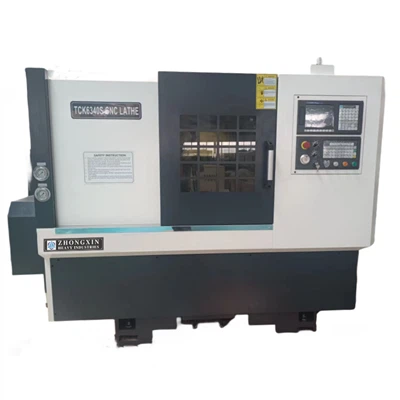
Hey there! As a supplier of Fanuc Lathes, I've seen firsthand how crucial it is to pick the right cutting tools. It can make or break your machining operations, affecting everything from the quality of your finished products to the efficiency of your production line. So, in this blog, I'm gonna share some tips on how to choose the right cutting tools for a Fanuc Lathe.


Understand Your Fanuc Lathe
First things first, you need to have a good grasp of your Fanuc Lathe. Different models have different capabilities and specifications. For example, the Ck6132 CNC Lathe is a popular choice for small to medium-sized workpieces. It offers high precision and reliability, making it suitable for a wide range of applications. On the other hand, the Dual Spindle CNC Lathe is designed for more complex and high-volume production, with the ability to perform multiple operations simultaneously. And if you're dealing with large workpieces, the Large CNC Turning option might be the way to go.
Knowing the maximum spindle speed, power, and tool capacity of your lathe is essential. These factors will determine the type and size of cutting tools that can be used effectively. For instance, if your lathe has a high spindle speed, you'll need cutting tools that can withstand the high rotational forces without breaking or wearing out quickly.
Consider the Material You're Cutting
The material you're working with is one of the most important factors in choosing cutting tools. Different materials have different hardness, toughness, and machinability characteristics. For example, cutting aluminum is a lot different from cutting stainless steel or titanium.
- Aluminum: Aluminum is a relatively soft and easy-to-machine material. You can use high-speed steel (HSS) or carbide cutting tools for aluminum. Carbide tools are generally preferred because they offer better wear resistance and can maintain a sharp cutting edge for longer periods.
- Stainless Steel: Stainless steel is harder and more difficult to machine than aluminum. It has a tendency to work harden, which means the surface of the material becomes harder as you cut it. For stainless steel, you'll need carbide cutting tools with a special coating to reduce friction and heat generation. Coated carbide tools can significantly improve tool life and cutting performance.
- Titanium: Titanium is a very strong and lightweight material, but it's also extremely difficult to machine. It has a low thermal conductivity, which means heat builds up quickly at the cutting edge. This can cause the cutting tool to wear out rapidly. For titanium, you'll need high-performance carbide cutting tools with advanced coatings and geometries specifically designed for titanium machining.
Choose the Right Tool Geometry
The geometry of the cutting tool plays a crucial role in its performance. The shape and angle of the cutting edge determine how the tool cuts through the material, how much force is required, and how well it can remove chips.
- Rake Angle: The rake angle is the angle between the face of the cutting tool and the workpiece. A positive rake angle reduces cutting forces and makes it easier to cut through the material, but it also reduces the strength of the cutting edge. A negative rake angle increases the strength of the cutting edge but requires more cutting force. The choice of rake angle depends on the material being cut and the cutting conditions.
- Relief Angle: The relief angle is the angle between the flank of the cutting tool and the workpiece. It prevents the flank of the tool from rubbing against the workpiece, which can cause friction and heat generation. A larger relief angle reduces friction but also reduces the strength of the cutting edge.
- Cutting Edge Radius: The cutting edge radius is the radius of the rounded tip of the cutting edge. A smaller cutting edge radius provides a sharper cutting edge and better surface finish, but it's also more prone to chipping and breakage. A larger cutting edge radius is more durable but may not provide as good a surface finish.
Think About Tool Coatings
Tool coatings can significantly improve the performance and life of cutting tools. Coatings can reduce friction, increase wear resistance, and improve heat dissipation. Some common tool coatings include:
- TiN (Titanium Nitride): TiN is a popular coating that provides good wear resistance and a gold-colored appearance. It's suitable for a wide range of materials and cutting conditions.
- TiCN (Titanium Carbonitride): TiCN is a harder and more wear-resistant coating than TiN. It's often used for high-speed machining and cutting harder materials.
- AlTiN (Aluminum Titanium Nitride): AlTiN is a high-performance coating that offers excellent heat resistance and wear resistance. It's ideal for machining difficult-to-cut materials at high speeds.
Evaluate Tool Life and Cost
Tool life and cost are important considerations when choosing cutting tools. You want to find a balance between the cost of the tool and how long it will last. A more expensive tool may have a longer tool life and provide better performance, but it may not be cost-effective if you're only doing small-scale production.
On the other hand, a cheap tool may save you money upfront, but it may wear out quickly and require frequent replacement, which can increase your overall production costs. You should also consider the cost of downtime due to tool changes and the impact on your production schedule.
Get Expert Advice
If you're still not sure which cutting tools are right for your Fanuc Lathe, don't hesitate to seek expert advice. You can consult with a cutting tool manufacturer or a machining specialist. They have the knowledge and experience to recommend the best cutting tools for your specific application.
At our company, we have a team of experts who can help you choose the right cutting tools for your Fanuc Lathe. We understand the unique requirements of different machining operations and can provide you with customized solutions. Whether you're a small job shop or a large manufacturing facility, we're here to support you.
If you're interested in learning more about our Fanuc Lathes or need help choosing the right cutting tools, please feel free to get in touch with us. We'd be happy to have a chat with you and discuss your needs. Let's work together to improve your machining operations and achieve better results.
References
- Machining Handbook, various editions
- Cutting Tool Engineering Magazine
- Fanuc Lathe Operator's Manuals