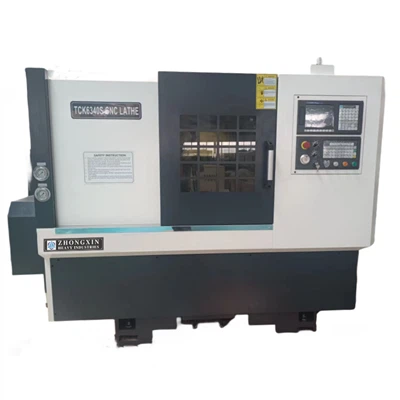
As a supplier of Horizontal Slant Bed Lathes, I've witnessed firsthand the critical role these machines play in modern manufacturing. Their efficiency can significantly impact production costs, product quality, and overall business profitability. In this blog, I'll share some practical strategies on how to improve the efficiency of a Horizontal Slant Bed Lathe.
1. Regular Maintenance and Inspection
Regular maintenance is the cornerstone of efficient lathe operation. Just like a well - tuned car performs better, a properly maintained lathe will run more smoothly and produce higher - quality parts.
Lubrication
Proper lubrication is essential for reducing friction between moving parts. Over time, lack of lubrication can lead to increased wear and tear, which not only shortens the lifespan of the machine but also reduces its efficiency. Check the lubrication levels regularly and use the recommended lubricants. Different parts of the lathe may require different types of lubricants, so it's crucial to follow the manufacturer's guidelines.
Cleaning
Dirt, chips, and coolant residues can accumulate on the lathe, causing blockages and interfering with the movement of parts. Regularly clean the lathe, including the bed, headstock, and tool turret. Use appropriate cleaning agents and tools to ensure a thorough clean. For example, compressed air can be used to blow away chips from hard - to - reach areas.
Inspection of Components
Regularly inspect critical components such as belts, gears, and bearings. Look for signs of wear, damage, or misalignment. Replace any worn - out parts promptly to prevent further damage to the machine. For instance, a worn - out belt can slip, reducing the power transmission efficiency and causing inconsistent cutting.
2. Tool Selection and Management
The choice of cutting tools has a direct impact on the efficiency of the lathe.
Appropriate Tool Selection
Selecting the right tool for the job is crucial. Consider factors such as the material being machined, the required surface finish, and the cutting parameters. For example, when machining hard materials, carbide - tipped tools may be more suitable as they offer better wear resistance. On the other hand, high - speed steel tools may be sufficient for softer materials.
Tool Coating
Tool coatings can improve the performance of cutting tools. Coatings such as titanium nitride (TiN) can reduce friction, increase wear resistance, and improve chip evacuation. This results in longer tool life and higher cutting speeds, thereby enhancing the efficiency of the lathe.
Tool Management
Implement a proper tool management system. Keep track of tool usage, wear, and replacement schedules. This helps in preventing tool breakage during machining, which can lead to costly downtime. Additionally, proper storage of tools can prevent damage and ensure their optimal performance.
3. Optimize Cutting Parameters
Adjusting the cutting parameters correctly can significantly improve the efficiency of the lathe.
Cutting Speed
The cutting speed is the speed at which the cutting tool moves relative to the workpiece. Increasing the cutting speed can reduce the machining time, but it also increases the tool wear. Therefore, it's important to find the optimal cutting speed for each material and tool combination. Consult the tool manufacturer's recommendations or use cutting speed calculators to determine the appropriate speed.
Feed Rate
The feed rate is the rate at which the cutting tool advances into the workpiece. A higher feed rate can reduce the machining time, but it may also affect the surface finish and increase the cutting forces. Similar to the cutting speed, find the right balance for the feed rate based on the material, tool, and desired surface finish.
Depth of Cut
The depth of cut is the thickness of the material removed in each pass. A larger depth of cut can reduce the number of passes required, thus saving time. However, it also increases the cutting forces and tool wear. Select an appropriate depth of cut that takes into account the machine's power, tool strength, and the material properties.
4. Operator Training
Well - trained operators are essential for maximizing the efficiency of the lathe.
Technical Training
Provide operators with comprehensive technical training on the operation of the Horizontal Slant Bed Lathe. This includes training on machine controls, programming, and safety procedures. Operators should be familiar with the lathe's features and capabilities to make the most of its functions.
Problem - Solving Skills
Train operators to identify and troubleshoot common problems that may occur during machining. This can reduce downtime as operators can quickly address issues such as tool breakage, chip jams, or machine malfunctions.


Continuous Learning
Encourage operators to stay updated with the latest machining techniques and technologies. Provide opportunities for further training and professional development to ensure they can adapt to new challenges and improve the efficiency of the lathe operation.
5. Use of Automation and CNC Technology
Automation and Computer Numerical Control (CNC) technology can greatly enhance the efficiency of the Horizontal Slant Bed Lathe.
CNC Programming
CNC programming allows for precise control of the lathe's movements. Programs can be created to perform complex machining operations with high accuracy and repeatability. This reduces the need for manual intervention, thereby increasing the machining speed and efficiency. For example, a well - written CNC program can optimize the tool path, minimizing the idle time between cuts.
Automation Features
Many modern Horizontal Slant Bed Lathes are equipped with automation features such as automatic tool changers and part loaders/unloaders. Automatic tool changers can quickly switch between different tools, reducing the time spent on manual tool changes. Part loaders/unloaders can feed workpieces into the lathe and remove finished parts automatically, allowing for continuous machining and increasing productivity.
6. Machine Upgrades and Modernization
Consider upgrading or modernizing the Horizontal Slant Bed Lathe to improve its efficiency.
Control System Upgrade
Upgrading the control system can provide access to new features and functions. Newer control systems may offer better programming capabilities, improved accuracy, and enhanced connectivity. This can lead to more efficient machining operations and better integration with other manufacturing systems.
Addition of Accessories
Adding accessories such as coolant systems, chip conveyors, and vibration dampeners can improve the performance of the lathe. Coolant systems can reduce cutting temperatures, improve chip evacuation, and extend tool life. Chip conveyors can remove chips from the work area, preventing blockages and improving the overall cleanliness of the machine. Vibration dampeners can reduce vibrations during machining, resulting in better surface finishes and increased tool life.
In conclusion, improving the efficiency of a Horizontal Slant Bed Lathe requires a comprehensive approach that includes regular maintenance, proper tool selection, optimization of cutting parameters, operator training, use of automation and CNC technology, and machine upgrades. By implementing these strategies, manufacturers can significantly increase the productivity of their lathes, reduce production costs, and improve the quality of their products.
If you are interested in our Horizontal CNC Lathe Machine, Small CNC Lathe with Live Tooling or Large Lathe Machine, or have any questions about improving the efficiency of your lathe, please feel free to contact us for procurement and negotiation. We are committed to providing you with the best solutions and high - quality products.
References:
- "Modern Machining Technology" by John T. Black
- "CNC Programming Handbook" by Mark Albert
- Manufacturer's manuals and technical documents for Horizontal Slant Bed Lathes