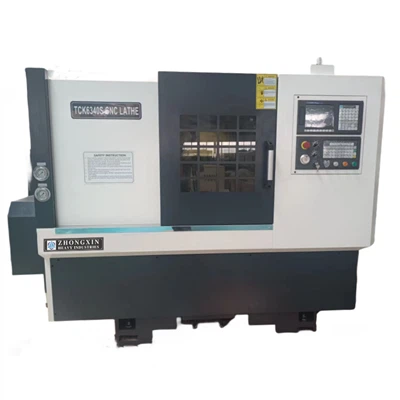
Hey there! As a supplier of New CNC Vertical Lathes, I'm stoked to share some tips on how to operate these bad boys. Whether you're a newbie or looking to brush up on your skills, this guide's got you covered.
Pre - operation Checks
Before you even think about firing up the New CNC Vertical Lathe, you gotta do some pre - operation checks. First off, take a good look at the machine. Check for any visible damage like cracks in the frame or loose parts. Make sure all the safety guards are in place and working properly. Safety first, right?
Next, check the lubrication system. The lathe needs proper lubrication to run smoothly. Look at the oil levels in the lubrication tanks and top them up if needed. Also, check the coolant system. The coolant helps to keep the cutting tools cool and clean the chips away. Ensure there's enough coolant in the tank and that the hoses aren't clogged.
Inspect the cutting tools. Make sure they're sharp and in good condition. Dull tools can lead to poor quality cuts and can even damage the workpiece. You might want to have a set of spare tools handy just in case.
Setting Up the Workpiece
Once you've done the pre - operation checks, it's time to set up the workpiece. First, select the right chuck or fixture for your workpiece. There are different types of chucks available, like three - jaw chucks and four - jaw chucks. Choose the one that best suits the shape and size of your workpiece.


Clean the workpiece and the chuck or fixture before mounting. Any dirt or debris can affect the accuracy of the setup. Carefully place the workpiece in the chuck or fixture and tighten it securely. Make sure the workpiece is centered properly. You can use a dial indicator to check the alignment. A misaligned workpiece can cause vibrations during operation, which can mess up the cuts.
Programming the CNC Vertical Lathe
Now, let's talk about programming. Programming is like giving the lathe a set of instructions on what to do. Most New CNC Vertical Lathes come with user - friendly programming interfaces. You can either use G - code programming, which is a standard language for CNC machines, or use the built - in conversational programming features.
If you're new to programming, start with simple programs. For example, if you're just doing a straight turning operation, you can write a basic G - code program. First, you'll need to define the starting point of the tool. Then, specify the feed rate (how fast the tool moves) and the spindle speed (how fast the workpiece rotates).
Let's say you're using a Large Lathe Machine for a big - scale project. You'll need to adjust the programming parameters accordingly. Larger workpieces might require slower feed rates and lower spindle speeds to ensure a good quality cut.
Operating the Lathe
Once you've programmed the lathe, it's time to start the operation. First, turn on the power to the lathe. Make sure all the control panels are functioning properly. Set the spindle speed and the feed rate according to your program.
Before starting the actual cutting, do a dry run. A dry run means running the program without the cutting tool actually touching the workpiece. This allows you to check if the tool path is correct and if there are any errors in the program. If you notice any issues during the dry run, stop the machine and make the necessary adjustments to the program.
When you're ready to start cutting, carefully lower the cutting tool to the workpiece. Keep an eye on the cutting process. Watch for any signs of vibrations, unusual noises, or excessive heat. If you notice any of these, stop the machine immediately. It could be a sign of a problem with the tool, the workpiece, or the programming.
Monitoring and Adjusting
During the operation, it's important to monitor the lathe continuously. Check the cutting parameters regularly. For example, if you notice that the surface finish of the workpiece is not as smooth as you'd like, you might need to adjust the feed rate or the spindle speed.
Keep an eye on the coolant flow. If the coolant isn't flowing properly, it can cause the cutting tools to overheat. You can adjust the coolant flow rate using the controls on the coolant system.
Also, check the chips being produced. The shape and color of the chips can tell you a lot about the cutting process. For example, long, stringy chips might indicate that the feed rate is too low, while short, broken chips could mean the feed rate is too high.
Finishing Up
Once the cutting operation is complete, turn off the spindle and the cutting tool. Carefully remove the workpiece from the chuck or fixture. Be careful as the workpiece might still be hot.
Clean the lathe thoroughly. Remove any chips and debris from the work area, the chuck, and the cutting tools. Wipe down the machine with a clean cloth. Lubricate the moving parts again to prevent rust and corrosion.
Troubleshooting
Even with proper operation, you might encounter some problems with the New CNC Vertical Lathe. If you experience issues like poor surface finish, you might need to check the cutting tool, the feed rate, or the spindle speed. If the lathe is making strange noises, it could be due to loose parts or a problem with the bearings.
If you're having trouble with the programming, don't worry. Most CNC lathes come with technical support. You can also refer to the user manual or online resources for help.
Advantages of Using New CNC Vertical Lathes
New CNC Vertical Lathes offer a lot of advantages. They're more accurate than traditional lathes. The computer - controlled system ensures that the cuts are precise and consistent. This is especially important for industries where high precision is required, like aerospace and automotive.
They're also more efficient. Once you've programmed the lathe, it can perform the same operation over and over again with minimal human intervention. This can save a lot of time and labor costs.
Different Types of CNC Vertical Lathes
There are different types of CNC Vertical Lathes available, depending on your needs. If you're working on small - scale projects, you might want to consider a Best Small Cnc Lathes. These lathes are compact and can be easily installed in a small workshop.
On the other hand, if you're dealing with large workpieces, a Large Lathe Machine would be more suitable. These lathes have a larger working area and can handle heavier workpieces.
Another popular type is the Ck6140 CNC Lathe. It's a versatile lathe that can be used for a wide range of turning operations.
Contact for Purchase
If you're interested in purchasing a New CNC Vertical Lathe, we're here to help. Our team of experts can assist you in choosing the right lathe for your specific needs. Whether you're a small business or a large industrial manufacturer, we've got a solution for you. Just reach out to us, and we can start the procurement discussion.
References
- "CNC Programming Handbook" by John Zimmers
- "Machining Fundamentals" by Industrial Press Inc.