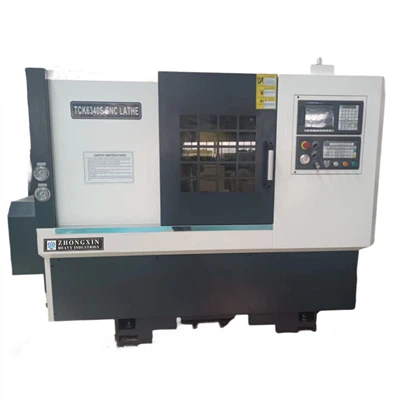
When it comes to installing a large lathe machine, the environmental requirements are crucial for ensuring its optimal performance, longevity, and safety. As a supplier of large lathe machines, I understand the significance of these factors and would like to share some insights on what the environmental requirements are for installing such equipment.
Temperature and Humidity Control
One of the primary environmental factors to consider is the temperature and humidity of the installation site. Large lathe machines are precision instruments, and extreme temperatures and humidity levels can have a significant impact on their accuracy and functionality.
Temperature
Most large lathe machines are designed to operate within a specific temperature range, typically between 15°C and 30°C (59°F and 86°F). Operating the machine outside of this range can cause thermal expansion or contraction of the machine's components, leading to dimensional inaccuracies in the workpieces being machined. For example, if the temperature is too high, the metal components of the lathe may expand, causing the cutting tools to move out of alignment and resulting in poor surface finishes and inaccurate dimensions.
To maintain a stable temperature, it is recommended to install the lathe machine in a climate - controlled environment. This can be achieved through the use of air - conditioning systems or heaters, depending on the local climate. Additionally, the installation area should be well - insulated to prevent heat transfer from the outside environment.
Humidity
Humidity levels also play a crucial role in the performance of large lathe machines. High humidity can lead to corrosion of the machine's metal parts, which can compromise its structural integrity and reduce its lifespan. On the other hand, low humidity can cause static electricity to build up, which can interfere with the electrical components of the machine and pose a safety hazard.
The ideal humidity range for operating a large lathe machine is between 40% and 60%. To control humidity levels, dehumidifiers or humidifiers can be installed in the installation area. Regular maintenance checks should also be carried out to ensure that the machine's components are free from corrosion.
Floor and Foundation Requirements
The floor and foundation on which the large lathe machine is installed are essential for its stability and performance.
Floor Strength
Large lathe machines are heavy pieces of equipment, and the floor must be able to support their weight without sagging or shifting. Before installation, a structural engineer should assess the floor's load - bearing capacity to ensure that it can handle the weight of the lathe machine, as well as any additional loads such as workpieces and cutting tools.


In general, the floor should have a minimum load - bearing capacity of 1000 kg/m² (205 lb/ft²). If the existing floor does not meet this requirement, additional support structures such as steel beams or concrete pads may need to be installed.
Floor Flatness
The floor must also be flat to ensure the proper alignment of the lathe machine. Any unevenness in the floor can cause the machine to vibrate during operation, which can lead to poor machining accuracy and premature wear of the machine's components.
The allowable floor flatness deviation is typically within ± 0.5 mm per meter of length. To achieve this level of flatness, the floor may need to be ground or leveled before the lathe machine is installed.
Power Supply and Electrical Requirements
A stable and adequate power supply is essential for the proper operation of a large lathe machine.
Voltage and Frequency
Large lathe machines usually require a specific voltage and frequency to operate. Most machines are designed to run on a three - phase power supply with a voltage of 380V or 415V and a frequency of 50Hz or 60Hz, depending on the region.
It is crucial to ensure that the power supply at the installation site matches the machine's requirements. Any fluctuations in voltage or frequency can cause damage to the machine's electrical components and affect its performance. To protect the machine from power surges and fluctuations, a voltage stabilizer or uninterruptible power supply (UPS) can be installed.
Electrical Wiring
The electrical wiring for the large lathe machine must be installed correctly to ensure safety and reliable operation. The wiring should be of the appropriate gauge to handle the machine's electrical load and should be installed in accordance with local electrical codes.
All electrical connections should be properly insulated and grounded to prevent electrical shocks and short - circuits. Regular inspections of the electrical wiring should be carried out to detect and fix any potential problems.
Ventilation and Air Quality
Proper ventilation is necessary for maintaining a healthy working environment and protecting the large lathe machine from dust and debris.
Ventilation
During the operation of a large lathe machine, cutting fluids, chips, and dust are generated. These contaminants can accumulate in the air and pose a health risk to the operators. Adequate ventilation systems should be installed to remove these contaminants from the installation area.
The ventilation system should be designed to provide a sufficient amount of fresh air exchange. A general rule of thumb is to have at least six air changes per hour in the installation area. This can be achieved through the use of exhaust fans, ductwork, and air filters.
Air Quality
In addition to removing contaminants, the ventilation system should also help maintain good air quality. The air in the installation area should be free from excessive dust, fumes, and other pollutants. High levels of dust can cause premature wear of the machine's moving parts and clog the filters of the ventilation system.
To improve air quality, air purifiers can be installed in the installation area. Regular cleaning of the installation area and the machine itself is also essential to keep the air clean.
Space Requirements
Sufficient space is required for the installation and operation of a large lathe machine.
Installation Space
The installation area should be large enough to accommodate the lathe machine, as well as any associated equipment such as control panels, coolant systems, and chip conveyors. A minimum clearance of at least 1 meter (3.3 feet) should be maintained around the machine to allow for easy access for maintenance and operation.
Working Space
In addition to the installation space, there should also be enough working space around the machine for the operators to move freely and perform their tasks safely. The working space should be free from obstacles and should provide easy access to the workpieces and cutting tools.
Conclusion
As a supplier of large lathe machines, I emphasize the importance of meeting the environmental requirements for installing these machines. By ensuring proper temperature and humidity control, a stable floor and foundation, a reliable power supply, adequate ventilation, and sufficient space, you can maximize the performance and lifespan of your large lathe machine.
If you are in the market for a large lathe machine, we offer a wide range of products, including the Horizontal Turning Lathe, New Slant Bed Lathe, and Horizontal CNC Lathe Machine. Our team of experts can assist you in determining the best machine for your needs and ensuring that it is installed in an environment that meets all the necessary requirements.
Contact us today to start the procurement process and discuss how we can help you achieve your machining goals.
References
- Machinery's Handbook (31st Edition), Industrial Press Inc.
- ANSI B11.9 - 2017, Safety Requirements for Machine Tools - Turning Machines
- OSHA Standards for Machine Guarding and Electrical Safety