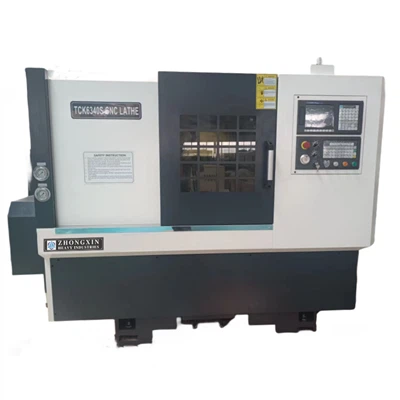
As a supplier of Swiss Turn Lathes, I've had the privilege of witnessing the transformative power of these precision machines in various manufacturing settings. One of the most critical components of a Swiss Turn Lathe is the chip breaker, a feature that often goes unnoticed but plays a pivotal role in the machining process. In this blog, I'll delve into the function of the chip breaker in a Swiss Turn Lathe, its importance, and how it contributes to the overall efficiency and quality of machining operations.
Understanding the Basics of a Swiss Turn Lathe
Before we dive into the chip breaker function, let's briefly understand what a Swiss Turn Lathe is. A Swiss Turn Lathe, also known as a Swiss-style lathe or sliding headstock lathe, is a highly specialized machine tool designed for high-precision, high-volume machining of small, complex parts. Unlike traditional lathes, Swiss Turn Lathes hold the workpiece in a guide bushing close to the cutting tool, which allows for minimal deflection and excellent surface finish. This makes them ideal for machining parts with tight tolerances, such as those used in the medical, aerospace, and automotive industries.
The Role of Chips in Machining
When a cutting tool removes material from a workpiece during machining, it generates chips. These chips can vary in size, shape, and thickness depending on the material being machined, the cutting tool geometry, and the machining parameters. While chips are a natural byproduct of the machining process, they can also cause significant problems if not properly managed.
Uncontrolled chips can wrap around the cutting tool, workpiece, or other machine components, leading to poor surface finish, tool wear, and even machine damage. They can also pose a safety hazard to operators, as sharp chips can fly off the machine and cause injuries. Additionally, chips can accumulate in the machining area, obstructing the view of the cutting process and making it difficult to monitor the quality of the machined parts.
What is a Chip Breaker?
A chip breaker is a feature incorporated into the cutting tool or the lathe itself to control the shape and size of the chips generated during machining. Its primary function is to break the long, continuous chips into smaller, more manageable pieces that can be easily removed from the machining area. By doing so, chip breakers help to prevent chip entanglement, improve chip evacuation, and enhance the overall efficiency and safety of the machining process.
How Does a Chip Breaker Work?
There are several types of chip breakers, each with its own unique design and operating principle. Some common types of chip breakers include:
- Groove-Type Chip Breakers: These chip breakers feature a series of grooves or notches on the cutting tool's rake face. As the chip forms, it comes into contact with these grooves, which cause it to bend and break into smaller pieces. Groove-type chip breakers are simple and effective, and they can be easily incorporated into standard cutting tools.
- Step-Type Chip Breakers: Step-type chip breakers have a stepped profile on the cutting tool's rake face. The steps create a sudden change in the chip's flow direction, which causes it to break. Step-type chip breakers are particularly effective for machining materials with high ductility, as they can prevent the formation of long, stringy chips.
- Integrated Chip Breakers: Some Swiss Turn Lathes are equipped with integrated chip breakers that are built into the lathe's tool holder or guide bushing. These chip breakers use a combination of mechanical and hydraulic forces to break the chips as they are formed. Integrated chip breakers offer precise control over chip formation and can be adjusted to suit different machining applications.
Benefits of Using a Chip Breaker in a Swiss Turn Lathe
The use of a chip breaker in a Swiss Turn Lathe offers several benefits, including:
- Improved Surface Finish: By breaking the chips into smaller pieces, chip breakers prevent them from scratching or damaging the surface of the workpiece. This results in a smoother, more consistent surface finish, which is essential for parts that require high precision and aesthetic appeal.
- Reduced Tool Wear: Long, continuous chips can cause excessive wear on the cutting tool, as they can rub against the tool's cutting edge and cause it to dull. Chip breakers help to reduce tool wear by preventing the chips from coming into contact with the cutting edge, which extends the tool's lifespan and reduces the frequency of tool changes.
- Enhanced Chip Evacuation: Smaller, broken chips are easier to remove from the machining area than long, continuous chips. Chip breakers help to improve chip evacuation by breaking the chips into manageable pieces that can be easily carried away by the coolant or chip conveyor. This prevents chip accumulation in the machining area, which can improve the visibility of the cutting process and reduce the risk of machine damage.
- Increased Productivity: By improving surface finish, reducing tool wear, and enhancing chip evacuation, chip breakers help to increase the overall productivity of the Swiss Turn Lathe. With less time spent on tool changes and chip removal, operators can focus on producing high-quality parts more efficiently.
- Improved Safety: Long, continuous chips can pose a safety hazard to operators, as they can fly off the machine and cause injuries. Chip breakers help to improve safety by breaking the chips into smaller pieces that are less likely to cause harm. Additionally, by preventing chip entanglement, chip breakers reduce the risk of machine damage, which can also improve safety in the workplace.
Applications of Chip Breakers in Swiss Turn Lathes
Chip breakers are widely used in a variety of industries and applications where high-precision machining is required. Some common applications of chip breakers in Swiss Turn Lathes include:
- Medical Device Manufacturing: Swiss Turn Lathes are commonly used to manufacture small, complex parts for medical devices, such as surgical instruments, implants, and catheters. Chip breakers are essential in these applications to ensure a high-quality surface finish and to prevent contamination of the machined parts.
- Aerospace Industry: The aerospace industry requires parts with extremely tight tolerances and high strength-to-weight ratios. Swiss Turn Lathes equipped with chip breakers are used to machine parts such as turbine blades, fuel injectors, and landing gear components. Chip breakers help to ensure the precision and reliability of these critical parts.
- Automotive Industry: Swiss Turn Lathes are used in the automotive industry to manufacture a wide range of parts, including engine components, transmission parts, and steering components. Chip breakers are used to improve the surface finish and reduce the production time of these parts, which helps to increase the overall efficiency of the automotive manufacturing process.
- Electronics Industry: The electronics industry requires small, precise parts with high electrical conductivity and low resistance. Swiss Turn Lathes equipped with chip breakers are used to machine parts such as connectors, terminals, and pins. Chip breakers help to ensure the quality and reliability of these parts, which are essential for the proper functioning of electronic devices.
Choosing the Right Chip Breaker for Your Swiss Turn Lathe
When choosing a chip breaker for your Swiss Turn Lathe, it's important to consider several factors, including the material being machined, the cutting tool geometry, and the machining parameters. Different materials require different chip breaker designs to achieve optimal chip control. For example, materials with high ductility, such as aluminum and copper, require chip breakers that can prevent the formation of long, stringy chips. On the other hand, materials with low ductility, such as cast iron and stainless steel, require chip breakers that can break the chips into smaller pieces.
The cutting tool geometry also plays a crucial role in chip breaker performance. The shape and size of the cutting tool's rake face, clearance angle, and cutting edge radius can all affect the way the chips are formed and broken. It's important to choose a cutting tool with the appropriate geometry for your machining application and to ensure that the chip breaker is compatible with the cutting tool.
Finally, the machining parameters, such as the cutting speed, feed rate, and depth of cut, can also affect the performance of the chip breaker. It's important to optimize these parameters to achieve the best possible chip control and to ensure the efficiency and quality of the machining process.
Conclusion
In conclusion, the chip breaker is a critical component of a Swiss Turn Lathe that plays a vital role in the machining process. By controlling the shape and size of the chips generated during machining, chip breakers help to prevent chip entanglement, improve chip evacuation, and enhance the overall efficiency and quality of the machining operations. As a supplier of Swiss Turn Lathes, we understand the importance of chip breakers and offer a wide range of cutting tools and accessories that are designed to provide optimal chip control.


If you're interested in learning more about our Swiss Turn Lathes or the chip breaker function, please feel free to contact us for a consultation. Our team of experts is always available to answer your questions and to help you choose the right machine and cutting tools for your specific application. Whether you're looking for a Horizontal Turning Lathe, Large CNC Turning, or a Heavy Duty Metal Lathe, we have the solution for you.
References
- Boothroyd, G., & Knight, W. A. (2006). Fundamentals of machining and machine tools. CRC Press.
- Kalpakjian, S., & Schmid, S. R. (2008). Manufacturing engineering and technology. Pearson Prentice Hall.
- Trent, E. M., & Wright, P. K. (2000). Metal cutting. Butterworth-Heinemann.