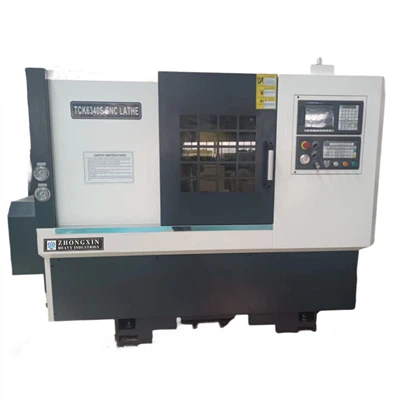
CNC (Computer Numerical Control) programming is a critical aspect of operating a horizontal CNC lathe machine. It enables precise control over the machine's movements and operations, ensuring accurate and efficient machining processes. However, errors in CNC programming can occur, leading to various issues such as poor part quality, machine damage, and production delays. As a supplier of Horizontal CNC Lathe Machines, understanding and effectively handling CNC programming errors is essential to provide reliable solutions to our customers.
Common Types of CNC Programming Errors
Syntax Errors
Syntax errors are among the most common programming mistakes. They occur when the programmer does not follow the correct syntax rules of the CNC programming language. For example, missing a semicolon at the end of a block, using an incorrect G - code or M - code, or misspelling a command can all result in syntax errors. These errors are usually detected by the CNC control system during the program verification phase. When the control system encounters a syntax error, it will typically display an error message indicating the location and nature of the error.
Logical Errors
Logical errors are more difficult to detect than syntax errors. They occur when the program's logic is flawed, even though the syntax is correct. For instance, incorrect sequencing of operations, improper tool selection, or incorrect calculation of feed rates and spindle speeds can lead to logical errors. These errors may not cause the machine to stop immediately, but they can result in parts being machined incorrectly. For example, if the programmer miscalculates the depth of cut, the part may end up with the wrong dimensions.
Data Input Errors
Data input errors happen when incorrect data is entered into the CNC program. This can include wrong coordinates, incorrect tool offsets, or inaccurate workpiece dimensions. Data input errors can be caused by human factors such as typos or misunderstandings of the part drawing. For example, if the programmer enters the wrong X - coordinate for a cutting operation, the tool will move to the wrong position, resulting in an incorrect cut.
Impact of CNC Programming Errors
Poor Part Quality
One of the most significant impacts of CNC programming errors is poor part quality. Errors in programming can lead to parts being machined with incorrect dimensions, surface finish, or geometric tolerances. For example, a logical error in the tool path programming can cause the tool to cut too deeply or too shallowly, resulting in parts that do not meet the required specifications. This can lead to increased scrap rates and rework, which in turn increases production costs.
Machine Damage
In some cases, CNC programming errors can cause machine damage. For example, if the programmer sets the spindle speed too high or the feed rate too fast, it can put excessive stress on the machine's components, such as the spindle, bearings, and cutting tools. This can lead to premature wear and tear, and in severe cases, it can cause the machine to break down. Machine damage not only results in costly repairs but also causes production downtime.
Production Delays
CNC programming errors can also cause production delays. When an error is detected during the machining process, the machine has to be stopped, and the program has to be corrected. This can take a significant amount of time, especially if the error is difficult to diagnose. Production delays can have a negative impact on the overall production schedule, leading to missed deadlines and dissatisfied customers.
Error Handling Strategies
Program Verification
Program verification is an essential step in error handling. Before running the program on the actual machine, it should be verified using simulation software. Simulation software allows the programmer to visualize the tool path and check for potential errors such as collisions, incorrect tool movements, and logical flaws. Most modern CNC control systems also have built - in program verification features that can detect syntax errors. By verifying the program before running it on the machine, many errors can be identified and corrected early, reducing the risk of poor part quality, machine damage, and production delays.
Error Logging and Analysis
Maintaining an error log is crucial for identifying recurring errors and improving the programming process. Every time an error is detected, the details of the error, such as the type of error, the location in the program, and the circumstances under which it occurred, should be recorded. This data can then be analyzed to identify patterns and root causes of errors. For example, if a particular type of logical error occurs frequently, it may indicate a need for additional training for the programmers or a problem with the programming guidelines.
Operator Training
Operator training is another important aspect of error handling. Operators should be trained not only in CNC programming but also in error detection and correction. They should be able to recognize the symptoms of programming errors, such as abnormal machine noises, vibrations, or incorrect part dimensions. Operators should also be trained to perform basic troubleshooting steps, such as checking the program for syntax errors and verifying the data input. By having well - trained operators, the chances of errors going undetected are reduced.
Backup and Recovery
Having a backup of all CNC programs is essential. In case of a programming error or a system failure, the backup programs can be used to resume production quickly. Regular backups should be taken, and the backup files should be stored in a secure location. Additionally, the CNC control system should have a recovery mechanism in place to restore the program to a previous state in case of an error.


Our Company's Approach to Error Handling
As a supplier of Horizontal CNC Lathe Machines, we understand the importance of CNC programming error handling. We offer a range of Dual Spindle CNC Lathe that are equipped with advanced CNC control systems with powerful program verification features. These features help our customers detect and correct programming errors before they cause any problems.
We also provide comprehensive training to our customers' operators and programmers. Our training programs cover not only basic CNC programming but also advanced error handling techniques. We believe that by empowering our customers with the knowledge and skills to handle programming errors, we can help them improve their production efficiency and part quality.
In addition, we offer Ck6130 CNC Lathe and Cnc Lathe Machine Heavy Duty models that are designed to be robust and reliable. These machines are less likely to be damaged by programming errors, and they can withstand the stresses of normal machining operations.
Conclusion
CNC programming error handling is a crucial aspect of operating a horizontal CNC lathe machine. By understanding the common types of errors, their impacts, and implementing effective error handling strategies, manufacturers can improve part quality, reduce machine damage, and minimize production delays. As a supplier of Horizontal CNC Lathe Machines, we are committed to providing our customers with the tools, training, and support they need to handle CNC programming errors effectively.
If you are interested in our Horizontal CNC Lathe Machines or have any questions about CNC programming error handling, please feel free to contact us for procurement and further discussions. We look forward to working with you to meet your machining needs.
References
- "CNC Programming Handbook" by John A. Reha
- "Modern Manufacturing Technology" by Mikell P. Groover
- "CNC Machining Technology" by Daniel C. Cheatham