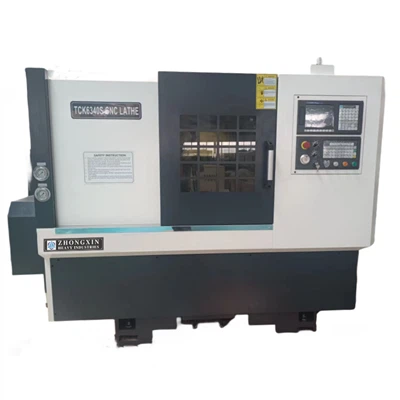
As a supplier of Gap Bed Engine Lathes, one question that often comes up from our customers is about the coolant tank capacity of these machines. In this blog post, I'll delve into this topic, providing a comprehensive overview of what coolant tank capacity means for a Gap Bed Engine Lathe and why it's an important consideration.
Understanding Coolant in Gap Bed Engine Lathes
Before we talk about the coolant tank capacity, it's crucial to understand the role of coolant in a Gap Bed Engine Lathe. Coolant serves several vital functions during the machining process. Firstly, it helps to reduce the temperature generated by the cutting tool and the workpiece. When the cutting tool interacts with the metal, a significant amount of heat is produced. High temperatures can lead to tool wear, deformation of the workpiece, and a decrease in the quality of the machined surface. Coolant absorbs this heat, keeping the cutting edge of the tool sharp and maintaining the dimensional accuracy of the workpiece.
Secondly, coolant acts as a lubricant. It reduces friction between the cutting tool and the workpiece, which not only extends the life of the tool but also improves the surface finish of the machined part. Additionally, coolant helps to flush away chips and debris generated during the cutting process. This prevents chips from getting stuck between the tool and the workpiece, which could otherwise cause damage to both.
Factors Influencing Coolant Tank Capacity
The coolant tank capacity of a Gap Bed Engine Lathe is not a random specification; it's determined by several factors.
1. Machine Size and Type
Larger Gap Bed Engine Lathes generally require larger coolant tank capacities. This is because they are capable of handling larger workpieces and performing more extensive machining operations. For example, a heavy - duty Gap Bed Engine Lathe designed for industrial - scale production will likely have a much larger coolant tank than a smaller, benchtop - style lathe used for light - duty tasks.
2. Machining Operations
The type of machining operations being performed also affects the required coolant tank capacity. Operations that generate a lot of heat, such as high - speed cutting or heavy - duty turning, require more coolant to maintain the appropriate temperature. In contrast, lighter operations like finishing cuts may require less coolant. For instance, if a lathe is used primarily for roughing operations where large amounts of material are being removed quickly, a larger coolant tank will be necessary to ensure continuous and effective cooling.
3. Production Volume
High - volume production environments demand a larger coolant tank capacity. When a lathe is running continuously for long periods to produce a large number of parts, the coolant is consumed at a faster rate. A larger tank ensures that there is enough coolant available to last through the production run without the need for frequent refilling.
Typical Coolant Tank Capacities
Coolant tank capacities for Gap Bed Engine Lathes can vary widely depending on the factors mentioned above. Smaller, hobby - grade or light - industrial Gap Bed Engine Lathes may have coolant tank capacities ranging from 10 to 50 liters. These machines are often used for small - scale projects or in workshops with limited space and lower production volumes.
For medium - sized Gap Bed Engine Lathes that are commonly used in small to medium - sized manufacturing facilities, the coolant tank capacity typically ranges from 50 to 200 liters. These lathes can handle a wider variety of machining tasks and are suitable for producing a moderate number of parts.
Large, industrial - grade Gap Bed Engine Lathes, such as the Gap Bed Lathe CS6250C, can have coolant tank capacities of 200 liters or more. These machines are designed for heavy - duty, high - volume production and require a large amount of coolant to support their operations.
Importance of the Right Coolant Tank Capacity
Having the appropriate coolant tank capacity is essential for the efficient and effective operation of a Gap Bed Engine Lathe.
1. Tool Life
Insufficient coolant can lead to overheating of the cutting tool, which significantly reduces its lifespan. A larger coolant tank ensures a consistent supply of coolant, keeping the tool cool and lubricated, and thus extending its useful life. This reduces the frequency of tool changes, which in turn lowers production costs and increases productivity.
2. Workpiece Quality
Adequate coolant supply is crucial for maintaining the quality of the machined workpiece. Without enough coolant, the workpiece may experience thermal deformation, resulting in dimensional inaccuracies. The right amount of coolant helps to keep the workpiece at a stable temperature, ensuring precise machining and a high - quality surface finish.
3. Operational Efficiency
A large enough coolant tank reduces the need for frequent refilling. In a production environment, downtime for refilling coolant can be costly. By having a sufficient coolant tank capacity, the lathe can run for longer periods without interruption, increasing overall operational efficiency.
Maintenance and Monitoring of Coolant Tank
Once you've selected a Gap Bed Engine Lathe with an appropriate coolant tank capacity, it's important to properly maintain and monitor the coolant.
1. Coolant Level
Regularly check the coolant level in the tank. Most lathes are equipped with a sight glass or a level indicator to make this easy. If the coolant level is low, it should be topped up immediately to avoid any issues with the machining process.
2. Coolant Quality
The quality of the coolant also needs to be monitored. Over time, coolant can become contaminated with chips, debris, and bacteria. Contaminated coolant can lose its effectiveness and may even cause damage to the lathe and the workpiece. Regularly filter the coolant and replace it according to the manufacturer's recommendations.


3. Tank Cleaning
Periodically clean the coolant tank to remove any accumulated sediment and debris. A dirty tank can reduce the effectiveness of the coolant and may even lead to blockages in the coolant delivery system.
Conclusion
The coolant tank capacity of a Gap Bed Engine Lathe is a critical specification that should not be overlooked. It is influenced by factors such as machine size, machining operations, and production volume. Having the right coolant tank capacity is essential for ensuring tool life, workpiece quality, and operational efficiency. As a supplier of Gap Bed Engine Lathes, we understand the importance of this specification and can help you select the machine with the appropriate coolant tank capacity for your specific needs.
If you're in the market for a Gap Bed Engine Lathe and have questions about coolant tank capacity or any other aspect of our machines, we encourage you to reach out to us for a detailed discussion. Our team of experts is ready to assist you in making the right choice for your machining requirements. Contact us today to start the procurement process and take your machining operations to the next level.
References
- General machining textbooks on lathe operations and coolant systems
- Manufacturer's manuals for Gap Bed Engine Lathes
- Industry standards and guidelines related to machining coolant usage