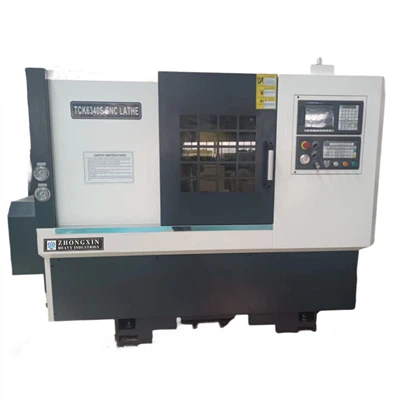
The distance between centers on a Gap Bed Engine Lathe is a crucial specification that significantly impacts the machine's capabilities and the types of work it can handle. As a leading supplier of Gap Bed Engine Lathes, we understand the importance of this measurement and its implications for various machining applications.
Understanding the Concept of Distance Between Centers
The distance between centers, often abbreviated as DBC, refers to the maximum length of the workpiece that can be supported between the headstock and the tailstock of a lathe. This measurement is taken from the face of the headstock spindle to the center of the tailstock quill when it is fully extended. It is a fundamental parameter that determines the size of the workpieces that the lathe can accommodate.
For instance, if a Gap Bed Engine Lathe has a distance between centers of 1000 mm, it means that the machine can handle workpieces up to 1000 mm in length when supported between the headstock and the tailstock. This measurement is essential for planning machining operations, as it helps in determining whether a particular workpiece can be machined on the lathe or if a larger machine is required.
Importance of the Distance Between Centers
The distance between centers plays a vital role in several aspects of machining with a Gap Bed Engine Lathe:
Workpiece Size Limitations
The DBC directly limits the length of the workpieces that can be machined on the lathe. If the workpiece is longer than the distance between centers, it cannot be supported properly, which can lead to inaccurate machining and potential damage to the workpiece or the machine. Therefore, it is crucial to choose a lathe with a suitable DBC for the intended workpieces.
Machining Accuracy
Proper support of the workpiece between the headstock and the tailstock is essential for achieving high machining accuracy. A longer distance between centers may require additional support, such as steady rests or follow rests, to prevent deflection and ensure precise machining. On the other hand, a shorter DBC may limit the types of workpieces that can be machined accurately.
Versatility
A lathe with a larger distance between centers offers greater versatility, as it can handle a wider range of workpiece lengths. This is particularly beneficial for workshops that deal with various types of workpieces, including long shafts, rods, and other cylindrical components.
Factors Affecting the Distance Between Centers
Several factors can influence the distance between centers on a Gap Bed Engine Lathe:
Machine Design
The design of the lathe, including the length of the bed and the position of the headstock and tailstock, determines the maximum distance between centers. Some lathes are designed with a fixed DBC, while others offer adjustable centers, allowing for greater flexibility in handling different workpiece lengths.
Tailstock Quill Extension
The maximum extension of the tailstock quill also affects the effective distance between centers. A longer quill extension can increase the DBC, enabling the lathe to handle longer workpieces.
Bed Type
The type of bed used in the lathe can also impact the DBC. For example, a gap bed design allows for the removal of a section of the bed, which can increase the available space for machining larger diameter workpieces. However, this may also reduce the overall distance between centers.
Selecting the Right Distance Between Centers
When choosing a Gap Bed Engine Lathe, it is important to consider the specific requirements of your machining operations. Here are some factors to keep in mind:
Workpiece Length
Determine the maximum length of the workpieces you need to machine. Choose a lathe with a DBC that is slightly larger than this length to ensure proper support and machining accuracy.
Future Expansion
If you anticipate the need to machine longer workpieces in the future, consider investing in a lathe with a larger DBC or one that offers adjustable centers. This will provide flexibility and allow for future growth in your machining capabilities.
Space Constraints
Consider the available space in your workshop. A lathe with a longer DBC will require more floor space, so make sure you have enough room to accommodate the machine.
Our Gap Bed Engine Lathes
As a leading supplier of Gap Bed Engine Lathes, we offer a wide range of machines with different distances between centers to meet the diverse needs of our customers. Our Gap Bed Engine Lathe models are designed with precision and durability in mind, ensuring high-quality machining results.


One of our popular models is the Gap Bed Lathe CS6250C, which offers a generous distance between centers of [specify the DBC]. This machine is suitable for a variety of machining applications, including turning, boring, threading, and facing. It is equipped with advanced features and controls, making it easy to operate and maintain.
Contact Us for More Information
If you are interested in learning more about the distance between centers on our Gap Bed Engine Lathes or would like to discuss your specific machining requirements, please contact us. Our team of experts is ready to assist you in selecting the right machine for your needs and providing you with the best possible solutions.
References
- "Machining Fundamentals," by John A. Schey.
- "Lathe Operations Handbook," by Industrial Press Inc.
- "Modern Manufacturing Processes," by David A. Dornfeld.