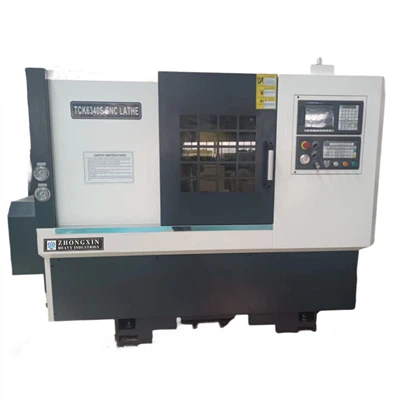
Adjusting the cutting parameters of a New CNC Vertical Lathe is a crucial aspect of achieving optimal machining results. As a supplier of New CNC Vertical Lathes, I understand the significance of these parameters and how they can impact the efficiency, quality, and cost of the machining process. In this blog post, I will share some insights on how to adjust the cutting parameters of a New CNC Vertical Lathe effectively.
Understanding Cutting Parameters
Before delving into the adjustment process, it's essential to understand the key cutting parameters involved in CNC vertical lathe operations. These parameters include cutting speed, feed rate, and depth of cut.
- Cutting Speed (Vc): This refers to the speed at which the cutting edge of the tool moves relative to the workpiece. It is typically measured in meters per minute (m/min) or surface feet per minute (SFM). The cutting speed affects the rate of material removal, tool life, and surface finish of the workpiece.
- Feed Rate (f): The feed rate is the distance the tool advances into the workpiece per revolution of the spindle. It is measured in millimeters per revolution (mm/r) or inches per revolution (ipr). The feed rate influences the chip thickness, surface finish, and cutting force.
- Depth of Cut (ap): The depth of cut is the distance the tool penetrates into the workpiece perpendicular to the machined surface. It is measured in millimeters (mm) or inches (in). The depth of cut affects the material removal rate, cutting force, and tool life.
Factors Affecting Cutting Parameters
Several factors need to be considered when adjusting the cutting parameters of a New CNC Vertical Lathe. These factors include:
- Workpiece Material: Different materials have different machinability characteristics. Harder materials require lower cutting speeds and feed rates to avoid excessive tool wear, while softer materials can be machined at higher speeds and feed rates.
- Tool Material and Geometry: The type of tool material (e.g., carbide, high-speed steel) and its geometry (e.g., rake angle, clearance angle) significantly impact the cutting parameters. Carbide tools, for example, can generally withstand higher cutting speeds than high-speed steel tools.
- Machine Capabilities: The power, rigidity, and spindle speed range of the CNC vertical lathe determine the maximum cutting parameters that can be used. It's important to operate within the machine's capabilities to ensure safe and efficient machining.
- Desired Surface Finish: If a high-quality surface finish is required, lower feed rates and cutting speeds may be necessary. Conversely, if the surface finish requirements are less stringent, higher feed rates and cutting speeds can be used to increase the material removal rate.
Step-by-Step Guide to Adjusting Cutting Parameters
Here is a step-by-step guide on how to adjust the cutting parameters of a New CNC Vertical Lathe:
Step 1: Select the Appropriate Tool
Choose a tool that is suitable for the workpiece material and the machining operation. Consider the tool material, geometry, and coating to ensure optimal performance. For example, if you are machining a hard material, a carbide tool with a positive rake angle and a wear-resistant coating may be a good choice.
Step 2: Determine the Initial Cutting Parameters
Based on the workpiece material, tool material, and machine capabilities, refer to the tool manufacturer's recommendations or machining handbooks to determine the initial cutting parameters. These recommendations provide a starting point for your machining operation.
Step 3: Conduct a Test Cut
Before starting the full machining operation, perform a test cut on a scrap piece of the same material as the workpiece. This allows you to evaluate the cutting performance and make any necessary adjustments to the cutting parameters. During the test cut, monitor the cutting force, tool wear, and surface finish of the workpiece.
Step 4: Evaluate the Test Cut Results
After the test cut, inspect the workpiece to assess the surface finish, dimensional accuracy, and chip formation. If the surface finish is poor, the cutting speed or feed rate may need to be adjusted. If the tool shows excessive wear, the cutting parameters may be too aggressive. Based on the evaluation results, make small adjustments to the cutting parameters and repeat the test cut until satisfactory results are achieved.
Step 5: Optimize the Cutting Parameters
Once you have obtained satisfactory results from the test cut, you can optimize the cutting parameters to further improve the machining efficiency. This may involve increasing the cutting speed or feed rate while maintaining the desired surface finish and tool life. However, it's important to make these adjustments gradually and monitor the machining process closely to avoid any potential issues.
Examples of Adjusting Cutting Parameters
Let's take a look at some examples of adjusting cutting parameters for different machining scenarios:
Example 1: Machining Aluminum
- Workpiece Material: Aluminum alloy
- Tool Material: Carbide
- Initial Cutting Parameters: Cutting speed (Vc) = 300 m/min, Feed rate (f) = 0.2 mm/r, Depth of cut (ap) = 2 mm
- Test Cut Results: The surface finish is good, but the material removal rate is relatively low.
- Adjustment: Increase the cutting speed to 400 m/min and the feed rate to 0.3 mm/r while keeping the depth of cut constant. Repeat the test cut to evaluate the results.
Example 2: Machining Steel
- Workpiece Material: Carbon steel
- Tool Material: Carbide
- Initial Cutting Parameters: Cutting speed (Vc) = 150 m/min, Feed rate (f) = 0.15 mm/r, Depth of cut (ap) = 1.5 mm
- Test Cut Results: The tool shows signs of wear, and the surface finish is not as smooth as desired.
- Adjustment: Decrease the cutting speed to 120 m/min and the feed rate to 0.1 mm/r while keeping the depth of cut constant. Repeat the test cut to evaluate the results.
Importance of Proper Cutting Parameter Adjustment
Proper adjustment of the cutting parameters is essential for several reasons:
- Improved Tool Life: By using the correct cutting parameters, you can reduce tool wear and extend the tool life. This helps to lower the tooling costs and increase the productivity of the machining operation.
- Enhanced Surface Finish: Adjusting the cutting parameters can significantly improve the surface finish of the workpiece. A smooth surface finish is often required for parts that need to fit precisely or have aesthetic requirements.
- Increased Material Removal Rate: Optimizing the cutting parameters allows you to increase the material removal rate without sacrificing the quality of the machined part. This leads to shorter machining times and higher production efficiency.
- Reduced Machining Costs: By minimizing tool wear, improving surface finish, and increasing the material removal rate, proper cutting parameter adjustment can help to reduce the overall machining costs.
Related Products
If you are interested in exploring other types of CNC lathes, we also offer a range of high-quality products, including the Dual Spindle CNC Lathe, the Ck6132 CNC Lathe, and the Precision CNC Lathe. These machines are designed to meet the diverse needs of different machining applications.


Conclusion
Adjusting the cutting parameters of a New CNC Vertical Lathe is a critical skill that can significantly impact the machining performance and quality. By understanding the key cutting parameters, considering the factors that affect them, and following a systematic approach to adjustment, you can achieve optimal machining results. Remember to conduct test cuts, evaluate the results, and make small adjustments as needed. If you have any questions or need further assistance with adjusting the cutting parameters of your CNC vertical lathe, please don't hesitate to contact us. We are here to help you optimize your machining operations and achieve the best possible results. Whether you are a small workshop or a large manufacturing facility, our team of experts can provide you with the support and guidance you need to make informed decisions about your machining processes. Contact us today to discuss your specific requirements and explore how our New CNC Vertical Lathes can meet your needs.
References
- ASM Handbook, Volume 16: Machining, ASM International.
- Machinery's Handbook, Industrial Press Inc.
- Tool Manufacturer's Catalogs and Technical Guides.