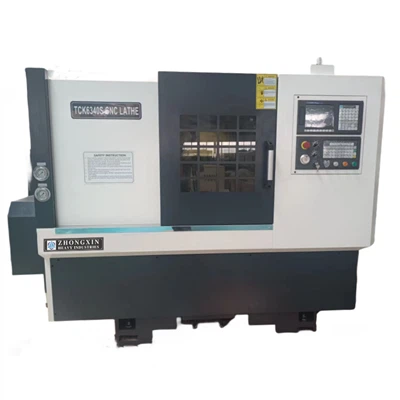
As a supplier of Manual Turret Lathes, I understand the importance of knowing how to operate the cross - slide on these machines. The cross - slide is a crucial component of a Manual Turret Lathe, allowing for precise control over the cutting tool's movement perpendicular to the workpiece's axis. In this blog post, I'll guide you through the process of operating the cross - slide on a Manual Turret Lathe, from basic setup to advanced techniques.
Understanding the Cross - Slide
Before we dive into the operation, it's essential to understand what the cross - slide is and its function. The cross - slide is a part of the lathe's carriage that moves horizontally across the lathe bed, perpendicular to the longitudinal axis of the workpiece. It is typically driven by a lead screw, which is turned by a handwheel. This movement enables the operator to control the depth of cut and the diameter of the workpiece during turning operations.

Pre - operation Checks
Before operating the cross - slide, you need to perform a series of pre - operation checks. First, ensure that the lathe is properly installed and leveled. A misaligned lathe can lead to inaccurate cuts and premature wear on the machine. Next, check the lubrication of the cross - slide. Adequate lubrication reduces friction and ensures smooth movement. You should also inspect the lead screw and the handwheel for any signs of damage or excessive wear.
Basic Operation
- Mounting the Tool
- First, select the appropriate cutting tool for your operation. The tool should be securely mounted in the tool post on the cross - slide. Make sure the tool is centered and at the correct height relative to the workpiece. Incorrect tool height can cause poor surface finish and inaccurate cuts.
- Zeroing the Cross - Slide
- To ensure accurate measurements, you need to zero the cross - slide. This is done by turning the handwheel until the cross - slide is at the desired starting position, usually at the outermost point of the workpiece. Then, set the dial on the handwheel to zero. This will serve as your reference point for all subsequent movements.
- Making a Cut
- To make a cut, turn the handwheel on the cross - slide in the appropriate direction. Clockwise rotation typically moves the cross - slide towards the workpiece, increasing the depth of cut. Counter - clockwise rotation moves it away from the workpiece. You need to turn the handwheel slowly and steadily to control the depth of cut accurately. For example, if you want to remove a small amount of material, turn the handwheel a small number of degrees.
- Measuring the Cut
- As you make the cut, you can use a caliper or a micrometer to measure the diameter of the workpiece. Compare the measured value with the desired diameter. If the diameter is larger than desired, you can make additional cuts by turning the handwheel further. If it is smaller, you may need to adjust your setup or start over with a new workpiece.
Advanced Techniques
- Taper Turning
- The cross - slide can be used in combination with the compound rest for taper turning. Taper turning is the process of creating a conical shape on the workpiece. To perform taper turning, you need to set the compound rest at the appropriate angle and then use the cross - slide to control the depth of cut as you feed the tool along the workpiece. This requires careful coordination between the movement of the cross - slide and the compound rest.
- Thread Cutting
- Thread cutting on a Manual Turret Lathe also involves the use of the cross - slide. When cutting threads, the cross - slide is used to control the depth of the thread. You need to make multiple passes, gradually increasing the depth of cut with each pass until the desired thread depth is achieved. The lead screw on the cross - slide is used to ensure accurate thread pitch.
- Facing Operations
- Facing is the process of cutting the end of the workpiece to make it flat. The cross - slide is used to move the cutting tool across the end of the workpiece. You start at the outer diameter and gradually move towards the center. The key is to maintain a consistent feed rate and depth of cut to achieve a smooth surface finish.
Maintenance and Troubleshooting
- Maintenance
- Regular maintenance of the cross - slide is essential for its proper operation. Clean the cross - slide regularly to remove chips and debris. Lubricate the lead screw and the slideways as recommended by the manufacturer. Check the alignment of the cross - slide periodically to ensure accurate movement.
- Troubleshooting
- If you encounter problems with the cross - slide, such as rough movement or inaccurate positioning, there are several possible causes. First, check for any debris or chips that may be blocking the movement. If the lead screw is worn, it may need to be replaced. Also, make sure the handwheel is properly tightened and that there is no play in the mechanism.
Conclusion
Operating the cross - slide on a Manual Turret Lathe requires a combination of knowledge, skill, and practice. By understanding the basic operation, advanced techniques, and maintenance requirements, you can make the most of your Manual Turret Lathe. Whether you are a hobbyist or a professional machinist, mastering the cross - slide will allow you to create precise and high - quality parts.

If you are interested in purchasing a Manual Turret Lathe, a High Precision Manual Lathe, or are looking for a Manual Lathe For Sale, please feel free to contact us for more information and to start a procurement discussion.
References
- "Manual Lathe Operations Handbook"
- Manufacturer's Manual for Manual Turret Lathes