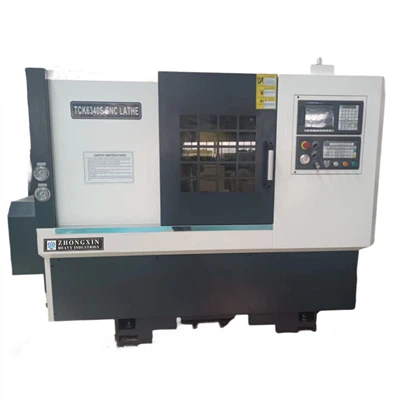
As a supplier of Gap Bed Engine Lathes, I often get asked about the available feed rates on these machines. Feed rates play a crucial role in the performance and efficiency of a lathe, and understanding them is essential for anyone looking to make the most of their machining operations. In this blog post, I'll break down the different feed rates you can expect from a Gap Bed Engine Lathe and explain how they can impact your work.
What is a Gap Bed Engine Lathe?
Before we dive into feed rates, let's quickly go over what a Gap Bed Engine Lathe is. A Gap Bed Engine Lathe is a versatile machine tool used for turning, facing, boring, and threading operations on a variety of materials, including metal, wood, and plastics. What sets it apart from other lathes is the "gap" in the bed, which allows for the machining of larger diameter workpieces. You can check out more details about Gap Bed Engine Lathe on our website.
Types of Feed Rates
There are two main types of feed rates on a lathe: longitudinal feed and cross feed.
Longitudinal Feed
Longitudinal feed refers to the movement of the cutting tool along the length of the workpiece. This is the most common type of feed used in turning operations. The longitudinal feed rate determines how quickly the tool moves along the workpiece, and it's typically measured in millimeters per revolution (mm/r) or inches per revolution (ipr).
On a Gap Bed Engine Lathe, the longitudinal feed rate can be adjusted to suit the specific requirements of the job. A higher feed rate will result in faster material removal, but it may also lead to a rougher finish. Conversely, a lower feed rate will produce a smoother finish but will take longer to complete the operation.
Cross Feed
Cross feed, on the other hand, is the movement of the cutting tool perpendicular to the length of the workpiece. This type of feed is used for facing and boring operations. Similar to longitudinal feed, the cross feed rate is measured in millimeters per revolution or inches per revolution.
The cross feed rate also needs to be carefully selected based on the material being machined, the type of cutting tool, and the desired finish. A higher cross feed rate can increase productivity, but it may also cause the tool to wear out more quickly or result in a poor surface finish.
Factors Affecting Feed Rates
Several factors can influence the appropriate feed rate for a given machining operation on a Gap Bed Engine Lathe. Here are some of the key considerations:
Material Properties
The type of material being machined is one of the most important factors in determining the feed rate. Different materials have different hardness, toughness, and machinability characteristics. For example, softer materials like aluminum can generally be machined at higher feed rates than harder materials like steel.
Cutting Tool Geometry
The geometry of the cutting tool, including the rake angle, clearance angle, and nose radius, can also affect the feed rate. A tool with a larger nose radius can typically handle higher feed rates without causing excessive wear or poor surface finish.
Machine Capability
The power and rigidity of the Gap Bed Engine Lathe itself play a role in determining the maximum feed rate. A more powerful and rigid machine can handle higher feed rates without experiencing excessive vibration or deflection, which can lead to poor machining results.
Desired Surface Finish
The desired surface finish of the workpiece is another important factor. If a high-quality surface finish is required, a lower feed rate may be necessary to minimize the amount of cutting force and reduce the risk of tool marks or roughness.


Available Feed Rates on Our Gap Bed Engine Lathes
At our company, we offer a range of Gap Bed Engine Lathes with different feed rate capabilities. Our Gap Bed Lathe CS6250C is a popular model that provides a wide range of longitudinal and cross feed rates to meet the needs of various machining applications.
The longitudinal feed rates on the Gap Bed Lathe CS6250C range from 0.08 mm/r to 1.59 mm/r, allowing for both fine finishing and high-speed roughing operations. The cross feed rates range from 0.04 mm/r to 0.795 mm/r, providing flexibility for facing and boring tasks.
These feed rates are adjustable through the lathe's gearbox or electronic control system, depending on the model. This allows operators to easily select the appropriate feed rate for each job, ensuring optimal performance and efficiency.
Choosing the Right Feed Rate
Selecting the right feed rate for a machining operation can be a bit tricky, but with a little experience and knowledge, you can make an informed decision. Here are some general guidelines to help you choose the appropriate feed rate:
Start with the Manufacturer's Recommendations
The manufacturer of the cutting tool or the lathe will often provide recommended feed rates for different materials and operations. These recommendations are a good starting point, but you may need to adjust them based on your specific circumstances.
Consider the Material and Tool
As mentioned earlier, the type of material and the cutting tool geometry are important factors in determining the feed rate. Harder materials and tools with smaller nose radii generally require lower feed rates.
Test and Adjust
It's always a good idea to perform a test cut on a scrap piece of material before starting the actual machining operation. This will allow you to see how the tool performs at a given feed rate and make any necessary adjustments.
Conclusion
Feed rates are an important aspect of operating a Gap Bed Engine Lathe. By understanding the different types of feed rates, the factors that affect them, and how to choose the right feed rate for your application, you can improve the efficiency and quality of your machining operations.
If you're interested in learning more about our Gap Bed Engine Lathes or have any questions about feed rates, please don't hesitate to contact us. We're here to help you find the right machine for your needs and provide you with the support and advice you need to get the most out of it. Whether you're a small shop looking to upgrade your equipment or a large manufacturer in need of a high-performance lathe, we have the solution for you. Let's start a conversation and see how we can work together to take your machining to the next level.
References
- "Machining Handbook," Industrial Press Inc.
- "Lathe Operations Manual," Various Manufacturers