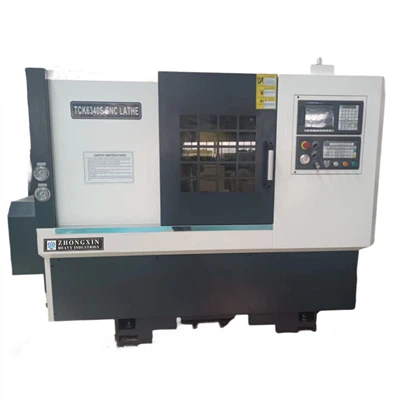
Investing in a CNC lathe machine is a significant decision for any manufacturing business. As a supplier of CNC lathe machines, I've witnessed firsthand how these advanced pieces of equipment can revolutionize a company's production capabilities and bottom line. In this blog post, I'll explore the return on investment (ROI) for a CNC lathe machine, considering various factors that impact the financial outcome of such an investment.
Initial Investment and Cost Considerations
The first step in understanding the ROI of a CNC lathe machine is to evaluate the initial investment. The cost of a CNC lathe can vary widely depending on its size, features, brand, and level of automation. For example, a basic Heavy Duty Metal Lathe may have a lower upfront cost compared to a more advanced Ck6140 CNC Lathe with additional capabilities such as live tooling, Y-axis functionality, and advanced controls.
In addition to the purchase price, other costs associated with acquiring a CNC lathe machine include installation, training, tooling, and ongoing maintenance. Installation may require adjustments to the factory floor, electrical and plumbing work, and proper alignment to ensure optimal performance. Training is essential for operators to learn how to program and operate the machine effectively, which may involve on-site training provided by the supplier or external training courses. Tooling costs can add up quickly, especially if specialized cutting tools are required for specific applications. Finally, regular maintenance is necessary to keep the machine in good working condition and prevent breakdowns, which can result in costly downtime.
Productivity and Efficiency Gains
One of the primary benefits of investing in a CNC lathe machine is the significant improvement in productivity and efficiency. Unlike manual lathes, which require skilled operators to control the cutting process, CNC lathes are automated and can perform complex machining operations with high precision and repeatability. This allows for faster production times, reduced cycle times, and increased throughput.


For example, a CNC lathe can run unattended for extended periods, allowing operators to focus on other tasks such as loading and unloading parts, setting up new jobs, or performing quality inspections. This not only increases productivity but also reduces labor costs by minimizing the need for multiple operators. Additionally, CNC lathes can perform multiple operations in a single setup, eliminating the need for manual handling and reducing the risk of errors and rework.
Another advantage of CNC lathes is their ability to produce parts with consistent quality. The use of computer-controlled programming ensures that each part is machined to the exact specifications, resulting in fewer defects and higher customer satisfaction. This can lead to increased sales and repeat business, further enhancing the ROI of the investment.
Quality and Precision
In today's competitive manufacturing environment, quality and precision are essential for success. CNC lathe machines offer superior accuracy and repeatability compared to manual lathes, making them ideal for producing high-quality parts with tight tolerances. The use of advanced control systems and servo motors allows for precise control of the cutting tool, resulting in smooth surface finishes and accurate dimensions.
For industries such as aerospace, automotive, and medical, where precision is critical, CNC lathes are often the preferred choice. These industries require parts that meet strict quality standards and specifications, and a CNC lathe machine can deliver the level of precision required. By investing in a CNC lathe, manufacturers can improve the quality of their products, reduce scrap rates, and increase customer satisfaction, all of which contribute to a higher ROI.
Flexibility and Versatility
Another important factor to consider when evaluating the ROI of a CNC lathe machine is its flexibility and versatility. Unlike traditional lathes, which are typically designed for specific types of machining operations, CNC lathes can be programmed to perform a wide range of tasks, including turning, facing, threading, drilling, and milling. This makes them suitable for a variety of industries and applications, from small job shops to large-scale production facilities.
For example, a Lathe Milling Machine Combo 3 in 1 allows manufacturers to perform both turning and milling operations on a single machine, eliminating the need for multiple pieces of equipment and reducing setup times. This not only increases productivity but also provides greater flexibility in terms of the types of parts that can be produced.
Additionally, CNC lathes can be easily reprogrammed to accommodate changes in product design or production requirements. This allows manufacturers to quickly adapt to market demands and introduce new products to the market faster, giving them a competitive edge.
Long-Term Value and Resale Potential
When considering the ROI of a CNC lathe machine, it's important to look beyond the initial investment and consider the long-term value of the equipment. A high-quality CNC lathe machine is a durable and reliable piece of equipment that can provide years of service with proper maintenance and care. This means that the investment can continue to generate value for the business over an extended period of time.
In addition, CNC lathe machines often have a good resale value, especially if they are well-maintained and kept up-to-date with the latest technology. This can provide an additional source of income when it comes time to upgrade or replace the machine, further enhancing the overall ROI of the investment.
Calculating the Return on Investment
To calculate the ROI of a CNC lathe machine, you need to consider both the costs and the benefits associated with the investment. The formula for calculating ROI is:
ROI = (Net Profit / Cost of Investment) x 100%
The net profit is the total revenue generated from the use of the CNC lathe machine minus the total costs associated with the investment, including the purchase price, installation, training, tooling, maintenance, and operating costs. The cost of investment is the total amount of money spent on acquiring and setting up the machine.
For example, let's say you purchase a CNC lathe machine for $100,000 and spend an additional $20,000 on installation, training, and tooling. The total cost of investment is $120,000. Over the course of a year, the machine generates $200,000 in revenue, and the total operating costs, including maintenance, electricity, and labor, are $80,000. The net profit is $200,000 - $80,000 = $120,000.
Using the ROI formula, we can calculate the ROI as follows:
ROI = ($120,000 / $120,000) x 100% = 100%
This means that the investment in the CNC lathe machine has paid for itself in the first year and generated a 100% return on investment.
Conclusion
In conclusion, investing in a CNC lathe machine can provide significant benefits for manufacturing businesses, including increased productivity, improved quality, greater flexibility, and long-term value. While the initial investment may be substantial, the potential return on investment can be significant, especially when considering the long-term benefits of the equipment.
If you're considering investing in a CNC lathe machine for your business, I encourage you to contact us to discuss your specific needs and requirements. Our team of experts can help you select the right machine for your application, provide you with a detailed cost analysis and ROI calculation, and offer ongoing support and service to ensure the success of your investment.
References
- "CNC Lathe Machine Basics." Manufacturing.net.
- "The Benefits of CNC Lathe Machines." Modern Machine Shop.
- "How to Calculate Return on Investment (ROI)." Investopedia.