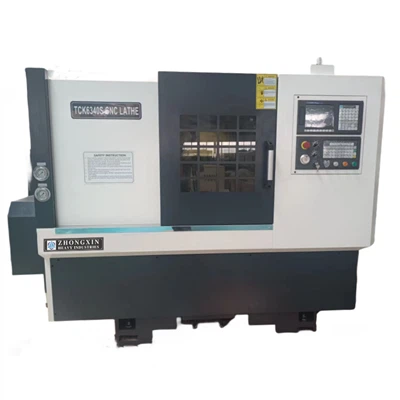
Hey there! As a supplier of manual lathes, I often get asked about all sorts of technical stuff. One question that pops up a lot is, "What is the cutting speed on a manual lathe?" Well, let's dive right into it.
First off, cutting speed is super important when it comes to using a manual lathe. It's basically how fast the cutting tool moves across the workpiece. Think of it like how fast you'd drive a car on a road. If you go too fast, you might lose control; if you go too slow, it'll take forever to get to your destination. The same goes for cutting speed on a manual lathe.
The cutting speed is usually measured in surface feet per minute (SFM) in the imperial system or meters per minute (m/min) in the metric system. It depends on a bunch of factors, like the type of material you're cutting, the kind of cutting tool you're using, and the diameter of the workpiece.
Let's talk about the material first. Different materials have different properties, and that affects the cutting speed. For example, if you're cutting soft materials like aluminum, you can usually go at a higher cutting speed. Aluminum is pretty easy to cut through, so you can push the cutting tool a bit faster. On the other hand, if you're dealing with hard materials like stainless steel or titanium, you've got to slow down. These materials are tough, and if you try to cut them too fast, you'll wear out your cutting tool really quickly, and you might not get a good finish on the workpiece.
The type of cutting tool also plays a huge role. There are different kinds of cutting tools, like high - speed steel (HSS) and carbide. HSS tools are more affordable and can be used for a variety of materials, but they have a lower cutting speed compared to carbide tools. Carbide tools are more expensive, but they can handle higher cutting speeds and are great for cutting hard materials. So, when you're choosing a cutting tool, you've got to think about the material you're cutting and how fast you want to cut it.
The diameter of the workpiece is another factor. The larger the diameter of the workpiece, the higher the cutting speed needs to be to maintain the same surface speed. This is because the outer edge of a larger - diameter workpiece has to travel a longer distance in the same amount of time compared to a smaller - diameter workpiece.
Now, how do you calculate the cutting speed? Well, there's a formula for that. The formula for calculating the cutting speed (SFM) is:
SFM = (π × D × RPM) / 12
Where D is the diameter of the workpiece in inches and RPM is the revolutions per minute of the lathe spindle. If you're using the metric system, the formula is:
m/min = (π × D × RPM) / 1000
Where D is the diameter of the workpiece in millimeters.
Let's say you've got a workpiece with a diameter of 2 inches and you want to cut it at a speed of 100 SFM. You can use the formula to figure out the RPM you need. Rearranging the formula for RPM, we get:
RPM = (SFM × 12) / (π × D)
Plugging in the values, RPM = (100 × 12) / (π × 2) ≈ 191 RPM
So, you'd set your lathe spindle to rotate at about 191 RPM to achieve a cutting speed of 100 SFM on a 2 - inch diameter workpiece.

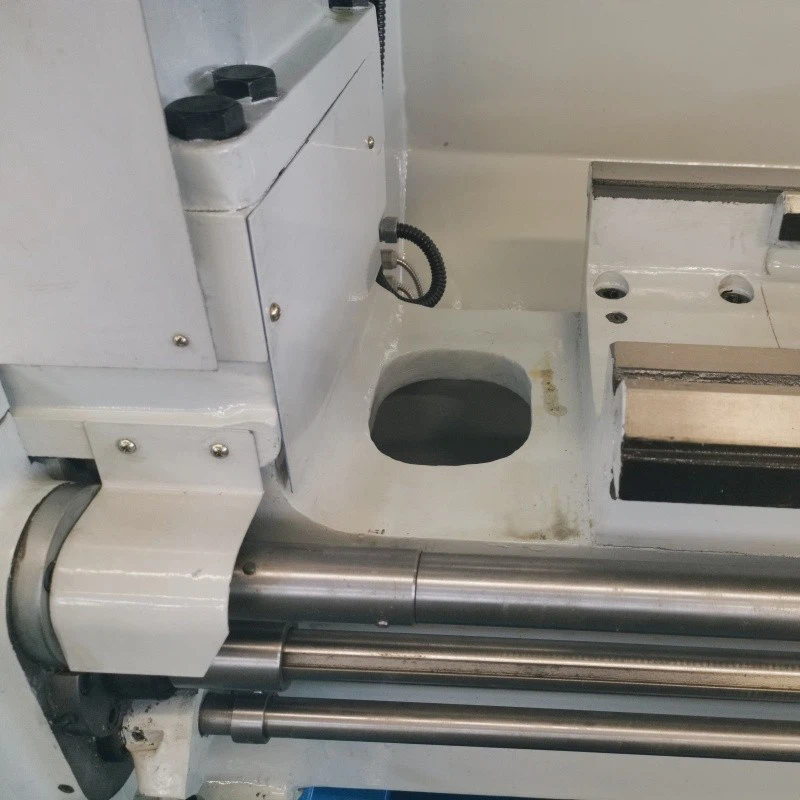
At our company, we offer a wide range of manual lathes that can handle different cutting speeds. Our Manual Turret Lathe is a great option for those who need a versatile lathe. It's got a solid construction and can be adjusted to different cutting speeds depending on your needs. Whether you're cutting soft or hard materials, this lathe can do the job.
If you're looking for a lathe that offers high precision, our High Precision Manual Lathe is the way to go. It's designed to give you accurate cuts, and you can control the cutting speed precisely to get the best results.
And if you're in the market for a manual lathe, check out our Manual Lathe For Sale. We've got a variety of models at competitive prices.
Getting the right cutting speed is crucial for the quality of your work. If the cutting speed is too high, you might end up with a rough finish on the workpiece, and the cutting tool will wear out quickly. If the cutting speed is too low, it'll take a long time to complete the job, and you might not be as productive.
So, how do you know if you've got the right cutting speed? Well, one way is to look at the chips that are being produced. If the chips are long, continuous, and have a nice, shiny appearance, that's a good sign that you're cutting at the right speed. If the chips are short, broken, or have a burnt color, it could mean that the cutting speed is too high or too low.
Another thing to keep in mind is that you might need to make some adjustments as you're cutting. The material might have some variations in hardness, or the cutting tool might start to wear down. So, it's a good idea to keep an eye on the process and make small adjustments to the cutting speed if necessary.
In conclusion, understanding the cutting speed on a manual lathe is essential for anyone who uses these machines. It depends on factors like the material, the cutting tool, and the workpiece diameter. By calculating the right cutting speed and making adjustments as needed, you can get high - quality results and make the most of your manual lathe.
If you're interested in our manual lathes or have any questions about cutting speeds or anything related to manual lathes, don't hesitate to reach out. We're here to help you find the right solution for your needs. Whether you're a hobbyist or a professional in the machining industry, we've got the products and the knowledge to support you.
References
- "Machining Fundamentals" by various industry experts
- Manufacturer's manuals for manual lathes