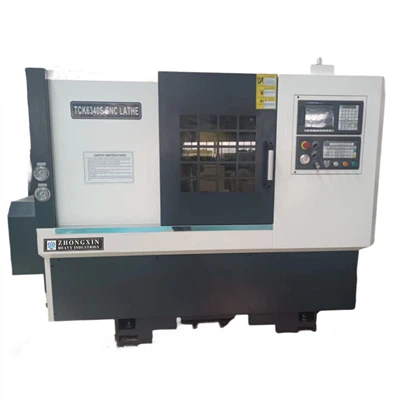
When it comes to metalworking and machining, lathes are indispensable tools. Among the various types of lathes available in the market, gap bed lathes and bench lathes are two commonly used options, each with its own distinct features and applications. As a supplier of gap bed lathes, I am often asked about the differences between these two types of lathes. In this blog post, I will delve into the characteristics, advantages, and suitable applications of gap bed lathes and bench lathes to help you make an informed decision when choosing the right lathe for your needs.
What is a Gap Bed Lathe?
A gap bed lathe, also known as a gap bed engine lathe, is a versatile and powerful machine designed for a wide range of turning operations. The defining feature of a gap bed lathe is the presence of a removable section in the bed near the headstock, creating a gap. This gap allows for the machining of larger diameter workpieces that would otherwise be restricted by the standard bed length.
One of the key advantages of a gap bed lathe is its ability to handle large and irregularly shaped workpieces. With the gap in the bed, operators can turn parts with diameters greater than the swing over the bed, making it ideal for tasks such as machining large pulleys, wheels, and other components. The Gap Bed Engine Lathe is a prime example of a high - performance gap bed lathe that offers excellent precision and durability.
Gap bed lathes are typically larger and more robust than bench lathes. They are equipped with powerful motors and heavy - duty components to handle the increased load and stress associated with machining large workpieces. The construction of a gap bed lathe is designed to provide stability and rigidity, ensuring accurate and consistent machining results.
In addition to their capacity for large - diameter workpieces, gap bed lathes also offer a wide range of speed and feed options. This flexibility allows operators to optimize the machining process for different materials and operations, whether it's roughing, finishing, or threading. The Gap Bed Lathe CS6250C is a popular model that provides a comprehensive set of speed and feed controls, enabling precise and efficient machining.
What is a Bench Lathe?
A bench lathe, as the name suggests, is a smaller lathe that is designed to be mounted on a workbench. It is a compact and lightweight machine, making it suitable for small - scale machining operations, prototyping, and hobbyist use. Bench lathes are commonly used in educational institutions, small workshops, and home garages.
Bench lathes are generally more affordable than gap bed lathes, which makes them an attractive option for those on a budget or with limited space. They are also easier to operate and maintain, making them a great choice for beginners or those with less machining experience.
Despite their smaller size, bench lathes can still perform a variety of turning operations, including facing, turning, boring, and threading. However, their capacity is limited compared to gap bed lathes. Bench lathes typically have a smaller swing over the bed, which restricts the maximum diameter of the workpieces that can be machined. They also have less power and may not be suitable for heavy - duty or large - scale machining tasks.
The construction of a bench lathe is more lightweight and less rigid than that of a gap bed lathe. While this may affect the accuracy and surface finish for some applications, modern bench lathes are still capable of producing high - quality work when used within their limitations. Bench lathes are often used for machining small parts such as jewelry, model components, and precision instruments.
Key Differences
Size and Capacity
The most obvious difference between a gap bed lathe and a bench lathe is their size and capacity. Gap bed lathes are large and heavy - duty machines with the ability to handle large - diameter workpieces. They have a greater swing over the bed and can accommodate longer and heavier workpieces. In contrast, bench lathes are small and compact, designed for small - scale machining with limited workpiece size.
Power and Performance
Gap bed lathes are equipped with more powerful motors and heavy - duty components to handle the increased load and stress of machining large workpieces. They offer higher torque and a wider range of speed and feed options, which allows for more efficient and precise machining. Bench lathes, on the other hand, have less power and may have a more limited range of speed and feed settings, which can restrict their performance for certain applications.
Cost
Cost is another significant difference between the two types of lathes. Gap bed lathes are generally more expensive due to their larger size, more powerful components, and higher machining capacity. Bench lathes are more affordable, making them accessible to a wider range of users, including hobbyists and small - business owners.
Application
The application of a lathe is closely related to its size and capacity. Gap bed lathes are used in industrial settings for large - scale production, such as in manufacturing plants, shipyards, and heavy machinery industries. They are ideal for machining large and complex components that require high precision and heavy - duty machining. Bench lathes, on the other hand, are commonly used in educational institutions for teaching basic machining skills, in small workshops for prototyping and small - batch production, and by hobbyists for personal projects.
Choosing the Right Lathe for Your Needs
When deciding between a gap bed lathe and a bench lathe, several factors need to be considered.
If you are working in an industrial setting and need to machine large - diameter workpieces on a regular basis, a gap bed lathe is the obvious choice. Its high capacity, power, and precision make it suitable for heavy - duty and large - scale machining operations. However, if you have limited space, a small budget, or are mainly involved in small - scale projects and prototyping, a bench lathe may be more appropriate.
It's also important to consider your level of experience. Bench lathes are generally easier to operate and maintain, making them a good choice for beginners. Gap bed lathes, while more powerful and versatile, require more skill and experience to operate effectively.


Conclusion
In summary, gap bed lathes and bench lathes are two distinct types of lathes, each with its own advantages and suitable applications. As a supplier of gap bed lathes, I understand the importance of choosing the right machine for your specific needs. Whether you require the high - capacity and precision of a gap bed lathe or the affordability and simplicity of a bench lathe, it's crucial to make an informed decision based on your machining requirements, budget, and available space.
If you are interested in learning more about our gap bed lathes or have any questions regarding the selection of a lathe, please feel free to contact us for a consultation. Our team of experts is ready to assist you in finding the perfect lathe solution for your business.
References
- Groover, M. P. (2010). Fundamentals of Modern Manufacturing: Materials, Processes, and Systems. Wiley.
- Trent, E. M., & Wright, P. K. (2000). Metal Cutting. Butterworth - Heinemann.