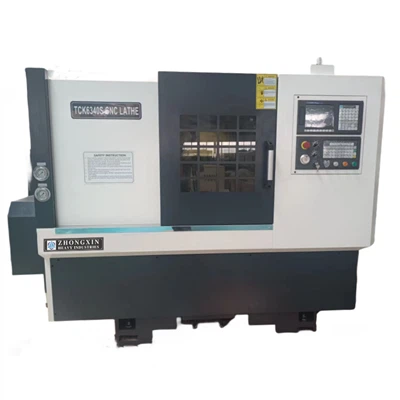
In the realm of machining, lathes are indispensable tools that play a crucial role in metalworking and various precision manufacturing processes. Among the different types of lathes available in the market, gap bed lathes and tool room lathes are two commonly used options, each with its own unique features, capabilities, and applications. As a gap bed lathe supplier, I have had the privilege of witnessing firsthand the differences between these two types of lathes and the specific advantages that gap bed lathes offer in certain machining scenarios. In this blog post, I will delve into the key differences between a gap bed lathe and a tool room lathe, providing insights into their respective designs, functions, and suitable applications.
Design and Structure
One of the primary differences between a gap bed lathe and a tool room lathe lies in their design and structure. A gap bed lathe is characterized by a removable section in the bed near the headstock, which creates a “gap” in the bed. This gap allows for the machining of larger diameter workpieces that would otherwise be restricted by the normal swing diameter of the lathe. When the gap section is removed, the lathe can accommodate workpieces with a larger diameter, providing greater versatility in machining operations.
On the other hand, a tool room lathe typically has a solid, continuous bed without a removable gap section. This design provides a more rigid and stable platform for precision machining operations, making it ideal for tasks that require high levels of accuracy and surface finish. The solid bed construction of a tool room lathe minimizes vibrations and deflections during machining, ensuring consistent and reliable results.
Machining Capabilities
The design differences between gap bed lathes and tool room lathes also translate into differences in their machining capabilities. A gap bed lathe is well-suited for machining large diameter workpieces, such as flywheels, pulleys, and large gears. The ability to remove the gap section allows the lathe to handle workpieces with diameters that exceed the normal swing capacity of the machine, making it a valuable tool for industries that require the machining of large components.
In addition to its large diameter machining capabilities, a gap bed lathe can also perform a wide range of other machining operations, including turning, facing, threading, and boring. The versatility of a gap bed lathe makes it a popular choice for general machining shops and manufacturing facilities that deal with a variety of workpiece sizes and shapes.
In contrast, a tool room lathe is designed primarily for precision machining operations. It is commonly used in tool and die making, mold making, and other applications that require high levels of accuracy and surface finish. The solid bed construction and precise control mechanisms of a tool room lathe enable it to produce parts with tight tolerances and excellent surface quality.
Tool room lathes are often equipped with advanced features such as variable speed controls, digital readouts, and high-precision spindles, which further enhance their machining capabilities. These features allow operators to achieve precise control over the machining process, resulting in parts that meet the most demanding specifications.
Applications
The differences in design and machining capabilities between gap bed lathes and tool room lathes also determine their respective applications. Gap bed lathes are commonly used in industries such as automotive, aerospace, and heavy machinery manufacturing, where the machining of large diameter workpieces is often required. They are also suitable for general machining shops that need to handle a variety of workpiece sizes and shapes.
For example, in the automotive industry, gap bed lathes are used to machine engine components such as crankshafts, camshafts, and flywheels. These components often have large diameters and require precise machining to ensure proper fit and function. The ability of a gap bed lathe to handle large workpieces makes it an ideal choice for this type of application.
Tool room lathes, on the other hand, are primarily used in industries that require high levels of precision and accuracy, such as tool and die making, mold making, and aerospace manufacturing. They are also commonly used in research and development laboratories and educational institutions for prototyping and small-scale production.
In tool and die making, tool room lathes are used to machine precision components such as punches, dies, and molds. These components require tight tolerances and excellent surface finish to ensure proper functionality and longevity. The high precision and accuracy of a tool room lathe make it the preferred choice for this type of application.


Advantages of Gap Bed Lathes
As a gap bed lathe supplier, I believe that gap bed lathes offer several advantages over tool room lathes in certain machining scenarios. One of the main advantages of a gap bed lathe is its versatility. The ability to remove the gap section allows the lathe to handle a wide range of workpiece sizes, from small to large diameter components. This makes it a valuable tool for machining shops that need to be able to handle different types of workpieces without having to invest in multiple machines.
Another advantage of a gap bed lathe is its relatively lower cost compared to a tool room lathe. Gap bed lathes are generally less expensive to purchase and maintain, making them a more affordable option for small and medium-sized machining shops. Additionally, the simplicity of the gap bed lathe design makes it easier to operate and maintain, reducing the need for highly skilled operators.
Gap bed lathes are also known for their durability and reliability. The robust construction of the lathe, combined with its simple design, ensures that it can withstand heavy use and harsh machining conditions. This makes it a long-lasting investment for machining shops that require a reliable and efficient lathe for their operations.
Conclusion
In conclusion, the differences between a gap bed lathe and a tool room lathe are significant and are primarily determined by their design, machining capabilities, and applications. Gap bed lathes are characterized by their removable gap section, which allows for the machining of large diameter workpieces, and their versatility in handling a wide range of workpiece sizes. They are commonly used in industries that require the machining of large components, such as automotive, aerospace, and heavy machinery manufacturing.
Tool room lathes, on the other hand, are designed for precision machining operations and are commonly used in industries that require high levels of accuracy and surface finish, such as tool and die making, mold making, and aerospace manufacturing. They offer advanced features and precise control mechanisms that enable operators to achieve tight tolerances and excellent surface quality.
As a gap bed lathe supplier, I understand the importance of choosing the right lathe for your specific machining needs. If you are looking for a versatile and cost-effective lathe that can handle a wide range of workpiece sizes, a gap bed lathe may be the right choice for you. Our Gap Bed Engine Lathe and Gap Bed Lathe CS6250C are designed to provide high performance and reliability, allowing you to achieve your machining goals efficiently and effectively.
If you have any questions or would like to discuss your specific machining requirements, please do not hesitate to contact us. Our team of experts is always ready to assist you in choosing the right lathe for your needs and to provide you with the support and guidance you need to make an informed decision.
References
- Groover, M. P. (2016). Fundamentals of Modern Manufacturing: Materials, Processes, and Systems. Wiley.
- Kalpakjian, S., & Schmid, S. R. (2018). Manufacturing Engineering and Technology. Pearson.
- Trent, E. M., & Wright, P. K. (2000). Metal Cutting. Butterworth-Heinemann.