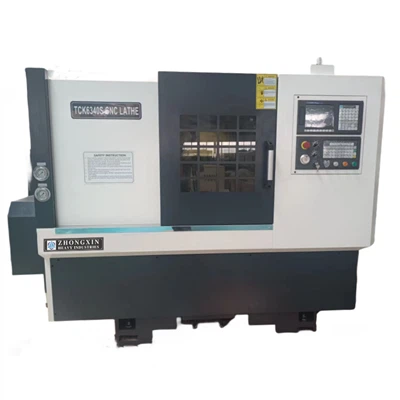
When it comes to industrial machinery, understanding the acoustic noise levels during operation is crucial for both the well - being of operators and the overall working environment. As a supplier of the Ck6150 CNC Lathe, I am often asked about the acoustic noise levels of this particular machine. In this blog post, I will delve into the factors influencing the noise levels of the Ck6150 CNC Lathe, the typical noise levels one can expect, and the implications of these noise levels in a workshop setting.
Factors Influencing the Acoustic Noise Levels of the Ck6150 CNC Lathe
The acoustic noise generated by the Ck6150 CNC Lathe during operation is the result of several interacting factors. First and foremost, the spindle is a major source of noise. The spindle rotates at high speeds to drive the workpiece, and the mechanical friction and vibration within the spindle assembly can produce significant noise. The quality of the spindle bearings, the balance of the rotating parts, and the speed at which the spindle operates all play a role in determining the noise level. For example, if the spindle bearings are worn out or not properly lubricated, the noise can increase substantially.
Another significant factor is the cutting process. When the cutting tool engages with the workpiece, there is a high - energy interaction that generates noise. The type of material being cut, the cutting speed, the feed rate, and the depth of cut all affect the noise produced during cutting. Harder materials generally require more force to cut, which can lead to louder noise levels. Similarly, higher cutting speeds and deeper cuts tend to generate more noise compared to slower speeds and shallower cuts.
The motor of the CNC lathe is also a source of noise. The motor converts electrical energy into mechanical energy to power the various components of the lathe. The design of the motor, its power rating, and the efficiency of its cooling system can influence the noise it produces. A poorly designed or overloaded motor may generate more noise due to increased vibration and heat.
The structural design of the lathe itself can impact the noise levels. A rigid and well - designed frame can help dampen vibrations and reduce noise transmission. On the other hand, a lathe with a weak or poorly constructed frame may amplify vibrations, leading to higher noise levels. Additionally, the presence of loose parts or improper assembly can cause rattling and additional noise.
Typical Acoustic Noise Levels of the Ck6150 CNC Lathe
Under normal operating conditions, the acoustic noise levels of the Ck6150 CNC Lathe typically range from 70 to 85 decibels (dB). At idle, when the lathe is running without any cutting operation, the noise level is usually around 70 - 75 dB. This is comparable to the noise level of a normal conversation in a busy office.


During light cutting operations, such as when using a small cutting tool and a low feed rate on a relatively soft material, the noise level may increase to around 75 - 80 dB. This is similar to the noise level of a vacuum cleaner.
When performing heavy - duty cutting operations, such as cutting hard materials at high speeds and with a large depth of cut, the noise level can reach up to 80 - 85 dB. This is equivalent to the noise level of a busy city street.
It is important to note that these are approximate values, and the actual noise levels may vary depending on the specific configuration of the lathe, the condition of its components, and the operating parameters.
Implications of the Noise Levels in a Workshop Setting
The acoustic noise levels of the Ck6150 CNC Lathe have several implications in a workshop setting. From an operator's perspective, prolonged exposure to high - noise levels can have a negative impact on hearing. According to occupational health and safety standards, continuous exposure to noise levels above 85 dB for an extended period can cause permanent hearing damage. Therefore, it is essential for operators to wear appropriate hearing protection, such as earplugs or earmuffs, when working with the lathe, especially during heavy - duty cutting operations.
In addition to the health risks, high noise levels can also affect the communication and concentration of workers in the workshop. Excessive noise can make it difficult for operators to communicate effectively with each other, which can lead to misunderstandings and potential safety hazards. It can also be a distraction, reducing the operator's ability to focus on the task at hand and increasing the risk of errors.
The noise levels can also have an impact on the overall working environment. A noisy workshop can be unpleasant for all employees, leading to decreased job satisfaction and productivity. Moreover, if the workshop is located in an area with noise regulations, exceeding the permitted noise levels can result in fines and legal issues.
Mitigating the Acoustic Noise Levels
To reduce the acoustic noise levels of the Ck6150 CNC Lathe, several measures can be taken. Regular maintenance is crucial. This includes checking and replacing worn - out parts, such as spindle bearings and cutting tools, and ensuring proper lubrication of all moving components. A well - maintained lathe is less likely to generate excessive noise.
Optimizing the cutting parameters can also help reduce noise. By selecting the appropriate cutting speed, feed rate, and depth of cut for the material being cut, the energy required for cutting can be minimized, thereby reducing the noise generated during the cutting process.
Installing noise - reducing enclosures or barriers around the lathe can be an effective way to contain the noise. These enclosures are designed to absorb and reflect sound waves, preventing them from spreading throughout the workshop. However, it is important to ensure that the enclosures do not interfere with the operation and maintenance of the lathe.
Using vibration - damping materials and anti - vibration mounts can also help reduce noise. These materials absorb and dissipate vibrations, preventing them from being transmitted to the surrounding environment.
The Ck6150 CNC Lathe in Comparison to Other Lathes
Compared to some other CNC lathes on the market, the Ck6150 CNC Lathe offers a relatively good balance between performance and noise levels. There are smaller CNC lathes, such as the Small CNC Lathe with Live Tooling, which may generate less noise due to their smaller size and lower power requirements. However, they may not be suitable for heavy - duty applications.
On the other hand, heavy - duty CNC lathes, like the Cnc Lathe Machine Heavy Duty, may have higher noise levels due to their larger motors and more powerful cutting capabilities. The Ck6150 CNC Lathe provides a middle - ground solution, offering sufficient power for a wide range of applications while keeping the noise levels within an acceptable range.
If you are looking for a small - sized CNC lathe with good performance, you might also consider the Best Small Cnc Lathes. These lathes are designed to be compact and efficient, but they may have different noise characteristics compared to the Ck6150.
Conclusion and Call to Action
In conclusion, understanding the acoustic noise levels of the Ck6150 CNC Lathe is essential for creating a safe and productive working environment. By being aware of the factors that influence the noise levels and taking appropriate measures to mitigate them, operators can reduce the impact of noise on their health and well - being.
If you are in the market for a reliable and high - performance CNC lathe, the Ck6150 is an excellent choice. Our company has been a leading supplier of the Ck6150 CNC Lathe, and we are committed to providing high - quality products and excellent customer service. Whether you are a small - scale workshop or a large - scale manufacturing facility, our lathes can meet your needs.
If you are interested in learning more about the Ck6150 CNC Lathe or would like to discuss your specific requirements, please feel free to contact us. We are ready to assist you in making the right choice for your business.
References
- "Industrial Noise Control Handbook", by Cyril M. Harris
- "Machining Fundamentals", by John A. Schey
- Standards and guidelines on occupational noise exposure from relevant national and international organizations.