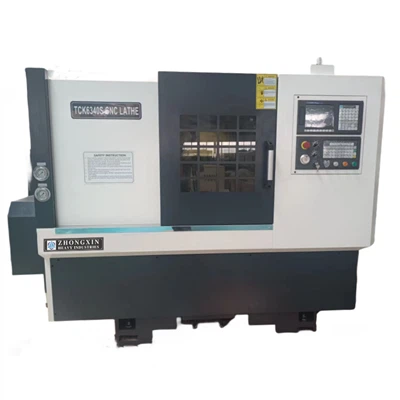
Hey there! As a supplier of gap bed lathes, I often get asked about the longitudinal - feed mechanism of these nifty machines. So, let's dive right in and break it down.
First things first, what exactly is a gap bed lathe? Well, it's a type of lathe that has a removable section in the bed, which allows for turning larger diameter workpieces. This feature makes it super versatile and useful in a variety of machining applications. Now, onto the longitudinal - feed mechanism.
The longitudinal - feed mechanism is responsible for moving the carriage (the part that holds the tool) along the length of the bed. This movement is crucial for operations like turning, facing, and threading. There are a few different ways this mechanism can work, and I'll go over the most common ones.
Manual Longitudinal - Feed Mechanism
One of the simplest ways to achieve longitudinal feed is through a manual operation. In this setup, the operator uses a handwheel to turn a lead screw, which in turn moves the carriage. It's like a classic, hands - on approach. You have full control over the speed and direction of the carriage movement. When you're working on small - scale projects or need precise, slow movements, the manual feed is the way to go.
The advantage of the manual longitudinal - feed mechanism is its simplicity. There are fewer parts that can break down, and it doesn't rely on complex electrical or hydraulic systems. You can feel the resistance of the workpiece and adjust your feed rate accordingly. However, it can be a bit tiring if you have to do a lot of repetitive work, and it's not the fastest option for mass production.
Power Longitudinal - Feed Mechanism
For more efficient and consistent work, many gap bed lathes are equipped with a power longitudinal - feed mechanism. This system uses a motor to drive the lead screw, which moves the carriage. The power feed can be engaged or disengaged easily, allowing you to switch between manual and power operation as needed.
There are two main types of power longitudinal - feed mechanisms: gear - driven and belt - driven. In a gear - driven system, a set of gears transfers the power from the motor to the lead screw. This type of system is known for its high torque and precision. It can handle heavy - duty cutting operations with ease. The belt - driven system, on the other hand, uses a belt to transfer power. It's generally quieter and smoother than the gear - driven system, but it may not be as powerful.
Hydraulic Longitudinal - Feed Mechanism
Some high - end gap bed lathes use a hydraulic longitudinal - feed mechanism. Hydraulic systems use pressurized fluid to move the carriage. The advantage of a hydraulic feed is its ability to provide a smooth and consistent feed rate, regardless of the cutting load. It can also be easily adjusted to different feed rates, making it suitable for a wide range of machining tasks.
However, hydraulic systems are more complex and expensive to maintain. They require regular fluid changes and can be prone to leaks if not properly maintained. But if you're looking for the ultimate in precision and performance, a hydraulic longitudinal - feed mechanism might be worth the investment.
How the Longitudinal - Feed Mechanism Affects Machining Operations
The type of longitudinal - feed mechanism you choose can have a big impact on your machining operations. For example, if you're doing a lot of rough turning on large workpieces, a power or hydraulic feed might be more efficient. You can set a higher feed rate and let the machine do the work, saving you time and effort.
On the other hand, if you're working on a delicate part that requires precise control, the manual feed might be the better option. You can make small, incremental adjustments to the feed rate to ensure a smooth finish.
Our Gap Bed Lathes and Their Longitudinal - Feed Mechanisms
At our company, we offer a range of gap bed lathes with different longitudinal - feed mechanisms to suit your needs. For instance, our Gap Bed Lathe CS6250C comes with a reliable power longitudinal - feed mechanism. It provides a good balance between efficiency and precision, making it a popular choice among our customers.
If you're looking for a more heavy - duty option, our Gap Bed Engine Lathe is equipped with a gear - driven power feed that can handle tough cutting jobs. It's built to last and can provide consistent performance over long periods of operation.
Why Choose Our Gap Bed Lathes
We understand that choosing the right lathe is an important decision. That's why we focus on providing high - quality machines with reliable longitudinal - feed mechanisms. Our lathes are designed and manufactured to meet the highest industry standards, ensuring that you get the best performance and value for your money.
We also offer excellent customer support. If you have any questions about the longitudinal - feed mechanism or any other aspect of our gap bed lathes, our team of experts is always here to help. We can provide you with detailed information, answer your queries, and even offer on - site training if needed.
Contact Us for Your Gap Bed Lathe Needs
If you're in the market for a gap bed lathe, we'd love to talk to you. Whether you're a small - scale workshop or a large manufacturing facility, we have the right machine for you. Our longitudinal - feed mechanisms are designed to make your machining operations easier, more efficient, and more precise.


Don't hesitate to reach out to us to discuss your specific requirements. We can help you choose the best gap bed lathe with the right longitudinal - feed mechanism for your projects. Let's work together to take your machining capabilities to the next level.
References
- "Machinery's Handbook" - A comprehensive guide to machining processes and machine tools.
- Various industry - specific magazines and online resources that cover the latest developments in lathe technology.