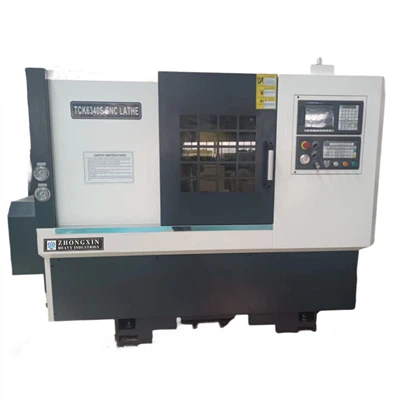
Hey there! As a supplier of Swiss Turn Lathes, I often get asked about tool life in these machines. It's a crucial topic, especially for those looking to optimize their machining processes and cut down on costs. So, let's dive right in and explore what tool life in a Swiss Turn Lathe really means.


First off, what's a Swiss Turn Lathe? Well, it's a high - precision machine used for making small, complex parts. It's got some unique features like a sliding headstock and a guide bushing that allow it to handle long, slender workpieces with amazing accuracy. And just like any other machining tool, the tools in a Swiss Turn Lathe have a limited lifespan.
Tool life refers to the amount of time a cutting tool can be used before it needs to be replaced. It's not just about how long it lasts in hours, though. It's also about the quality of the cuts it makes. As a tool wears out, it can start to produce parts that don't meet the required specifications. So, tool life is measured in terms of the number of parts produced, the cutting distance traveled, or the actual time of cutting.
There are several factors that can affect tool life in a Swiss Turn Lathe. Let's take a look at some of the most important ones.
1. Material of the workpiece
The type of material you're cutting has a huge impact on tool life. Harder materials, like stainless steel or titanium, are much more abrasive than softer materials such as aluminum. When you're cutting a hard material, the tool has to work harder, which leads to faster wear. For example, if you're using a carbide tool to cut aluminum, it might last for thousands of parts. But if you switch to cutting stainless steel with the same tool, you'll notice a significant reduction in the number of parts it can produce before it needs to be replaced.
2. Cutting parameters
The cutting speed, feed rate, and depth of cut are all critical cutting parameters. If you set these parameters too high, the tool will experience more stress and wear out faster. On the other hand, if they're set too low, the machining process will be inefficient. Finding the right balance is key. For instance, increasing the cutting speed can increase the metal removal rate, but it also generates more heat. This heat can cause the tool to soften and wear out prematurely. You can check out some of our Precision CNC Lathe models that are designed to handle different cutting parameters effectively.
3. Tool material and coating
The material of the tool itself plays a big role in its lifespan. Carbide is a popular choice for Swiss Turn Lathe tools because it's hard and wear - resistant. However, there are also other materials like high - speed steel (HSS) that can be used for certain applications. Additionally, many tools are coated with materials like titanium nitride (TiN) or titanium aluminum nitride (TiAlN). These coatings can improve the tool's hardness, reduce friction, and increase its resistance to wear.
4. Coolant and lubrication
Using the right coolant and lubrication is essential for extending tool life. Coolants help to reduce heat generated during the cutting process, which can prevent the tool from overheating and wearing out. They also help to flush away chips, which can otherwise cause damage to the tool. Lubricants, on the other hand, reduce friction between the tool and the workpiece, making the cutting process smoother and less stressful on the tool.
5. Machine condition
The overall condition of the Swiss Turn Lathe also matters. A well - maintained machine will provide a stable cutting environment. If the machine has excessive vibrations or if the axes are not properly aligned, it can cause uneven wear on the tool. Regular maintenance, such as cleaning, lubricating, and calibrating the machine, is necessary to ensure optimal tool life.
Now, let's talk about how you can extend the tool life in your Swiss Turn Lathe.
Tips to extend tool life
- Proper tool selection: Choose the right tool for the job. Consider the material of the workpiece, the required surface finish, and the cutting parameters. If you're not sure which tool to use, our team of experts can help you make the right choice.
- Optimize cutting parameters: Experiment with different cutting speeds, feed rates, and depths of cut to find the optimal combination. You can start with the manufacturer's recommendations and then make adjustments based on your specific application.
- Regular tool inspection: Check your tools regularly for signs of wear. Look for things like chipping, flaking, or excessive dullness. If you notice any problems, replace the tool before it starts to affect the quality of the parts.
- Use quality coolant and lubrication: Invest in high - quality coolants and lubricants. Make sure they're compatible with the tool and the workpiece material. And follow the recommended guidelines for their use.
- Maintain the machine: Keep your Swiss Turn Lathe in good condition. Follow the maintenance schedule provided by the manufacturer. This includes cleaning, lubricating, and calibrating the machine regularly.
As a Swiss Turn Lathe supplier, we understand the importance of tool life. That's why we offer a range of high - quality machines, like our Dual Spindle CNC Lathe and Best Small Cnc Lathes. These machines are designed to provide stable and efficient machining, which can help to extend tool life.
If you're in the market for a Swiss Turn Lathe or if you have any questions about tool life, we'd love to hear from you. Whether you're a small - scale manufacturer or a large - scale production facility, we can provide you with the right solutions to meet your needs. Reach out to us for a detailed discussion and let's work together to optimize your machining processes.
References
- Kalpakjian, S., & Schmid, S. R. (2009). Manufacturing Engineering and Technology. Pearson Prentice Hall.
- Trent, E. M., & Wright, P. K. (2000). Metal Cutting. Butterworth - Heinemann.