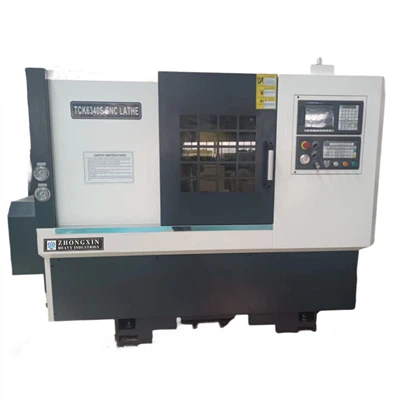
When it comes to machining operations, the type of chips produced can tell a lot about the efficiency and quality of the process. As a supplier of the New Vertical Lathe, I have had the privilege of witnessing firsthand the various chip formations during the machining process. In this blog, I will delve into the different kinds of chips produced by a New Vertical Lathe and their implications.
Understanding Chip Formation in Machining
Before we discuss the specific types of chips produced by a New Vertical Lathe, it's essential to understand the basic principles of chip formation. During machining, the cutting tool removes material from the workpiece, and this removed material forms chips. The shape, size, and type of chips are influenced by several factors, including the cutting speed, feed rate, depth of cut, tool geometry, and the material being machined.
Types of Chips Produced by a New Vertical Lathe
Continuous Chips
Continuous chips are long, unbroken ribbons of material that are typically produced when machining ductile materials such as aluminum, copper, and mild steel. These chips are formed when the cutting tool smoothly shears the material, and the chips flow continuously along the rake face of the tool. The New Vertical Lathe is designed to handle continuous chips efficiently, thanks to its advanced chip management system.
The advantage of continuous chips is that they indicate a smooth and efficient machining process. They also result in a good surface finish on the workpiece. However, continuous chips can sometimes cause problems if they become too long and wrap around the cutting tool or the workpiece. To prevent this, the New Vertical Lathe is equipped with chip breakers, which are designed to break the chips into smaller, more manageable pieces.
Discontinuous Chips
Discontinuous chips, also known as segmented chips, are short, broken pieces of material that are produced when machining brittle materials such as cast iron, high-carbon steel, and some plastics. These chips are formed when the material fractures rather than shearing smoothly. The New Vertical Lathe can handle discontinuous chips effectively, as its robust construction and high cutting forces can break through the brittle material.
Discontinuous chips are generally easier to manage than continuous chips, as they do not tend to wrap around the cutting tool or the workpiece. However, they can cause excessive wear on the cutting tool, as the sudden impact of the fractured material can put stress on the tool edge. To minimize tool wear, it's important to use the appropriate cutting tool geometry and cutting parameters when machining brittle materials with the New Vertical Lathe.
Serrated Chips
Serrated chips, also known as sawtooth chips, are a combination of continuous and discontinuous chips. They are characterized by a series of alternating peaks and valleys along the length of the chip. Serrated chips are typically produced when machining materials with a high strength-to-toughness ratio, such as titanium alloys and some high-strength steels.
The New Vertical Lathe can produce serrated chips with precision, thanks to its high-speed spindle and advanced control system. Serrated chips can indicate a stable machining process, but they can also cause vibrations and noise, which can affect the surface finish of the workpiece. To reduce vibrations and noise, it's important to optimize the cutting parameters and use a cutting tool with a sharp edge.
Chip Management in the New Vertical Lathe
Efficient chip management is crucial for the performance and longevity of the New Vertical Lathe. The lathe is equipped with a comprehensive chip management system that includes chip conveyors, chip breakers, and coolant systems.
The chip conveyors are designed to remove the chips from the machining area quickly and efficiently. They transport the chips to a collection bin, where they can be easily disposed of or recycled. The chip breakers, as mentioned earlier, are used to break the chips into smaller, more manageable pieces, preventing them from wrapping around the cutting tool or the workpiece.
The coolant system plays a vital role in chip management. It helps to cool the cutting tool and the workpiece, reducing heat generation and tool wear. The coolant also flushes the chips away from the cutting area, preventing them from accumulating and causing problems. The New Vertical Lathe uses a high-pressure coolant system, which can effectively remove chips from even the most complex machining operations.
Impact of Chip Type on Machining Performance
The type of chips produced by the New Vertical Lathe can have a significant impact on the machining performance. For example, continuous chips indicate a smooth and efficient machining process, which can result in a good surface finish and high productivity. On the other hand, discontinuous chips can cause excessive tool wear and reduce the surface finish quality.
By understanding the different types of chips and their implications, operators can optimize the machining process to achieve the best results. For instance, if continuous chips are being produced but are becoming too long, the operator can adjust the cutting parameters or use chip breakers to break the chips into smaller pieces. If discontinuous chips are causing excessive tool wear, the operator can change the cutting tool geometry or use a different cutting fluid.


Comparison with Other Lathe Machines
Compared to other lathe machines, such as the Dual Spindle CNC Lathe and the New CNC Lathe, the New Vertical Lathe offers several advantages in terms of chip management.
The vertical design of the New Vertical Lathe allows for better chip evacuation, as gravity helps to pull the chips down into the chip conveyor. This reduces the risk of chips accumulating in the machining area and causing problems. In addition, the New Vertical Lathe's advanced chip management system is more efficient at handling both continuous and discontinuous chips, resulting in a smoother and more productive machining process.
Conclusion
In conclusion, the New Vertical Lathe is a powerful and versatile machining tool that can produce a variety of chip types, depending on the material being machined and the cutting parameters used. By understanding the different types of chips and their implications, operators can optimize the machining process to achieve the best results in terms of surface finish, productivity, and tool life.
If you are interested in learning more about the New Vertical Lathe and how it can improve your machining operations, I encourage you to contact us for a consultation. Our team of experts will be happy to answer your questions and help you find the right solution for your specific needs.
References
- Boothroyd, G., & Knight, W. A. (2006). Fundamentals of machining and machine tools. CRC Press.
- Kalpakjian, S., & Schmid, S. R. (2009). Manufacturing engineering and technology. Pearson Prentice Hall.
- Trent, E. M., & Wright, P. K. (2000). Metal cutting. Butterworth-Heinemann.