Can a Gap Bed Engine Lathe be used for grooving operations?
Hey there, folks! I'm a supplier of Gap Bed Engine Lathes, and today, I'm gonna dig deep into whether these lathes can be used for grooving operations.
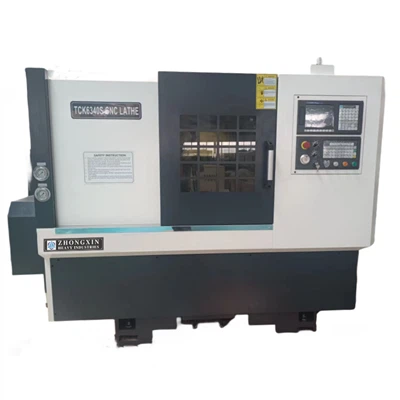
First off, let's get to know what a Gap Bed Engine Lathe is. A Gap Bed Engine Lathe, as the name implies, has a gap in the bed. This gap provides increased swing capacity for larger-diameter workpieces. You can check out more about Gap Bed Engine Lathe on our website.
Now, onto grooving operations. Grooving involves cutting a narrow slot or a depression on the surface of a workpiece. It has various applications, from creating oil grooves in engine parts to making threads on some components.
So, can a Gap Bed Engine Lathe handle grooving? The answer is a big yes! Here's why.


Capabilities for Grooving
One of the key advantages of a Gap Bed Engine Lathe is its precision. These lathes are designed to provide accurate cutting and turning operations. When it comes to grooving, precision is crucial. You need to cut the groove to the right depth and width. The spindle of a Gap Bed Engine Lathe rotates smoothly and steadily, allowing for consistent grooving. For example, if you're grooving a small brass part, the lathe can maintain a stable cutting speed, ensuring that the groove's dimensions are within the required tolerance.
Most Gap Bed Engine Lathes come with a variety of tool holders. These tool holders can be easily adjusted to hold different types of grooving tools. Whether you're using a parting tool for grooving or a dedicated grooving blade, the lathe can accommodate them. You can easily set the tool at the correct height and angle to make the groove as per your requirements.
The feed control on a Gap Bed Engine Lathe is also quite versatile. You can control the rate at which the tool advances into the workpiece. This is important for grooving because different materials and groove widths may require different feed rates. For instance, when grooving a hard steel material, you may need to use a slower feed rate to prevent tool wear and ensure a clean cut.
Specific Applications of Grooving on a Gap Bed Engine Lathe
Let's talk about some real - world applications. One common use is in the manufacturing of hydraulic cylinders. These cylinders often require grooves for O - rings. A Gap Bed Engine Lathe can precisely cut these grooves, ensuring a proper seal. The gap in the bed allows for larger - diameter cylinders to be accommodated, which may not be possible on a standard lathe.
Another area is in the production of automotive parts. For example, crankshafts may need grooves for oil lubrication. The lathe can cut these grooves with high accuracy, improving the performance and longevity of the engine.
In the electrical industry, components like connectors may need grooves for insulation or to hold wires in place. A Gap Bed Engine Lathe can be used to create these grooves on small - to medium - sized connectors efficiently.
Considerations for Grooving on a Gap Bed Engine Lathe
Of course, there are some things to keep in mind when using a Gap Bed Engine Lathe for grooving.
Tool selection is extremely important. You need to choose the right tool for the material and the groove dimensions. For soft materials like aluminum, a high - speed steel grooving tool may work well. But for harder materials like stainless steel, you might need a carbide - tipped tool. Also, the rake angle and the shape of the tool can affect the quality of the groove.
Coolant is another factor. Using a proper coolant during grooving helps to reduce heat, which can cause tool wear and affect the surface finish of the groove. It also helps to flush away the chips generated during the cutting process. You need to choose the right type of coolant for the material being cut. For example, water - based coolants are often used for general - purpose grooving on various metals.
Workholding is crucial too. A secure workholding method ensures that the workpiece doesn't move during the grooving operation. For small - sized workpieces, a chuck can be used. But for larger or irregularly shaped pieces, other workholding devices like fixtures may be required.
Our Gap Bed Lathe CS6250C for Grooving
We offer the Gap Bed Lathe CS6250C, which is a great option for grooving operations. It has a powerful spindle motor that can handle different cutting loads. The control system on this lathe allows for easy programming of the cutting parameters, including the feed rate, spindle speed, and depth of cut for the groove.
The bed design of the CS6250C provides excellent stability during the grooving process. The gap in the bed gives you the flexibility to work on larger - diameter workpieces. You can use it to create grooves on a wide range of materials, from plastics to hard metals.
Conclusion and Call to Action
In conclusion, a Gap Bed Engine Lathe is definitely capable of performing grooving operations. Whether you're in the automotive, hydraulic, or electrical industry, it can be a valuable addition to your manufacturing setup. The precision, tool - holding capabilities, and feed control make it suitable for various grooving applications.
If you're interested in learning more about our Gap Bed Engine Lathes, including the Gap Bed Lathe CS6250C, and how they can meet your grooving needs, don't hesitate to reach out. We're here to help you with all your lathe - related questions and to discuss possible purchase options.
References
- Manufacturing Technology Handbook, John Wiley & Sons
- Lathe Operations Manuals, Industry Standards Publications