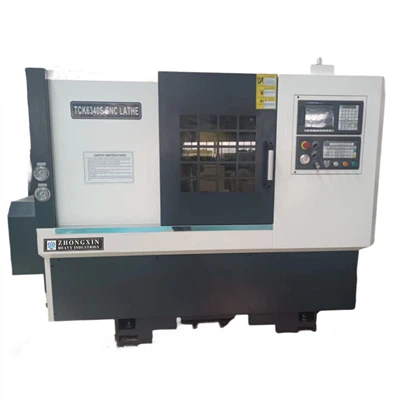
A new vertical lathe is a remarkable piece of machinery, renowned for its precision, efficiency, and versatility in the manufacturing industry. As a leading supplier of New Vertical Lathe, I often encounter inquiries from customers about the possibility of equipping these lathes with additional accessories. In this blog, I will delve into this topic, exploring the benefits, types of accessories, and considerations when adding extras to a new vertical lathe.
Benefits of Equipping Additional Accessories
Enhanced Precision
One of the primary advantages of adding accessories to a new vertical lathe is the improvement in precision. Accessories such as high - precision tool holders can ensure that cutting tools are held firmly and accurately in place. This reduces the chances of tool deflection during the machining process, resulting in more precise cuts and higher - quality finished products. For example, a precision boring head accessory can be used to achieve extremely accurate hole diameters, which is crucial in industries like aerospace and automotive manufacturing where tight tolerances are required.
Increased Efficiency
Additional accessories can significantly boost the efficiency of a vertical lathe. Automatic tool changers (ATCs) are a prime example. With an ATC, the lathe can switch between different cutting tools rapidly without manual intervention. This reduces downtime between tool changes, allowing for continuous machining operations. As a result, production cycles are shortened, and overall productivity is increased. Another accessory that enhances efficiency is the coolant system. A well - designed coolant system can keep the cutting tools cool, reducing tool wear and improving chip evacuation, which in turn speeds up the machining process.
Expanded Capabilities
By equipping a new vertical lathe with accessories, its capabilities can be expanded to handle a wider range of machining tasks. For instance, a live tooling system can be added to enable milling, drilling, and tapping operations on the lathe. This means that complex parts that previously required multiple machines can now be produced on a single vertical lathe, saving both time and cost. Additionally, a tailstock accessory can be used to support long workpieces, allowing for the machining of larger and more complex components.


Types of Accessories for New Vertical Lathes
Tooling Accessories
- Tool Holders: There are various types of tool holders available, such as collet chucks, hydraulic chucks, and quick - change tool holders. Collet chucks are ideal for holding small - diameter tools with high precision, while hydraulic chucks provide a strong grip and can handle larger cutting forces. Quick - change tool holders allow for rapid tool changes, improving efficiency.
- Cutting Tools: Different cutting tools are used for various machining operations. Carbide inserts are commonly used for turning operations due to their high hardness and wear resistance. High - speed steel (HSS) tools are also popular for their versatility and ability to cut a wide range of materials.
- Tool Presetters: A tool presetter is an important accessory that allows for the accurate measurement and setting of cutting tools outside the lathe. This ensures that the tools are properly calibrated before being installed on the lathe, reducing setup time and improving machining accuracy.
Workholding Accessories
- Chucks: There are several types of chucks available for vertical lathes, including three - jaw chucks, four - jaw chucks, and hydraulic chucks. Three - jaw chucks are self - centering and are suitable for round workpieces. Four - jaw chucks, on the other hand, can be adjusted independently to hold irregularly shaped workpieces. Hydraulic chucks provide a strong and reliable grip, especially for heavy - duty machining.
- Vises: Vises are used to hold workpieces securely during machining. They come in different sizes and designs, such as manual vises and hydraulic vises. Manual vises are simple and cost - effective, while hydraulic vises offer greater clamping force and can be operated more quickly.
- Fixture Plates: Fixture plates are used to mount workpieces and fixtures on the lathe table. They provide a stable and accurate base for machining operations and can be customized to fit specific workpiece requirements.
Automation Accessories
- Automatic Tool Changers (ATCs): As mentioned earlier, ATCs are essential for increasing the efficiency of a vertical lathe. They can hold multiple cutting tools and automatically select and change the appropriate tool for each machining operation.
- Robotic Loading and Unloading Systems: These systems can automate the process of loading and unloading workpieces onto the lathe. This reduces the need for manual labor, improves safety, and increases production throughput.
- CNC Controllers: A modern CNC controller is an important accessory that allows for precise control of the lathe's operations. It can store machining programs, adjust cutting parameters, and monitor the machining process in real - time.
Cooling and Chip Management Accessories
- Coolant Systems: Coolant systems are used to cool the cutting tools and workpieces during machining. There are different types of coolant systems, such as flood coolant systems and mist coolant systems. Flood coolant systems provide a large volume of coolant to the cutting area, while mist coolant systems use a fine mist of coolant, which can be more environmentally friendly.
- Chip Conveyors: Chip conveyors are used to remove chips from the machining area. They can be either belt - type conveyors or screw - type conveyors. A chip conveyor helps to keep the work area clean, preventing chips from interfering with the machining process and reducing the risk of damage to the lathe.
Considerations When Adding Accessories to a New Vertical Lathe
Compatibility
Before adding any accessory to a new vertical lathe, it is crucial to ensure its compatibility with the lathe. This includes mechanical compatibility, such as the size and mounting requirements of the accessory, as well as electrical and control compatibility. For example, an accessory that requires a certain voltage or control signal may not work properly if the lathe's electrical system is not compatible. It is recommended to consult the lathe manufacturer or a professional technician to ensure proper compatibility.
Cost
The cost of accessories is an important consideration. Some accessories can be quite expensive, especially high - end options like advanced ATCs or robotic loading systems. It is essential to evaluate the cost - benefit ratio of each accessory. Consider the potential increase in productivity, precision, and capabilities that the accessory will bring and compare it with its cost. In some cases, it may be more cost - effective to start with basic accessories and gradually upgrade as the need arises.
Training and Maintenance
Adding new accessories to a vertical lathe may require additional training for the operators. They need to learn how to use and maintain the new accessories properly. It is important to provide comprehensive training to ensure that the operators can operate the lathe and its accessories safely and efficiently. Additionally, regular maintenance of the accessories is necessary to ensure their proper functioning and longevity. This includes cleaning, lubrication, and calibration of the accessories.
Comparison with Other Lathe Types
When considering the addition of accessories to a new vertical lathe, it is also interesting to compare it with other types of lathes, such as Best Small Cnc Lathes and Horizontal Slant Bed Lathes.
- Best Small CNC Lathes: Small CNC lathes are generally more compact and suitable for small - scale production or prototyping. While they can also be equipped with accessories, the range of available accessories may be more limited due to their smaller size. In contrast, new vertical lathes are often larger and more powerful, allowing for the installation of more complex and heavy - duty accessories.
- Horizontal Slant Bed Lathes: Horizontal slant bed lathes have a different design compared to vertical lathes. They are typically better suited for certain types of machining operations, such as long - shaft turning. However, vertical lathes have the advantage of better chip evacuation and can handle larger workpieces more easily. When it comes to accessories, both types of lathes can be equipped with similar tooling and automation accessories, but the specific requirements and compatibility may vary.
Conclusion
In conclusion, a new vertical lathe can definitely be equipped with additional accessories, and doing so offers numerous benefits, including enhanced precision, increased efficiency, and expanded capabilities. There is a wide range of accessories available, from tooling and workholding accessories to automation and cooling systems. However, when adding accessories, it is important to consider factors such as compatibility, cost, and training.
If you are interested in exploring the possibilities of equipping your new vertical lathe with additional accessories or have any questions about our New Vertical Lathe, please feel free to contact us. Our team of experts is ready to assist you in making the right choices for your machining needs. We look forward to the opportunity to discuss your requirements and help you optimize your vertical lathe operations.
References
- Smith, J. (2020). Handbook of Machine Tool Accessories. Industrial Press Inc.
- Brown, A. (2019). Advanced Machining Technology. McGraw - Hill Education.
- Johnson, R. (2018). CNC Lathe Operations and Programming. Delmar Cengage Learning.