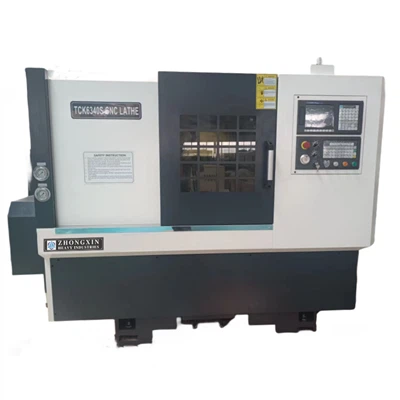
Adjusting the tool height in a horizontal CNC lathe machine is a crucial process that directly impacts the quality of machining operations. As a supplier of Horizontal CNC Lathe Machines, I understand the significance of this adjustment and its role in achieving precise and efficient machining results. In this blog, I will share detailed insights on how to adjust the tool height in a horizontal CNC lathe machine, covering the importance, steps, and considerations.
Importance of Tool Height Adjustment
Proper tool height adjustment is essential for several reasons. First, it ensures the accuracy of the machined parts. When the tool is at the correct height, it can cut the workpiece precisely according to the programmed dimensions. Any deviation in tool height can lead to dimensional errors in the finished product, affecting its functionality and quality.


Second, maintaining the right tool height helps to increase tool life. When the tool is not properly adjusted, it may experience excessive wear and tear due to uneven cutting forces. This can result in premature tool failure, increasing production costs and downtime.
Third, correct tool height adjustment improves the surface finish of the machined parts. A well - adjusted tool can produce a smoother surface, reducing the need for additional finishing operations and enhancing the overall aesthetics of the product.
Tools and Equipment Required
Before starting the tool height adjustment process, you need to ensure that you have the following tools and equipment:
- Height gauge: This is used to measure the height of the tool accurately.
- Caliper: It can be used to measure the diameter of the workpiece and the tool tip, which helps in determining the correct tool height.
- Wrench set: To loosen and tighten the tool clamping bolts.
- Tool post: Where the tool is mounted on the lathe.
Step - by - Step Guide to Adjust Tool Height
- Prepare the Machine
- First, power off the horizontal CNC lathe machine to ensure safety. Then, clean the tool post and the tool holder to remove any chips, debris, or coolant. This will ensure a proper connection between the tool and the tool post.
- Mount the Tool
- Select the appropriate tool for the machining operation and mount it in the tool holder. Make sure the tool is securely clamped in place using the wrench set. Do not overtighten the clamping bolts, as this may damage the tool or the tool holder.
- Set the Rough Tool Height
- Use the height gauge to set a rough height for the tool. Place the height gauge on the lathe bed and move it close to the tool tip. Adjust the tool height so that the tool tip is approximately at the center height of the workpiece. This is a rough setting and will be further refined in the next steps.
- Use a Test Piece
- Mount a test piece on the lathe chuck. The test piece should have a similar diameter and material as the actual workpiece. This will simulate the real machining conditions.
- Program the lathe to make a light cut on the test piece. After the cut is made, measure the diameter of the test piece at different points along the cut using a caliper. If the diameter varies, it indicates that the tool height is not correct.
- Fine - Tune the Tool Height
- If the diameter at the center of the cut is smaller than at the edges, it means the tool is too high. Loosen the tool clamping bolts slightly and lower the tool using a shim or the adjustment mechanism on the tool post.
- Conversely, if the diameter at the center of the cut is larger than at the edges, the tool is too low. Loosen the clamping bolts and raise the tool.
- After each adjustment, make another light cut on the test piece and measure the diameter again. Repeat this process until the diameter is consistent along the cut, indicating that the tool height is correct.
- Verify the Tool Height
- Once you are satisfied with the test cut results, measure the tool height again using the height gauge to confirm the setting. Make any final adjustments if necessary.
- Finally, run a full - scale machining operation on a scrap piece with the same parameters as the actual production to ensure that the tool height is still correct and the machining quality meets the requirements.
Factors to Consider during Tool Height Adjustment
- Tool Geometry
- Different tools have different geometries, such as rake angle, clearance angle, and nose radius. These geometries can affect the effective cutting height of the tool. Make sure to consider the tool geometry when adjusting the tool height to ensure optimal cutting performance.
- Workpiece Material
- The type of workpiece material can also influence the tool height adjustment. Harder materials may require a different tool height setting compared to softer materials. For example, when machining hard materials, a slightly lower tool height may be needed to reduce the cutting forces and prevent tool breakage.
- Machine Wear and Tear
- Over time, the horizontal CNC lathe machine may experience wear and tear, which can affect the accuracy of the tool height adjustment. Regularly inspect and maintain the machine, including the tool post, spindle, and bed, to ensure its accuracy.
Our Horizontal CNC Lathe Machines
As a supplier, we offer a wide range of horizontal CNC lathe machines, including Heavy Duty Metal Lathe, Slant Bed Cnc Lathe Machine, and Ck6132 CNC Lathe. These machines are designed with high - precision components and advanced control systems, which can provide stable and reliable performance during machining operations. Our technical support team is always ready to assist you with any questions regarding tool height adjustment or other aspects of the machine operation.
Conclusion
Adjusting the tool height in a horizontal CNC lathe machine is a complex but essential process that requires careful attention to detail. By following the steps outlined in this blog and considering the relevant factors, you can ensure accurate tool height adjustment, which will result in high - quality machined parts, longer tool life, and improved production efficiency.
If you are interested in our horizontal CNC lathe machines or need further assistance with tool height adjustment, please feel free to contact us for procurement and negotiation. We are committed to providing you with the best products and services to meet your machining needs.
References
- "CNC Lathe Operation Manuals" from various manufacturers.
- "Machining Technology" textbooks that cover the basics of CNC lathe operations and tool adjustment.