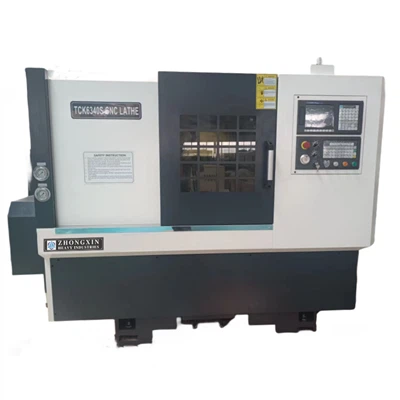
As a supplier of heavy-duty metal lathes, I've witnessed firsthand the critical role that cross-slide movement accuracy plays in machining operations. The cross-slide on a heavy-duty metal lathe is a fundamental component that enables precise lateral movement of the cutting tool, which is essential for creating accurate dimensions and smooth finishes on workpieces. In this blog, I'll delve into the intricacies of cross-slide movement accuracy, exploring its significance, the factors that influence it, and how we at [Company] ensure the highest levels of precision in our heavy-duty metal lathes.
The Significance of Cross-Slide Movement Accuracy
The accuracy of the cross-slide movement directly impacts the quality of the machined parts. When the cross-slide moves precisely, it allows for the creation of components with tight tolerances, which is crucial in industries such as aerospace, automotive, and medical device manufacturing. For example, in the production of engine components, a deviation of even a few thousandths of an inch can lead to performance issues and potential safety hazards.
Moreover, accurate cross-slide movement is essential for achieving smooth surface finishes. When the cutting tool moves smoothly and precisely, it reduces the occurrence of chatter and vibration, resulting in a better surface finish on the workpiece. This is particularly important in applications where aesthetics and functionality are both critical, such as in the production of consumer goods and high-precision instruments.
Factors Affecting Cross-Slide Movement Accuracy
Several factors can influence the accuracy of the cross-slide movement on a heavy-duty metal lathe. Understanding these factors is crucial for ensuring optimal performance and precision in machining operations.


Mechanical Design and Construction
The mechanical design and construction of the lathe play a significant role in determining the accuracy of the cross-slide movement. A well-designed lathe with a rigid and stable structure will provide a solid foundation for the cross-slide, minimizing deflection and vibration during operation. Additionally, the use of high-quality materials and precision machining techniques in the construction of the cross-slide and its components will contribute to improved accuracy and reliability.
Lead Screw and Nut Assembly
The lead screw and nut assembly is responsible for converting the rotational motion of the handwheel or motor into linear motion of the cross-slide. The accuracy of this assembly is crucial for achieving precise cross-slide movement. A high-quality lead screw with a low pitch and a well-fitted nut will provide smooth and accurate motion, minimizing backlash and ensuring consistent positioning of the cutting tool.
Lubrication and Maintenance
Proper lubrication and maintenance are essential for maintaining the accuracy of the cross-slide movement over time. Lubrication reduces friction and wear between the moving parts, ensuring smooth and efficient operation. Regular maintenance, including cleaning, inspection, and adjustment of the cross-slide components, will help identify and address any issues before they affect the accuracy of the movement.
Operator Skill and Technique
The skill and technique of the operator also play a significant role in achieving accurate cross-slide movement. An experienced operator will be able to use the lathe's controls effectively, making precise adjustments to the cross-slide position and feed rate. Additionally, the operator's ability to monitor the machining process and make real-time adjustments based on the feedback from the workpiece will contribute to improved accuracy and quality.
Ensuring Cross-Slide Movement Accuracy in Our Heavy-Duty Metal Lathes
At [Company], we are committed to delivering heavy-duty metal lathes that offer the highest levels of precision and performance. To ensure the accuracy of the cross-slide movement in our lathes, we employ a comprehensive approach that encompasses design, manufacturing, and quality control.
Advanced Design and Engineering
Our team of experienced engineers uses the latest design and engineering techniques to develop heavy-duty metal lathes that are optimized for accuracy and performance. We carefully select the materials and components used in the construction of the cross-slide, ensuring that they meet our strict quality standards. Additionally, we use advanced simulation and modeling tools to analyze the performance of the cross-slide and make any necessary adjustments to the design before production.
Precision Manufacturing Processes
We use state-of-the-art manufacturing processes to produce the cross-slide components with the highest levels of precision. Our machining operations are performed on high-precision CNC machines, which are capable of achieving tight tolerances and excellent surface finishes. We also employ strict quality control measures throughout the manufacturing process to ensure that each component meets our specifications.
Rigorous Testing and Inspection
Before leaving our factory, each heavy-duty metal lathe undergoes rigorous testing and inspection to ensure that it meets our quality standards. We use a variety of testing equipment and techniques to measure the accuracy of the cross-slide movement, including laser interferometers and coordinate measuring machines. Any deviations from the specifications are identified and corrected before the lathe is shipped to the customer.
Training and Support
We provide comprehensive training and support to our customers to ensure that they are able to operate our heavy-duty metal lathes effectively and achieve the highest levels of accuracy. Our training programs cover everything from basic lathe operation to advanced machining techniques, and our technical support team is available to assist customers with any questions or issues they may encounter.
Conclusion
The accuracy of the cross-slide movement on a heavy-duty metal lathe is a critical factor in determining the quality and precision of the machined parts. By understanding the factors that influence cross-slide movement accuracy and taking steps to ensure optimal performance, manufacturers can achieve the highest levels of productivity and quality in their machining operations. At [Company], we are committed to delivering heavy-duty metal lathes that offer the highest levels of precision and performance, and we are confident that our lathes will meet the needs of even the most demanding applications.
If you're in the market for a heavy-duty metal lathe, we invite you to explore our range of products, including the New Vertical Lathe, Cnc Lathe Machine Heavy Duty, and CNC Lathe Chucks. Our team of experts is available to answer any questions you may have and to help you select the right lathe for your needs. Contact us today to start the procurement process and take your machining operations to the next level.
References
- ASME B5.1-2009, "Machine Tools - General Requirements for Accuracy and Testing"
- ISO 230-1:2012, "Test code for machine tools - Part 1: Determination of the positioning accuracy of axes"
- "Precision Machining Technology" by Robert L. Schmidt and Charles A. Hoersch