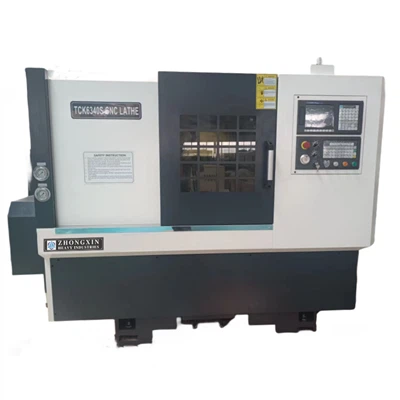
Alright, folks! If you're in the market for a new slant bed lathe, you've come to the right place. I'm a supplier of these bad boys, and I'm here to walk you through the installation process step by step. So, let's dive right in!
Pre-Installation Preparations
Before you even think about unpacking that shiny new slant bed lathe, you need to do some groundwork. First off, find a suitable location for it. You want a spot that's flat, level, and stable. It should also have enough space around it for easy access and maintenance. Make sure the area is well-ventilated to prevent overheating of the machine.
Next, check the power requirements. Our lathes usually run on a specific voltage and phase, so make sure your electrical supply can handle it. You might need to hire an electrician to install a dedicated circuit if necessary.
Also, gather all the tools you'll need for the installation. This typically includes wrenches, screwdrivers, a level, and a crane or forklift to move the lathe into place. It's a good idea to have an installation manual handy too. You can usually find it in the packaging or download it from our website.


Unpacking and Inspection
Once you've got everything ready, it's time to unpack the lathe. Be careful when opening the boxes, as the parts can be heavy and fragile. Start by removing any protective packaging materials. Then, do a thorough inspection of all the components. Look for any signs of damage during shipping, such as dents, scratches, or missing parts. If you find anything wrong, contact our customer service right away. We'll do our best to get it sorted out for you.
Moving the Lathe
Moving a slant bed lathe is no joke. It's a heavy piece of equipment, and you need to handle it with care. Use a crane or forklift to lift the lathe and move it to the installation location. Make sure the lifting equipment is rated for the weight of the lathe. When placing the lathe on the floor, use a level to ensure it's perfectly horizontal. Adjust the leveling feet if needed.
Assembly
Now comes the fun part - assembling the lathe. Start by attaching the base to the lathe body. Use the bolts and nuts provided in the kit and tighten them securely. Make sure the base is firmly attached to prevent any vibrations during operation.
Next, install the headstock and the tailstock. These are the two main components of the lathe that hold the workpiece. Align them properly and use the alignment tools to ensure they're in parallel. This is crucial for accurate machining.
After that, mount the carriage and the cross-slide. These parts allow you to move the cutting tool along the workpiece. Connect the drive belts and the gears according to the instructions in the manual. Make sure everything is properly lubricated to reduce friction and wear.
Electrical and Hydraulic Connections
Once the mechanical assembly is complete, it's time to connect the electrical and hydraulic systems. First, connect the power cable to the electrical panel of the lathe. Follow the wiring diagram in the manual to ensure correct connections. Make sure all the electrical components are grounded properly to prevent electrical shocks.
Next, connect the hydraulic pipes and hoses. These are used to power the hydraulic systems of the lathe, such as the chuck and the tool turret. Check for any leaks and tighten the fittings if necessary.
Testing and Calibration
Before you start using the lathe, you need to test it and calibrate it. Turn on the power and check the operation of all the components. Make sure the spindle rotates smoothly, the carriage and cross-slide move freely, and the hydraulic systems work properly.
Perform some basic calibration procedures, such as setting the tool height and the workpiece alignment. This will ensure accurate machining results. You can use a test piece to verify the accuracy of the lathe. If you encounter any problems during the testing or calibration, don't hesitate to contact our technical support team. We're here to help you get the lathe up and running smoothly.
Conclusion
Installing a new slant bed lathe can be a challenging task, but with the right preparations and a little patience, you can do it yourself. Just follow the steps outlined in this guide, and you'll have your lathe up and running in no time.
If you're in the market for a high-quality slant bed lathe, we've got you covered. We offer a wide range of lathes, including Large Lathe Machine, Horizontal Turning Lathe, and Dual Spindle CNC Lathe. Our lathes are known for their precision, reliability, and durability.
If you have any questions or would like to discuss your specific requirements, feel free to reach out to us. We're always happy to help you find the perfect lathe for your needs.
References
- Manufacturer's Installation Manual.
- Industry best practices for lathe installation.