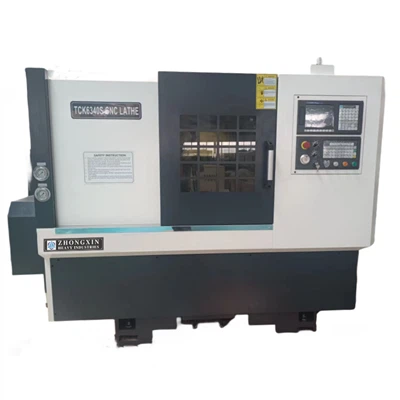
Hey there! As a supplier of Horizontal CNC Lathe Machines, I often get asked about the bed structure of these machines. So, I thought I'd take a moment to break it down for you.
First off, the bed is like the backbone of a horizontal CNC lathe machine. It provides a stable foundation for all the other components. Think of it as the base camp for a mountain climber. Without a solid base, everything else is at risk.
There are a few different types of bed structures commonly used in horizontal CNC lathes. One of the most popular is the flat bed structure. This type of bed is, well, flat! It offers excellent stability and is great for heavy - duty machining. The flat surface allows for easy movement of the carriage and other components along the X and Z axes. It's like a smooth highway for the machine parts to travel on.
Another type is the slant bed structure. Slant bed lathes have a bed that is angled. This design has some significant advantages. For starters, it improves chip evacuation. When you're machining, chips are produced, and if they aren't removed properly, they can cause all sorts of problems, like damaging the workpiece or the cutting tool. The slanted bed allows the chips to fall away more easily, keeping the work area clean.
Also, slant bed lathes often have better access to the workpiece. The angled design gives the operator a better view of what's going on, making it easier to set up and monitor the machining process. It's like having a front - row seat at a show!
Now, let's talk about the materials used for the bed. Most beds are made from cast iron. Cast iron is a great choice because it has good damping properties. Damping means it can absorb vibrations. When the machine is running, there are bound to be vibrations, and if they aren't controlled, they can affect the accuracy of the machining. Cast iron helps to keep those vibrations in check, ensuring a smooth and precise operation.
Some high - end machines might use other materials, like polymer concrete. Polymer concrete has even better damping properties than cast iron, but it's more expensive. It's like the luxury car of bed materials.
The bed also has guideways. Guideways are like the tracks that the carriage and other moving parts follow. There are two main types of guideways: sliding guideways and rolling guideways.
Sliding guideways are the traditional type. They use a lubricant to reduce friction between the moving parts and the guideway. They're relatively simple and cost - effective. However, they can wear out over time, and the lubrication needs to be maintained properly.
Rolling guideways, on the other hand, use balls or rollers to reduce friction. They offer higher precision and faster movement. They're like the high - speed trains of guideways. But they're also more expensive and require more precise installation and maintenance.
If you're in the market for a horizontal CNC lathe, you might be interested in some of our models. For example, we have the Ck6130 CNC Lathe. This machine has a well - designed bed structure that provides excellent stability and accuracy. It's suitable for a wide range of machining tasks.


Our Heavy Duty Metal Lathe is another great option. As the name suggests, it's built for heavy - duty work. The bed on this machine is extra - sturdy, able to handle large workpieces and high - cutting forces.
And if you're looking for a high - performance lathe, check out our Fanuc Lathe. It combines advanced technology with a well - engineered bed structure to deliver top - notch machining results.
The bed structure of a horizontal CNC lathe machine is a crucial aspect that affects the machine's performance, accuracy, and durability. Whether you choose a flat bed or a slant bed, sliding or rolling guideways, it all depends on your specific machining needs.
If you're interested in learning more about our horizontal CNC lathe machines or have any questions about the bed structure, don't hesitate to reach out. We're here to help you find the perfect machine for your business. Whether you're a small - scale workshop or a large manufacturing plant, we've got the right solution for you. So, let's start a conversation and see how we can work together to take your machining to the next level!
References
- Machinery's Handbook, Industrial Press Inc.
- Modern Manufacturing Processes, McGraw - Hill Education