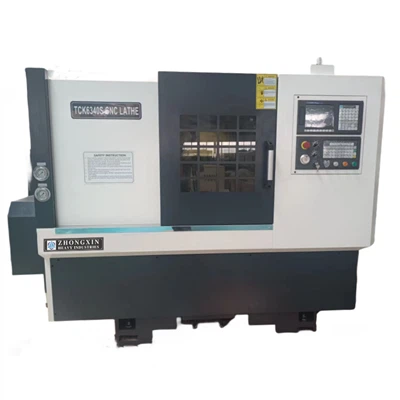
Setting up an internal threading operation on a Manual Turret Lathe requires a combination of technical knowledge, precision, and careful planning. As a Manual Turret Lathe supplier, I have witnessed firsthand the importance of proper setup to achieve high - quality internal threads. In this blog, I will guide you through the step - by - step process of setting up an internal threading operation on a Manual Turret Lathe.
Understanding the Basics of Internal Threading
Internal threading is the process of creating threads inside a hole in a workpiece. This operation is commonly used in various industries, such as automotive, aerospace, and machinery manufacturing. The quality of the internal threads can significantly impact the functionality and performance of the final product.
Before starting the setup process, it is essential to understand the different types of threads, including metric and imperial threads. Each type has its own specific pitch, which is the distance between adjacent threads. The pitch determines the speed and feed rate required for the threading operation.
Selecting the Right Tools
The first step in setting up an internal threading operation is selecting the appropriate tools. For internal threading on a Manual Turret Lathe, you will need a threading tool bit. The tool bit should be made of high - speed steel (HSS) or carbide, depending on the material of the workpiece. Carbide tool bits are more suitable for hard materials, while HSS tool bits are better for softer materials.
When choosing a tool bit, make sure it has the correct shape and size for the desired thread profile. The most common thread profiles are the V - thread, which is used for general - purpose applications, and the square thread, which is used for applications requiring high - load capacity.
In addition to the tool bit, you will also need a boring bar to create the initial hole before threading. The boring bar should be long enough to reach the depth of the hole and have the appropriate diameter to ensure a smooth and accurate boring operation.
Preparing the Workpiece
Once you have selected the right tools, the next step is to prepare the workpiece. Start by mounting the workpiece securely on the lathe chuck. Make sure the workpiece is centered and balanced to prevent vibration during the threading operation.
Measure the diameter of the hole that you want to thread. The initial hole diameter should be slightly smaller than the major diameter of the desired thread. This allows for the material removal during the threading process. Use a drill or a boring bar to create the initial hole to the required depth.
Setting Up the Lathe
After preparing the workpiece, it's time to set up the Manual Turret Lathe. First, select the appropriate spindle speed. The spindle speed depends on the material of the workpiece, the pitch of the thread, and the type of tool bit being used. As a general rule, higher spindle speeds are used for softer materials and smaller thread pitches, while lower spindle speeds are used for harder materials and larger thread pitches.
Next, set the feed rate. The feed rate is the distance the tool bit moves along the workpiece per revolution of the spindle. For internal threading, the feed rate is determined by the pitch of the thread. You can use the lathe's feed gearbox to set the correct feed rate.
Position the turret so that the threading tool bit is aligned with the center of the workpiece. Use the cross - slide and compound rest to move the tool bit into position. Make sure the tool bit is perpendicular to the axis of the workpiece to ensure accurate thread formation.
Programming the Threading Operation
Most Manual Turret Lathes have a threading dial or a lead screw mechanism for programming the threading operation. The threading dial is used to engage the half - nuts at the correct position to start and stop the threading process.
To program the threading operation, first, calculate the number of revolutions required to cut the desired thread length. Then, use the threading dial to engage the half - nuts at the appropriate position. Start the lathe and slowly feed the tool bit into the workpiece. As the tool bit cuts the thread, periodically check the thread profile using a thread gauge to ensure accuracy.
Performing the Threading Operation
Once the lathe is set up and the threading operation is programmed, it's time to start cutting the thread. Start the lathe at the selected spindle speed and slowly feed the tool bit into the workpiece using the cross - slide and compound rest. Make sure to apply a sufficient amount of cutting fluid to lubricate the tool bit and reduce heat generation.
As the tool bit cuts the thread, pay close attention to the cutting process. If you notice any signs of vibration, excessive wear on the tool bit, or poor thread quality, stop the lathe immediately and make the necessary adjustments.
After cutting the first pass, retract the tool bit and disengage the half - nuts. Reverse the direction of the spindle and move the tool bit back to the starting position. Then, engage the half - nuts again at the same position on the threading dial and make another pass. Repeat this process until the desired thread depth is achieved.
Inspecting the Thread
After completing the threading operation, it's important to inspect the thread to ensure its quality. Use a thread gauge to check the pitch, major diameter, and minor diameter of the thread. The thread should fit the gauge snugly without any play or binding.
If the thread does not meet the required specifications, you may need to make additional passes or adjust the setup parameters. Common problems with internal threads include incorrect pitch, poor surface finish, and thread chatter. These problems can be caused by various factors, such as incorrect tool bit selection, improper setup, or worn - out tooling.
Troubleshooting Common Issues
During the internal threading operation, you may encounter some common issues. One of the most common problems is thread chatter, which is characterized by a vibrating or rattling sound during the cutting process. Thread chatter can be caused by a loose workpiece, improper tool bit geometry, or incorrect feed rate. To fix this problem, make sure the workpiece is securely mounted, check the tool bit for wear or damage, and adjust the feed rate.
Another common issue is poor surface finish. Poor surface finish can be caused by dull tool bits, insufficient cutting fluid, or incorrect spindle speed. To improve the surface finish, replace the tool bit if it is dull, increase the amount of cutting fluid, and adjust the spindle speed.
Conclusion
Setting up an internal threading operation on a Manual Turret Lathe is a complex but rewarding process. By following the steps outlined in this blog, you can ensure a successful threading operation and achieve high - quality internal threads.

If you are interested in purchasing a Manual Turret Lathe or need more information about internal threading operations, please visit our website. We offer a wide range of Manual Lathe For Sale, including Manual Turret Lathe and High Precision Manual Lathe. Our team of experts is always ready to assist you with your lathe selection and setup needs. Contact us today to start a procurement discussion and take your machining operations to the next level.
References
- "Machinery's Handbook" by Industrial Press Inc.
- "Modern Machining Technology" by Robert L. Norton
- "CNC Programming Handbook" by Peter Smid