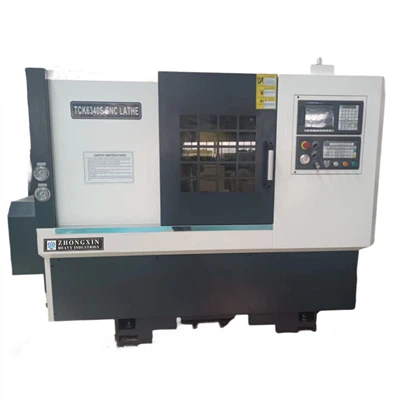
Yo, what's up everyone! I'm a supplier of New Vertical Lathes, and today I wanna chat about the communication interfaces of the control system in these bad boys.
So, first off, why are communication interfaces so important? Well, they're like the nervous system of the control system. They allow different parts of the lathe to talk to each other, and also enable the lathe to communicate with external devices. This is super crucial for getting the best performance and efficiency out of the machine.
One of the most common communication interfaces in our New Vertical Lathes is the Ethernet interface. Ethernet is great because it's fast and widely used. It can handle a large amount of data transfer, which is essential when the lathe is running complex machining programs. With an Ethernet interface, we can connect the lathe to a local area network (LAN) or even the internet. This means that operators can monitor and control the lathe remotely. For example, if you're away from the workshop but need to check on the progress of a job, you can simply log in to the lathe's system via the network and see what's going on. It's like having eyes and hands on the machine from anywhere in the world. You can also download new machining programs from a server or share production data with other departments in your company.
Another important interface is the USB interface. USB is really convenient because it's so versatile. You can use it to transfer files between the lathe's control system and a USB flash drive. This is handy when you need to quickly update the machining programs or transfer some diagnostic data. For instance, if you've created a new program on your computer, you can save it to a USB drive and then plug it into the lathe to load the program. It's a simple and efficient way to manage your machining data. You can also connect external USB devices, like a keyboard or a mouse, to make it easier to operate the control system. Just like you use a keyboard and mouse on your computer, you can use them to input commands and navigate through the menus on the lathe's control panel.
Serial interfaces, such as RS - 232 and RS - 485, are also commonly used in our New Vertical Lathes. These interfaces have been around for a long time and are reliable for short - distance communication. RS - 232 is often used to connect the lathe's control system to a computer or a printer. It's a simple and straightforward way to transfer data, especially for basic control and monitoring tasks. For example, you can use an RS - 232 connection to send a simple command from your computer to the lathe to start or stop a machining process. RS - 485, on the other hand, is better for multi - device communication over a longer distance. It can support up to 32 devices on the same bus, which is useful if you have multiple sensors or actuators connected to the lathe's control system.
Now, let's talk about some of the benefits of having these communication interfaces. Firstly, they improve productivity. With the ability to transfer data quickly and easily, operators can spend less time on manual data entry and more time on actual machining. For example, instead of typing in a long machining program line by line, you can just transfer it from a USB drive or download it via Ethernet. This saves a lot of time and reduces the chances of errors. Secondly, they enhance the flexibility of the lathe. You can easily connect different external devices, such as sensors, actuators, or monitoring systems, to the lathe's control system. This allows you to customize the lathe according to your specific production needs. For instance, you can add a temperature sensor to monitor the temperature of the cutting tool and adjust the machining parameters accordingly.
When it comes to our New Vertical Lathes, we also offer some advanced communication features. For example, we support wireless communication protocols like Wi - Fi and Bluetooth. Wi - Fi is great for creating a wireless network in the workshop, which allows for more flexible placement of the lathe and easier access to the control system. You can walk around the workshop with a tablet or a smartphone and still be able to control and monitor the lathe. Bluetooth, on the other hand, is useful for short - range communication with small devices, like a wireless pendant controller. You can use the pendant to operate the lathe from a short distance, which is convenient when you need to make some quick adjustments during the machining process.
If you're in the market for high - quality New Vertical Lathes, you'll also be interested in some of our related products. Check out our CNC Lathe Chucks, which are essential for holding the workpiece securely during machining. We also have Swiss Turn Lathe if you need to perform more precise and complex machining operations. And for those who have limited space or specific small - scale production needs, our Small Cnc Lathe is a great choice.


In conclusion, the communication interfaces of the control system in our New Vertical Lathes play a vital role in ensuring high - performance and efficient operation. They provide the means for seamless data transfer, remote control, and integration with external devices. If you're looking to upgrade your machining capabilities or start a new project, I'd highly recommend considering our New Vertical Lathes. Our team of experts is always ready to answer your questions and help you find the best solution for your production needs. Whether you're a small - scale workshop or a large manufacturing plant, we've got the right lathe and communication interfaces to meet your requirements. So, don't hesitate to reach out and start a discussion about your procurement needs. Let's work together to take your machining operations to the next level!
References
- Manufacturing Technology Handbook
- Industrial Control Systems Best Practices Guide