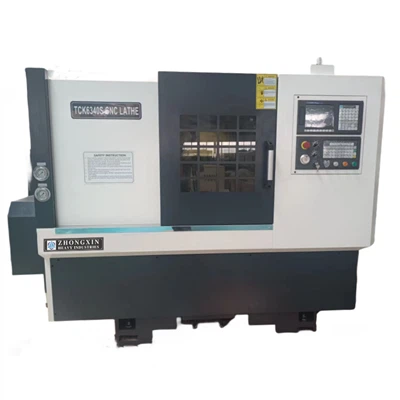
Hey there! As a supplier of manual lathes, I often get asked about the accuracy of these machines. So, let's dive right in and explore what the accuracy of a manual lathe really means.
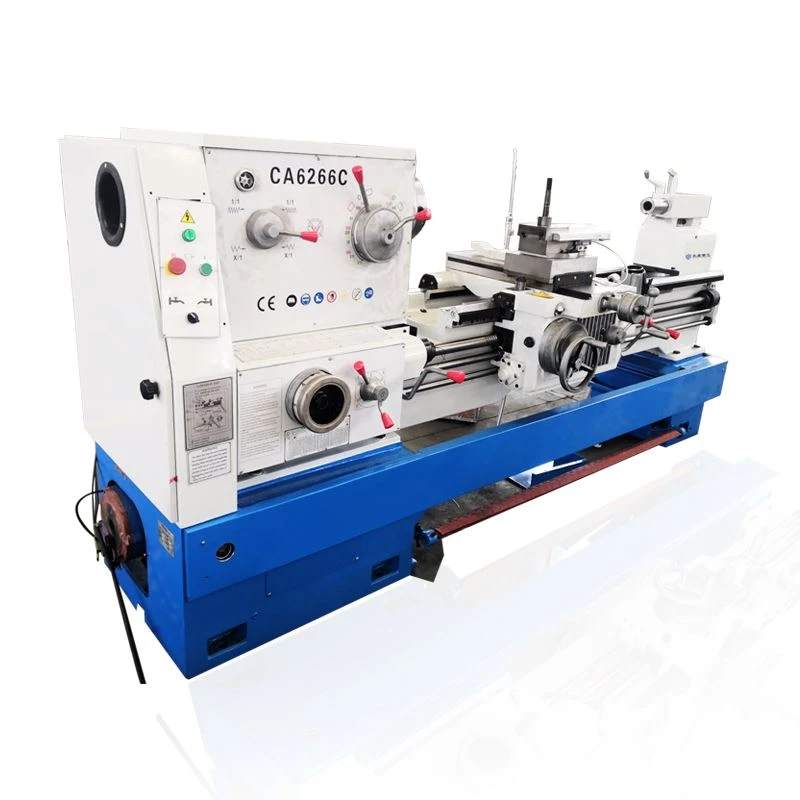

First off, what is accuracy in the context of a manual lathe? Well, it's all about how closely the machine can produce a workpiece to the specified dimensions. When a customer gives us a design with certain measurements, the accuracy of the manual lathe determines how well we can hit those numbers.
Accuracy in a manual lathe depends on several factors. One of the key elements is the quality of the machine itself. Higher - end manual lathes are built with better materials and precision engineering. They have more rigid frames, which helps in reducing vibrations during the machining process. Vibrations can cause the cutting tool to deviate from its intended path, leading to inaccuracies in the finished product. For example, our High Precision Manual Lathe is designed with a solid and stable frame that minimizes vibrations, allowing for more precise cuts.
The leadscrew and nut system also plays a huge role in accuracy. The leadscrew is what drives the carriage and cross - slide, which move the cutting tool along the workpiece. A high - quality leadscrew and nut combination will have less backlash. Backlash is the small amount of free movement in the system when the direction of movement is reversed. Too much backlash can result in over - or under - cutting, affecting the final dimensions of the workpiece.
Another factor is the skill of the operator. Even the most accurate manual lathe won't produce great results if it's in the hands of an inexperienced operator. An experienced machinist knows how to set up the machine correctly, select the right cutting tools, and adjust the cutting parameters such as speed and feed rate. They can also detect and correct small errors during the machining process. For instance, if they notice a slight deviation in the diameter of a turned part, they can make the necessary adjustments to bring it back within the specified tolerance.
Now, let's talk about tolerances. Tolerance is the acceptable amount of deviation from the specified dimension. In the world of manual lathes, tolerances can vary widely depending on the application. For general machining jobs, a tolerance of ±0.001 inches (±0.0254 mm) might be acceptable. But for more precision - critical applications, such as in the aerospace or medical industries, tolerances can be as tight as ±0.0001 inches (±0.00254 mm).
Our Mini Lathe Machine is great for hobbyists and small - scale machining where the tolerance requirements are not as strict. It can still achieve a reasonable level of accuracy for basic turning, facing, and threading operations. On the other hand, our Manual Turret Lathe is more suitable for production - level work where higher accuracy and repeatability are needed. It has multiple tool stations that can be quickly indexed, allowing for efficient machining of complex parts with tight tolerances.
When it comes to measuring the accuracy of a manual lathe, we use a variety of tools. Calipers are one of the most common tools. They can be used to measure the diameter of a turned part with a high degree of accuracy. Micrometers are even more precise and are often used for measuring small dimensions. We also use dial indicators to check for runout, which is the deviation of a rotating part from its true center.
Maintaining the accuracy of a manual lathe is crucial. Regular maintenance, such as lubricating the moving parts, checking and adjusting the belts and pulleys, and cleaning the machine, can help keep it in top - shape. Over time, the components of the lathe can wear out, which will affect its accuracy. So, it's important to replace worn parts promptly.
In addition to mechanical factors, the type of material being machined can also impact accuracy. Some materials, like aluminum, are relatively easy to machine and can be cut with high accuracy. Others, such as stainless steel or titanium, are more difficult to machine due to their hardness and toughness. These materials require different cutting tools and techniques to achieve the desired accuracy.
So, if you're in the market for a manual lathe, it's important to consider your accuracy requirements. Think about the types of projects you'll be working on, the tolerances you need to achieve, and your budget. Whether you're a hobbyist looking for a simple Mini Lathe Machine or a manufacturer in need of a high - precision High Precision Manual Lathe for large - scale production, we've got you covered.
If you have any questions about the accuracy of our manual lathes or want to discuss your specific requirements, don't hesitate to reach out. We're here to help you find the perfect machine for your needs and ensure that you get the best possible results. Let's start a conversation and see how we can work together to take your machining projects to the next level.
References
- ASME B5.1 - 2004, "American National Standard for General Purpose and Precision Engine Lathes"
- Machinist's Handbook, by Oberg et al.