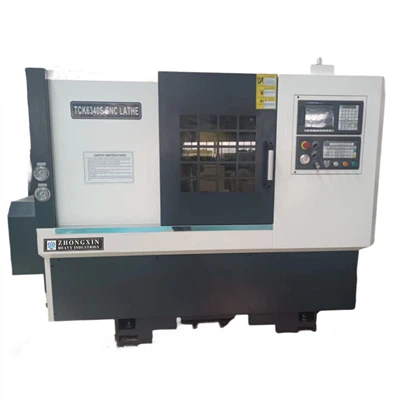
In the manufacturing industry, horizontal turning lathes play a crucial role in shaping various workpieces with high precision. One of the most critical aspects of a horizontal turning lathe is its repeatability. In this blog, as a horizontal turning lathe supplier, I will delve into what the repeatability of a horizontal turning lathe is and how to measure it.
What is the Repeatability of a Horizontal Turning Lathe?
Repeatability in the context of a horizontal turning lathe refers to the ability of the machine to produce the same machining results consistently over multiple cycles. When a lathe has high repeatability, it means that if you run the same machining program on the same workpiece multiple times, the final dimensions, surface finish, and other critical characteristics of the machined parts will be nearly identical.
Imagine a scenario where you are manufacturing a batch of small metal components for an automotive engine. Each component needs to have precise dimensions to ensure proper fit and function. If the horizontal turning lathe has poor repeatability, the dimensions of the components may vary from one piece to another, leading to quality issues and potential failures in the final product. On the other hand, a lathe with excellent repeatability will produce components that meet the required specifications consistently, reducing waste and improving overall production efficiency.
Several factors can affect the repeatability of a horizontal turning lathe. One of the primary factors is the mechanical structure of the lathe. A well - built lathe with high - quality components, such as a rigid bed, accurate lead screws, and reliable spindle bearings, is more likely to have better repeatability. For example, a Heavy Duty Metal Lathe is designed with a robust structure to withstand the forces generated during machining, which helps maintain consistent performance over time.
Another important factor is the control system of the lathe. Modern CNC (Computer Numerical Control) lathes, like the Ck6140 CNC Lathe, use advanced control algorithms to precisely control the movement of the cutting tool and the rotation of the spindle. These control systems can compensate for small errors and variations, improving the repeatability of the machining process.
The quality of the cutting tools also plays a significant role in repeatability. Dull or worn - out cutting tools can cause variations in the cutting force and the surface finish of the workpiece. Regular tool maintenance and replacement are essential to ensure consistent machining results.
How to Measure the Repeatability of a Horizontal Turning Lathe?
There are several methods to measure the repeatability of a horizontal turning lathe. Here are some of the most common ones:
Dimensional Measurement
This is one of the most straightforward methods. You can select a simple workpiece, such as a cylindrical rod, and run the same machining program on it multiple times. After each machining cycle, use precision measuring instruments, such as micrometers, calipers, or coordinate measuring machines (CMMs), to measure the critical dimensions of the workpiece, such as diameter, length, and roundness.
For example, if you are turning a cylindrical workpiece to a specific diameter, measure the diameter at several points along the length of the cylinder after each machining cycle. Calculate the average value and the standard deviation of the measured diameters. A small standard deviation indicates high repeatability.
Surface Finish Measurement
The surface finish of the machined workpiece can also be used to evaluate the repeatability of the lathe. You can use a surface roughness tester to measure the surface roughness (Ra value) of the workpiece after each machining cycle. Similar to dimensional measurement, calculate the average Ra value and the standard deviation. A consistent Ra value over multiple cycles indicates good repeatability.
Positioning Accuracy Measurement
The ability of the lathe to accurately position the cutting tool is crucial for repeatability. You can use a laser interferometer to measure the positioning accuracy of the X, Y, and Z axes of the lathe. The laser interferometer can detect small displacements and provide highly accurate measurements.
Run a series of positioning tests by commanding the lathe to move the cutting tool to specific positions along each axis. Measure the actual positions of the tool using the laser interferometer and compare them with the commanded positions. Calculate the positioning error and its standard deviation. A small standard deviation in the positioning error indicates good repeatability of the lathe's positioning system.
Spindle Speed and Torque Measurement
The spindle of the lathe is responsible for rotating the workpiece. Consistent spindle speed and torque are essential for repeatable machining. You can use a tachometer to measure the spindle speed and a torque sensor to measure the spindle torque during the machining process.
Run the same machining program multiple times and record the spindle speed and torque values at different points in the cycle. Calculate the average values and the standard deviations. A stable spindle speed and torque over multiple cycles indicate good repeatability of the spindle system.
Importance of Measuring Repeatability
Measuring the repeatability of a horizontal turning lathe is not only important for quality control but also for process optimization. By identifying the factors that affect repeatability, you can take appropriate measures to improve the performance of the lathe.
For example, if you find that the dimensional repeatability is poor due to worn - out cutting tools, you can implement a more frequent tool replacement schedule. If the positioning accuracy is inconsistent, you may need to recalibrate the control system or check for mechanical wear in the axis drive components.
In addition, accurate measurement of repeatability can help you demonstrate the quality of your products to your customers. If you can provide data showing that your lathes have high repeatability, it will increase the confidence of your customers in your products and may lead to more business opportunities.


Conclusion
The repeatability of a horizontal turning lathe is a critical factor in ensuring the quality and efficiency of the machining process. As a horizontal turning lathe supplier, we understand the importance of providing lathes with high repeatability. Our Precision CNC Lathe is designed and manufactured with the latest technology and high - quality components to ensure excellent repeatability.
If you are in the market for a horizontal turning lathe and are concerned about repeatability, we invite you to contact us for more information. Our team of experts can provide you with detailed technical specifications, measurement data, and guidance on how to choose the right lathe for your specific needs. Let's start a discussion about your procurement requirements and see how our horizontal turning lathes can meet your production goals.
References
- "Machining Technology: Metal Cutting and Machine Tools" by Mikell P. Groover
- "CNC Programming Handbook" by Peter Smid
- "Precision Machine Design" by Anthony S. Seireg and John D. Byers