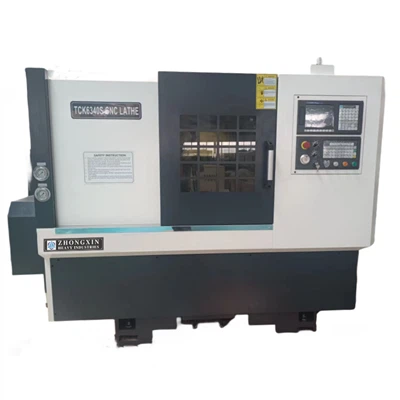
Alright folks, today I'm gonna talk about how to perform knurling on a lathe machine. As a lathe machine supplier, I've seen a lot of folks struggle with this process. So, I thought I'd share some tips and tricks to make it easier for you.


First off, let's talk about what knurling is. Knurling is a machining process that creates a pattern of small ridges or grooves on the surface of a workpiece. This is usually done to improve the grip of the workpiece, making it easier to hold or turn. It's commonly used on things like tool handles, knobs, and other parts where a good grip is important.
Getting Your Lathe Machine Ready
Before you start knurling, you need to make sure your lathe machine is in good working condition. Check all the moving parts, lubricate them if necessary, and make sure the chuck is tightened properly. You'll also want to select the right tool for the job. There are different types of knurling tools available, such as straight knurl, diamond knurl, and spiral knurl. The type of tool you choose will depend on the pattern you want to create on the workpiece.
If you're in the market for a new lathe machine, we've got some great options. Check out our New CNC Vertical Lathe. It's a high - precision machine that can handle a variety of machining tasks, including knurling.
Preparing the Workpiece
Once your lathe machine is ready, it's time to prepare the workpiece. First, clean the workpiece to remove any dirt, grease, or debris. This will ensure a clean and smooth knurling process. Next, measure the diameter of the workpiece. You need to know the diameter to set the correct feed rate and pressure for the knurling tool.
Mount the workpiece securely in the chuck of the lathe machine. Make sure it's centered properly, or you'll end up with an uneven knurled pattern. You can use a dial indicator to check the alignment if you're not sure.
Setting Up the Knurling Tool
Now, let's set up the knurling tool. Mount the knurling tool in the tool post of the lathe machine. Adjust the height of the tool so that it's at the same level as the center of the workpiece. Then, position the tool so that it's perpendicular to the axis of the workpiece. This will ensure that the knurled pattern is straight and even.
Starting the Knurling Process
Once everything is set up, it's time to start the knurling process. First, start the lathe machine at a slow speed. This is important because knurling can generate a lot of force, and starting at a high speed can cause the workpiece to slip or the tool to break.
Slowly bring the knurling tool into contact with the workpiece. Apply a light pressure at first and gradually increase it as the knurling process progresses. You want to make sure that the knurling tool bites into the workpiece evenly. If the pressure is too light, the knurled pattern won't be deep enough. If it's too heavy, the tool might damage the workpiece or even break.
Keep an eye on the knurling process as it goes on. You may need to adjust the pressure and the feed rate of the tool to get the desired pattern. The feed rate determines how fast the knurling tool moves along the workpiece. A slower feed rate will result in a deeper and more defined knurled pattern, while a faster feed rate will give a shallower pattern.
Troubleshooting Common Problems
Sometimes, things don't go as smoothly as we'd like during the knurling process. Here are some common problems and how to fix them:
Uneven Knurled Pattern: If you notice that the knurled pattern is uneven, it could be because the workpiece is not centered properly or the knurling tool is not perpendicular to the workpiece. Check the alignment and make the necessary adjustments.
Chattering: Chattering is when the knurling tool vibrates or makes a noise while in contact with the workpiece. This can be caused by a too - high feed rate, insufficient pressure, or a dull tool. Try reducing the feed rate, increasing the pressure, or sharpening the tool.
Tool Breakage: If the knurling tool breaks, it could be due to excessive pressure, a high - speed operation, or a tool that's not suitable for the job. Make sure you're using the right tool and apply the correct pressure and speed.
Other Lathe Machine Options
If you've got larger or more complex workpieces, you might want to consider our Gap Bed Lathe CS6250C. It has a larger working area and can handle heavier workpieces with ease. And for those who need high - efficiency and precision machining, our Dual Spindle CNC Lathe is a great choice. It can perform multiple operations simultaneously, saving you time and increasing productivity.
Conclusion
Performing knurling on a lathe machine might seem a bit tricky at first, but with the right setup, tools, and technique, you can get great results. Remember to take your time, start slow, and make adjustments as needed.
If you're interested in purchasing a lathe machine or have any questions about the knurling process or any other machining tasks, feel free to reach out. We're here to help you make the most out of your machining operations. Whether you're a hobbyist or a professional in the manufacturing industry, we've got the perfect lathe machine for you.
References
- "Modern Machining Technology" by the Society of Manufacturing Engineers
- "Handbook of Lathe Operation" by LatheTech Publishing