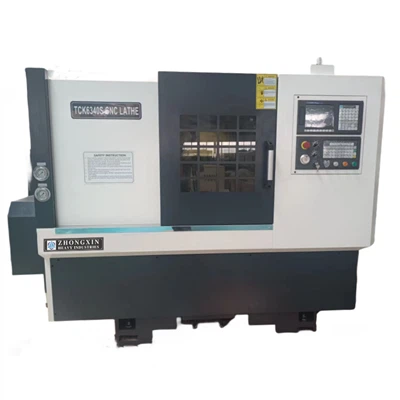
As a supplier of New Slant Bed Lathes, I've encountered a wide range of issues that customers face during the operation of these machines. In this blog, I'll share some practical tips on how to troubleshoot common problems in a New Slant Bed Lathe.
1. Power - related Issues
Machine won't power on
The first thing to check when your New Slant Bed Lathe refuses to power on is the power supply. Ensure that the main power switch is turned on and that the power cord is properly plugged into a functioning outlet. Sometimes, a tripped circuit breaker or a blown fuse can be the culprit. Check the electrical panel in your workshop and reset any tripped breakers or replace blown fuses.
If the power supply seems fine, the problem could lie within the machine's internal electrical system. Inspect the control panel for any visible signs of damage, such as loose wires or burnt components. In some cases, a malfunctioning power module might be causing the issue. For more complex electrical problems, it's advisable to contact a professional electrician or our technical support team.
Fluctuating power
Fluctuating power can lead to inconsistent machine performance and even damage to sensitive components. Check if there are any other high - power devices sharing the same electrical circuit as the lathe. If so, try to isolate the lathe from these devices. Installing a voltage stabilizer can also help regulate the power supply and protect the machine from voltage spikes and drops.
2. Tooling and Cutting Issues
Poor surface finish
A poor surface finish on the workpiece can be due to several factors. First, check the cutting tool. A dull or damaged tool will leave rough marks on the material. Replace the cutting tool if necessary and ensure that it is properly installed and sharpened.
The cutting parameters also play a crucial role. If the cutting speed is too high or the feed rate is too fast, it can result in a poor surface finish. Adjust the cutting speed and feed rate according to the material being machined and the type of cutting tool used. You can refer to the machine's manual or our technical specifications for the recommended cutting parameters for different materials.
Another factor could be the rigidity of the workpiece and the tooling system. Make sure that the workpiece is securely clamped to prevent vibrations during cutting. If the toolholder or toolpost is loose, tighten it to improve the overall rigidity of the cutting setup.


Tool breakage
Tool breakage can be a costly problem. One common cause is excessive cutting forces. Check if the cutting depth is too large or if the feed rate is too high. Reduce these parameters to reduce the stress on the tool.
The quality of the cutting tool itself can also be a factor. Use high - quality cutting tools from reliable manufacturers. Ensure that the tool is suitable for the material being machined. For example, using a tool designed for soft materials on hard materials can lead to premature tool breakage.
In addition, improper tool geometry can cause uneven stress distribution on the tool, leading to breakage. Check the tool's rake angle, clearance angle, and other geometric parameters and make sure they are appropriate for the cutting operation.
3. Spindle and Axis Movement Issues
Spindle not rotating
If the spindle fails to rotate, start by checking the spindle drive system. Ensure that the drive belts are properly tensioned and not worn out. A loose or damaged drive belt can prevent the spindle from receiving the necessary power to rotate.
The spindle motor might also be the problem. Check if the motor is getting power and if there are any error messages on the control panel related to the motor. If the motor is overheating, it could be due to a malfunctioning cooling system or an overload. Allow the motor to cool down and check the cooling fans and coolant circulation system.
Axis movement problems
Axis movement issues, such as jerky or inaccurate movement, can be caused by a variety of factors. First, check the ball screws and linear guides. These components are responsible for the precise movement of the axes. If they are dirty or damaged, it can affect the smoothness and accuracy of the movement. Clean the ball screws and linear guides regularly and lubricate them according to the machine's maintenance schedule.
The servo motors and drives that control the axis movement might also be malfunctioning. Check for any error codes on the control panel related to the servo system. If there are issues with the servo motors, it's best to have them inspected and repaired by a professional technician.
4. Control System Issues
Error messages on the control panel
Modern New Slant Bed Lathes are equipped with sophisticated control systems that can display error messages when something goes wrong. When you see an error message on the control panel, refer to the machine's manual or the error code list provided by the manufacturer.
Some error messages might be related to simple issues, such as a loose connection or a sensor malfunction. Check all the connections between the control panel, sensors, and other components. If the error persists, contact our technical support team for further assistance.
Software glitches
Software glitches can cause the control system to malfunction. Make sure that the control system software is up - to - date. We regularly release software updates to fix bugs and improve the performance of the machines. You can download the latest software from our official website and follow the instructions to install it.
If the software glitch is severe and cannot be resolved by an update, a system reset might be required. However, before performing a system reset, make sure to back up all the important data and programs stored in the control system.
5. Coolant and Lubrication Issues
Insufficient coolant supply
Insufficient coolant supply can lead to overheating of the cutting tool and the workpiece, which in turn can cause poor cutting performance and tool wear. Check the coolant tank to ensure that it has enough coolant. If the coolant level is low, refill it with the appropriate coolant.
The coolant pump might also be malfunctioning. Check if the pump is running and if there are any blockages in the coolant hoses. Clean any clogged hoses or filters to ensure proper coolant circulation.
Lubrication problems
Proper lubrication is essential for the smooth operation of the New Slant Bed Lathe. Check the lubrication system regularly to ensure that all the moving parts, such as the ball screws, linear guides, and spindle bearings, are properly lubricated.
If you notice any signs of dryness or excessive friction in the moving parts, it could be due to a malfunctioning lubrication pump or a clogged lubrication line. Check the lubrication pump and clean or replace any clogged filters or lines.
In conclusion, troubleshooting common problems in a New Slant Bed Lathe requires a systematic approach. By following these tips, you can identify and resolve many of the issues that you might encounter during the operation of the machine. However, if you are still having problems, don't hesitate to contact our technical support team. We are committed to providing you with the best solutions to ensure the smooth operation of your lathe.
If you are interested in purchasing a New Slant Bed Lathe, we offer a wide range of high - quality machines, including the Ck6132 CNC Lathe, Horizontal Turning Lathe, and Ck6130 CNC Lathe. Contact us today to start a purchase negotiation and find the perfect lathe for your needs.
References
- Lathe Machine Operation and Maintenance Manual
- Technical Specifications of New Slant Bed Lathes
- Industry Standards for Metal Cutting and Machining