


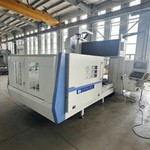


Manual Lathe
What is Manual Lathe?
A manual lathe is a machine tool that shapes and machines workpieces through controlled rotation of the piece and the cutting tool. Unlike CNC lathes, which operate through computerized commands, manual lathes are directly operated by an expert turner.
Why Choose Us
Compliant With Standards
Most of our products comply with CE and EAC standards
OEM and ODM Orders
We also accept OEM and ODM orders and look for agents around the world
Excellent Service
Dedicated to producing higher intelligence, higher quality machine tools, and excellent after-sales service
High Quality Service
Make machines simpler, smarter, and smarter, always online, always with you, always serving you.


The Difference Between Manual Lathes And Cnc Lathes
Different Structure
The feed system of the manual lathe includes a feed box and a slide box. It is used for turning the surface of the workpiece by the lead screw and the smooth bar; the CNC lathe has a numerical control system, feed and hydraulic systems, etc., and the thread processing of the workpiece surface is carried out in the turning center. The latter is more conducive to production management.
Different machining methods
Manual lathes need to be manually operated to light the workpiece, and workers must manually shake the tools to process the parts in strict accordance with the lathe use regulations; CNC lathes directly process product parts in accordance with the prescribed instructions issued by technicians through data control.
Different machining precision
There are few types of parts that can be processed by manual lathes. Due to the lack of automation, the processing accuracy and quality of parts are not as good as those of CNC lathes; CNC lathes can process parts with complex shapes by changing the control program, and the stability and repeatability of the processing quality are higher.
Different applicable conditions
Because manual lathes are more flexible in manual operation, the equipment is subject to large forces, and it is not easy to process complex parts, and it is more convenient to process single products; CNC lathes with the same large equipment are less stressed, and each part is more precise, suitable for more complex processing. And the production of high-volume mechanical parts.
The cost of construction and maintenance is different
The cost of manual lathes is low, the investment is small, and debugging can be done manually before use. The maintenance of ordinary lathes is mainly due to the wear between components, and the maintenance cost is not high; the use cost of CNC lathes is high, and the investment is large, and multiple debugging must be carried out before use. , The preparatory work is complicated, and all systems including CNC programs are regularly maintained, and the maintenance cost is high.
Different installation requirements
Manual lathes must strictly control the ambient temperature, humidity, power supply voltage and other conditions; CNC lathes level the position on the basis of avoiding direct sunlight and humid airflow as much as possible, and the reading of the level meter does not exceed 0.04/1000mm.
Advantages of Using Manual Lathes in Production Craftsmanship and Human Skill
Versatility in Prototype Production
Manual lathes are ideal for producing prototypes and initial samples. They can be easily adjusted and adapted to produce custom parts, essential for developing new products before investing in large-scale production tools and processes.
Lower Initial Investment
Compared to CNC machines, manual lathes usually require a smaller initial investment. This makes them accessible to small businesses and workshops looking to incorporate turning capabilities without a massive expenditure.
Flexibility in Working with Materials
Manual lathes can work with a wide range of materials, from metals to plastics and wood. This versatility allows manufacturers to tackle a broad spectrum of projects without the need for multiple specialized machines.
Simplified Maintenance
Manual lathes tend to have simpler maintenance compared to CNC machines. This translates into lower operating costs and less downtime due to maintenance.
Greater Control in Small Quantities
When working on small quantities or unique pieces, manual lathes offer precise control. Operators can adjust spin speed, cut depth, and other parameters in real-time, resulting in highly controlled and accurate machining.
Lower Energy Consumption
Manual lathes are more energy-efficient as they don’t require the constant electrical power that CNC machines do. This can lead to significant savings over time.
Development of Professional Skills
Operating manual lathes requires a specific skill that operators can hone over time. This skill is valuable and can lead to a career in the manufacturing industry.
A manual lathe machine is a versatile and indispensable tool in machining. It consists of a rotating spindle that holds the workpiece and a cutting tool that removes material to create a desired shape. Unlike their computer-controlled counterparts, manual lathes are operated by hand, requiring the machinist’s skill and experience to achieve precision.
Choosing the Right Material
The first step in mastering precision on a manual lathe machine is selecting the right material. Different materials have different properties, which can affect the ease of machining and the quality of the final product. Understanding the characteristics of materials such as steel, aluminum, brass, and plastics is crucial. Each material may require different cutting speeds, feed rates, and tooling choices.
Workholding and Setup
Proper workholding is essential for precision machining. The workpiece must be securely clamped in the lathe’s chuck or collet to prevent movement during machining. Additionally, aligning the workpiece correctly with the lathe’s axis is crucial to ensure concentricity and precision.
Tool Selection and Maintenance
Choosing the right cutting tool is another critical aspect of precision machining. Different tools are designed for specific tasks, such as roughing, finishing, or threading. Regular maintenance of cutting tools, including sharpening or replacing them when necessary, is essential to achieve consistent results.
Precision Measurement
Achieving precision in manual lathe work requires precise measurements. Machinists use a variety of measuring tools, including calipers, micrometers, and dial indicators, to ensure that dimensions are accurate to within thousandths of an inch. Consistent measurement and verification throughout the machining process are crucial for meeting tight tolerances.
Techniques for Precision Machining
Precision machining on a manual lathe involves various techniques, including facing, turning, boring, threading, and knurling. Each operation requires a unique approach and skill set. It’s essential to practice and develop these skills to achieve the desired level of precision in your work.
Finishing and Quality Control
The final step in mastering precision on a manual lathe machine is finishing. This includes removing any tool marks, burrs, or imperfections from the workpiece’s surface. Aesthetics and functionality play a role here, as a well-finished part not only looks better but also functions better. Quality control checks, such as final measurements and inspections, ensure that the workpiece meets the required specifications.
How Do You Select a Manual Lathe Machine For Your Requirements And Applications?
Size And Capacity
The size and capacity of a manual lathe machine are some of the most critical factors to consider. Depending on the parts you need to manufacture, you may need a larger or smaller lathe machine. You should also consider the length of the bed, the swing over the bed, and the distance between centers to ensure that the lathe can handle the size of the parts you need to manufacture.
Power and speed
The power and speed of the manual lathe machine are also essential factors to consider. If you need to work on more challenging materials, you will need a lathe machine with a higher horsepower rating. Similarly, if you need to work on materials with varying degrees of hardness, you will need a lathe machine with variable speed control.
Chuck size and type
The chuck size and type of a manual lathe machine are also essential factors. The chuck size will determine the maximum diameter of the workpiece that the lathe can hold. The chuck type, whether a three-jaw chuck or a four-jaw chuck, will also determine the flexibility and accuracy of the lathe.
Tooling and accessories
The tooling and accessories of a manual lathe machine can also affect its overall usefulness. Some devices may come with standard tooling and accessories, while others may require additional purchases to achieve the desired results. Consider the type of tooling and accessories that you need for your specific applications, and make sure the lathe machine you select can accommodate them.
Brand reputation and support
The brand reputation and support for a manual lathe machine are also important factors. You want to choose a reputable brand with a history of manufacturing high-quality machines. Additionally, consider the availability of replacement parts and customer support to ensure you can get the help you need if something goes wrong.
Price
Of course, the price of the manual lathe machine is also a significant factor to consider. While choosing the cheapest option is tempting, balancing cost with quality and features is essential. Consider the long-term value of the machine and how it will help you achieve your manufacturing goals.
Tips For Enhancing The Operation Of a Manual Lathe

Machinists can do small work on large lathes but not large work on small lathes. Therefore, buy a lathe a little bigger than you think you might need.
• Put target score marks on raw material for fast roughing. Touch off the tool and use a scale to make reference marks so you can reduce measuring time. Rip and tear down close to the lines and then pull out your finer measuring tools.
• Use quick-change tool posts. Make sure you have plenty of tool blocks. I hate it when a lack of tooling interferes with productivity.
• Always leave a boring bar set up in a tool block. A good starting point for general-purpose work is a ½ " or ⅝" boring bar. When tooling the bar, use indexable inserts if many different people use the machine so they can quickly change inserts, if needed. CCMT or WNMG inserts are a good compromise. You can switch insert geometry easily for different materials. WNMG inserts have six cutting edges, providing good economy. We set ours up with the thought of having one insert optimized for harder materials and one for softer materials.
Certifications


Our Factory
We have a general investment of 300 million yuan and covers an area of more than 120 thousand square meters, has more than one hundred sets of advanced equipment, annual production capacity over 3600 sets of machines, comprising more than thirty-five types and over fifty models. As a professional CNC lathe machine, CNC Veritical machining center, CNC gantry machine, band saw machine, bending machine supplier, We have dedicated ourselves to the field of machine tool manufacturing, we have built a modern quality management system which is in strict accordance with international standards, committed to produce a higher intelligent and higher quality machines and good after-sales services. We have exported our machines to more than 50 countries such as Russia, Belarus, East Europe, Egypt, Algeria, South Africa, Indonesia, Vietnam, Argentina, Mexico. We are also taking OEM & ODM orders and looking for agents all over the world, most of our products have got CE & EAC standards. Welcome to ZHONGXIN and establish a good cooperation and create a bright future together. ZHONGXIN, make the machines more easier, intelligent, and smarter, always online, always with you, and always for you!

FAQ