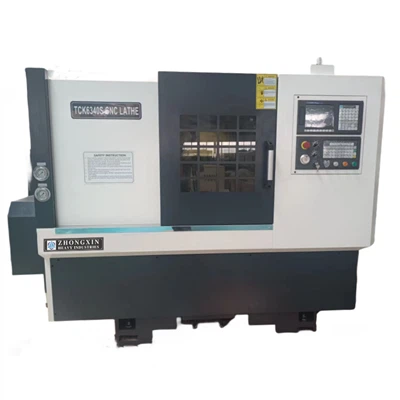
What is the Damping Characteristic of a Horizontal CNC Lathe Machine?
As a supplier of Horizontal CNC Lathe Machines, I've witnessed firsthand the critical role that damping characteristics play in the performance and efficiency of these remarkable pieces of equipment. In this blog post, I'll delve into the concept of damping in horizontal CNC lathes, its significance, and how it impacts the overall machining process.
Understanding Damping in Horizontal CNC Lathes
Damping, in the context of a horizontal CNC lathe, refers to the ability of the machine to dissipate or absorb the vibrations generated during the cutting process. When a cutting tool engages with the workpiece, it creates forces that can cause the machine components to vibrate. These vibrations can have several negative effects, including poor surface finish, reduced tool life, and decreased dimensional accuracy of the machined part.
The damping characteristic of a horizontal CNC lathe is determined by several factors, including the design of the machine structure, the materials used in its construction, and the presence of any damping mechanisms. A well-damped lathe will be able to minimize the amplitude and duration of vibrations, resulting in smoother cutting operations and higher-quality machined parts.


Significance of Damping in Horizontal CNC Lathes
The importance of damping in horizontal CNC lathes cannot be overstated. Here are some key reasons why damping is crucial for the performance of these machines:
- Improved Surface Finish: Vibrations during the cutting process can cause chatter marks on the surface of the workpiece, resulting in a poor surface finish. A lathe with good damping characteristics will be able to reduce these vibrations, leading to a smoother and more precise surface finish. This is particularly important in applications where a high-quality surface finish is required, such as in the aerospace and automotive industries.
- Enhanced Tool Life: Excessive vibrations can cause the cutting tool to wear out more quickly, reducing its lifespan and increasing the cost of tool replacement. By minimizing vibrations, a well-damped lathe can extend the life of the cutting tool, resulting in lower operating costs and increased productivity.
- Increased Dimensional Accuracy: Vibrations can also affect the dimensional accuracy of the machined part. When the machine vibrates, the cutting tool may deviate from its intended path, leading to errors in the size and shape of the part. A lathe with good damping characteristics will be able to maintain a stable cutting process, ensuring that the machined part meets the required dimensional tolerances.
- Reduced Noise and Vibration Levels: In addition to improving the quality of the machined part, damping can also reduce the noise and vibration levels generated by the lathe. This not only creates a more comfortable working environment for the operator but also helps to prevent damage to the machine and its components over time.
Factors Affecting Damping in Horizontal CNC Lathes
Several factors can affect the damping characteristic of a horizontal CNC lathe. Here are some of the key factors to consider:
- Machine Structure Design: The design of the machine structure plays a crucial role in determining its damping properties. A lathe with a rigid and well-balanced structure will be able to absorb and dissipate vibrations more effectively than a machine with a weak or poorly designed structure. For example, a lathe with a heavy cast iron bed will generally have better damping characteristics than a lathe with a lighter steel frame.
- Materials Used in Construction: The materials used in the construction of the lathe can also have a significant impact on its damping properties. Some materials, such as cast iron, have inherent damping characteristics that make them well-suited for use in machine tool construction. Other materials, such as steel, can be treated or coated to improve their damping properties.
- Damping Mechanisms: Many modern horizontal CNC lathes are equipped with damping mechanisms to further enhance their vibration absorption capabilities. These mechanisms can include shock absorbers, vibration dampers, and anti-vibration pads. By incorporating these damping mechanisms into the design of the lathe, manufacturers can significantly improve its damping characteristics and overall performance.
- Cutting Parameters: The cutting parameters used during the machining process can also affect the damping characteristic of the lathe. For example, using a higher cutting speed or feed rate can increase the forces generated during the cutting process, leading to more vibrations. By optimizing the cutting parameters, operators can minimize the vibrations and improve the damping performance of the lathe.
Our Horizontal CNC Lathe Machines and Damping Characteristics
At our company, we understand the importance of damping in horizontal CNC lathes. That's why we've designed our machines with a focus on maximizing their damping characteristics and ensuring optimal performance.
Our Ck6140 CNC Lathe is a popular choice among customers who require a high-quality, reliable lathe for a variety of machining applications. This lathe features a rigid cast iron bed and a well-balanced spindle design, which helps to minimize vibrations and ensure a smooth cutting process. In addition, the Ck6140 CNC Lathe is equipped with advanced damping mechanisms, such as vibration dampers and anti-vibration pads, to further enhance its damping performance.
Another popular model in our product lineup is the Ck6150 CNC Lathe. This lathe is designed for larger workpieces and offers increased power and precision. Like the Ck6140 CNC Lathe, the Ck6150 CNC Lathe features a rigid structure and advanced damping mechanisms to minimize vibrations and ensure high-quality machining results.
For customers who require a more advanced lathe with enhanced damping characteristics, we offer the Slant Bed Cnc Lathe Machine. This lathe features a slant bed design, which provides better chip evacuation and improved cutting performance. In addition, the Slant Bed Cnc Lathe Machine is equipped with state-of-the-art damping technologies, such as active vibration control systems, to further reduce vibrations and improve the overall stability of the machine.
Conclusion
In conclusion, the damping characteristic of a horizontal CNC lathe is a critical factor that can significantly impact the performance and quality of the machining process. By understanding the concept of damping, its significance, and the factors that affect it, operators and manufacturers can make informed decisions when selecting and operating a horizontal CNC lathe.
At our company, we are committed to providing our customers with high-quality horizontal CNC lathe machines that offer excellent damping characteristics and optimal performance. If you're in the market for a new lathe or looking to upgrade your existing equipment, we invite you to contact us to learn more about our products and how they can meet your specific machining needs. Our team of experts is always available to answer your questions and provide you with the support and guidance you need to make the right decision.
References
- Smith, J. (2018). Machine Tool Design and Operation. New York: Wiley.
- Jones, R. (2019). CNC Machining Handbook. London: Elsevier.
- Brown, A. (2020). Vibration Analysis and Control in Machine Tools. Berlin: Springer.