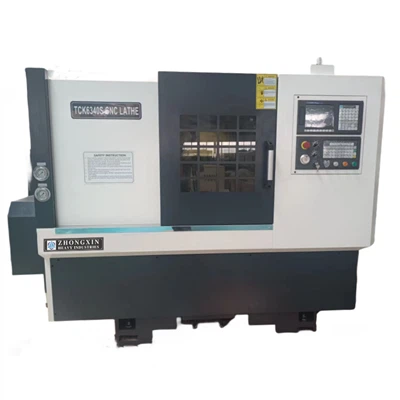
Selecting the right ball screw for a CNC lathe machine is a critical decision that can significantly impact the performance, accuracy, and longevity of the equipment. As a reputable CNC lathe machine supplier, I understand the importance of this choice and have extensive experience in guiding customers through the process. In this blog post, I'll share some key considerations to help you make an informed decision when selecting a ball screw for your CNC lathe.
Understanding the Basics of Ball Screws
Before delving into the selection process, it's essential to understand what ball screws are and how they work. A ball screw is a mechanical linear actuator that translates rotational motion into linear motion with high efficiency and precision. It consists of a screw shaft, a nut, and a series of ball bearings that roll between the screw and the nut. The ball bearings reduce friction, allowing for smooth and accurate movement.
In a CNC lathe machine, ball screws are used to control the movement of the tool post and the workpiece along the X, Y, and Z axes. They play a crucial role in achieving high-precision machining, as they determine the accuracy and repeatability of the machine's movements.
Factors to Consider When Selecting a Ball Screw
1. Load Capacity
The load capacity of a ball screw is one of the most important factors to consider. It refers to the maximum amount of force that the ball screw can withstand without experiencing excessive wear or failure. To determine the appropriate load capacity for your CNC lathe, you need to consider the following:
- Cutting Forces: Calculate the cutting forces generated during the machining process. These forces depend on factors such as the material being machined, the cutting speed, and the depth of cut.
- Acceleration and Deceleration Forces: Consider the forces generated when the machine accelerates and decelerates. These forces can be significant, especially in high-speed machining applications.
- Static Loads: Take into account any static loads, such as the weight of the tool post and the workpiece.
Make sure to choose a ball screw with a load capacity that exceeds the maximum expected load in your application. This will ensure reliable operation and prevent premature failure.
2. Lead and Pitch
The lead and pitch of a ball screw are closely related and determine the linear speed and accuracy of the machine. The lead refers to the distance that the nut travels along the screw shaft in one revolution, while the pitch is the distance between adjacent threads.
- High Lead Ball Screws: High lead ball screws offer faster linear speeds but may sacrifice some accuracy. They are suitable for applications where speed is more important than precision, such as rough machining operations.
- Low Lead Ball Screws: Low lead ball screws provide higher accuracy but slower linear speeds. They are ideal for applications that require precise positioning, such as finishing operations.
When selecting a ball screw, consider the specific requirements of your machining operations and choose the lead and pitch that best meet your needs.
3. Accuracy Class
The accuracy class of a ball screw indicates its level of precision. It is typically specified by international standards, such as ISO or JIS. The higher the accuracy class, the more precise the ball screw will be.


- High Accuracy Class: For applications that require extremely high precision, such as aerospace or medical machining, choose a ball screw with a high accuracy class. These ball screws are manufactured to tight tolerances and offer excellent positional accuracy.
- Standard Accuracy Class: In most general machining applications, a standard accuracy class ball screw will suffice. They provide a good balance between accuracy and cost.
Keep in mind that higher accuracy class ball screws are generally more expensive, so it's important to choose the appropriate class based on your specific requirements.
4. Preload
Preload is the initial force applied to the ball bearings in the ball screw to eliminate clearance and improve rigidity. It helps to reduce backlash, which is the play or movement between the screw and the nut, and enhances the accuracy and repeatability of the machine.
- Zero Preload: Ball screws with zero preload are suitable for applications where low friction and high speed are required. However, they may have some backlash, which can affect the accuracy of the machine.
- Partial Preload: Partial preload ball screws offer a balance between low friction and reduced backlash. They are commonly used in general machining applications.
- Full Preload: Full preload ball screws provide the highest level of rigidity and accuracy but also have the highest friction. They are typically used in applications that require extremely precise positioning, such as grinding or EDM machines.
Choose the preload level based on the specific requirements of your CNC lathe and the desired level of accuracy.
5. Length and Diameter
The length and diameter of the ball screw also need to be considered. The length of the ball screw should be sufficient to accommodate the required travel distance of the machine, while the diameter affects the load capacity and stiffness of the screw.
- Longer Ball Screws: Longer ball screws are required for machines with larger travel distances. However, they may be more prone to deflection and vibration, which can affect the accuracy of the machine.
- Larger Diameter Ball Screws: Larger diameter ball screws offer higher load capacity and stiffness but may also be more expensive. Choose the diameter based on the load requirements and the available space in your CNC lathe.
Compatibility with Your CNC Lathe
In addition to the above factors, it's important to ensure that the ball screw is compatible with your CNC lathe machine. Consider the following:
- Mounting Dimensions: Check the mounting dimensions of the ball screw to ensure that it can be easily installed on your machine.
- Drive System: Make sure that the ball screw is compatible with the drive system of your CNC lathe, such as the servo motor or stepper motor.
- Control System: Ensure that the ball screw can be integrated with the control system of your machine to achieve accurate positioning and motion control.
Our Product Recommendations
As a CNC lathe machine supplier, we offer a wide range of high-quality ball screws that are suitable for various applications. Our ball screws are manufactured to strict quality standards and are available in different load capacities, lead and pitch values, accuracy classes, and preload levels.
If you're looking for a reliable ball screw for your CNC lathe, we recommend considering our CNC Lathe Chucks, which are designed to provide high precision and durability. Our Lathe Milling Machine Combo 3 in 1 is also a great option for those who need a versatile machine that can perform multiple machining operations. And if you're in the market for a high-performance CNC lathe, our Ck6150 CNC Lathe is a top choice.
Conclusion
Selecting the right ball screw for your CNC lathe machine is a complex process that requires careful consideration of various factors. By understanding the basics of ball screws and considering factors such as load capacity, lead and pitch, accuracy class, preload, length and diameter, and compatibility, you can make an informed decision and choose a ball screw that meets the specific requirements of your application.
If you have any questions or need further assistance in selecting the right ball screw for your CNC lathe, please don't hesitate to contact us. Our team of experts is always ready to help you find the best solution for your machining needs. We look forward to discussing your requirements and guiding you through the procurement process.
References
- "Ball Screws: Design, Selection, and Application" by THK Co., Ltd.
- "CNC Machine Tool Design and Application" by John T. Black.
- International standards such as ISO and JIS for ball screw specifications.