What is the coolant flow rate requirement for a large lathe machine?
As a supplier of large lathe machines, I often encounter questions from customers regarding the coolant flow rate requirements for these industrial workhorses. Coolant plays a crucial role in the operation of a large lathe machine, and understanding the appropriate flow rate is essential for optimizing performance, extending tool life, and ensuring the quality of the machined parts.
The Importance of Coolant in a Large Lathe Machine
Coolant serves several vital functions in a large lathe machine. Firstly, it dissipates heat generated during the cutting process. When the cutting tool interacts with the workpiece, a significant amount of heat is produced due to friction. Excessive heat can lead to thermal expansion of the tool and the workpiece, which can result in dimensional inaccuracies and reduced tool life. By carrying away the heat, coolant helps maintain a stable temperature in the cutting zone, ensuring precise machining and prolonging the life of the cutting tools.
Secondly, coolant acts as a lubricant. It reduces the friction between the cutting tool and the workpiece, which not only improves the surface finish of the machined part but also reduces the power consumption of the lathe machine. Additionally, coolant helps flush away chips and debris from the cutting area, preventing them from interfering with the cutting process and causing damage to the tool or the workpiece.
Factors Affecting Coolant Flow Rate Requirements
The coolant flow rate requirement for a large lathe machine depends on several factors.
1. Machine Size and Power
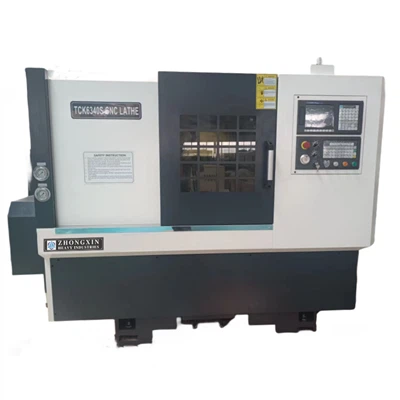
Larger lathe machines typically have more powerful motors and can operate at higher speeds and feed rates. As a result, they generate more heat during the cutting process and require a higher coolant flow rate to dissipate the heat effectively. For example, a heavy - duty Cnc Lathe Machine Heavy Duty designed for large - scale production will need a greater coolant flow compared to a smaller, less powerful lathe.
2. Cutting Tool and Material
Different cutting tools and workpiece materials have different heat generation characteristics. For instance, when machining hard materials such as stainless steel or titanium, more heat is generated due to the higher cutting forces required. In such cases, a higher coolant flow rate is necessary to keep the cutting tool and the workpiece at an optimal temperature. Similarly, certain cutting tools, like high - speed steel (HSS) tools, may require a different coolant flow rate compared to carbide tools.
3. Cutting Parameters
The cutting speed, feed rate, and depth of cut also influence the coolant flow rate requirement. Higher cutting speeds and feed rates generally result in more heat generation, necessitating a higher coolant flow. A larger depth of cut also increases the amount of material being removed, which in turn generates more heat and chips, requiring an adequate coolant flow to manage these factors.
Determining the Optimal Coolant Flow Rate
To determine the optimal coolant flow rate for a large lathe machine, a combination of theoretical calculations and practical testing is often required.
Theoretical Calculations
Some manufacturers provide guidelines based on the machine's power rating, cutting tool specifications, and expected cutting parameters. These guidelines can give a rough estimate of the coolant flow rate. For example, a general rule of thumb is that for every horsepower of the lathe's spindle motor, a certain amount of coolant flow (in gallons per minute or liters per minute) is recommended. However, these calculations are only approximations and may need to be adjusted based on the specific application.
Practical Testing
In practice, it is often necessary to conduct tests to fine - tune the coolant flow rate. This can involve monitoring the temperature of the cutting tool and the workpiece during the machining process. If the temperature is too high, it may indicate that the coolant flow rate is insufficient. On the other hand, if the coolant flow rate is too high, it can lead to excessive splashing and waste of coolant. By adjusting the flow rate and observing the machining results, such as surface finish, tool wear, and dimensional accuracy, the optimal flow rate can be determined.
Industry Standards and Recommendations
There are some industry standards and best practices regarding coolant flow rates for large lathe machines. For example, the American Machinists Association (AMA) and the International Organization for Standardization (ISO) have published guidelines on coolant usage in machining operations. These standards take into account factors such as machine type, cutting tool material, and workpiece material to provide recommended coolant flow rates.
However, it is important to note that these standards are general guidelines, and the actual coolant flow rate may need to be adjusted based on the specific requirements of each machining operation.
Impact of Incorrect Coolant Flow Rate
Using an incorrect coolant flow rate can have several negative consequences.
Insufficient Coolant Flow
If the coolant flow rate is too low, the heat generated during the cutting process cannot be dissipated effectively. This can lead to overheating of the cutting tool, which causes rapid tool wear, reduced tool life, and poor surface finish of the machined part. In extreme cases, the overheating can even cause the tool to break, resulting in costly downtime and potential damage to the workpiece.
Excessive Coolant Flow
On the other hand, an excessive coolant flow rate can also be problematic. It can cause excessive splashing, which not only creates a messy work environment but also leads to coolant waste. Additionally, high - velocity coolant flow can displace chips from the cutting area in an uncontrolled manner, which may interfere with the cutting process and cause damage to the tool or the workpiece.
Conclusion
In conclusion, the coolant flow rate requirement for a large lathe machine is a critical factor that affects the performance, tool life, and quality of the machined parts. As a supplier of large lathe machines, including Dual Spindle CNC Lathe and New Vertical Lathe, we understand the importance of getting the coolant flow rate right.
Determining the optimal coolant flow rate requires considering factors such as machine size, cutting tool, workpiece material, and cutting parameters. By following industry standards and conducting practical tests, users can ensure that their large lathe machines operate at peak efficiency.
If you are in the market for a large lathe machine or need more information about coolant flow rate requirements for your specific application, we invite you to contact us for a detailed discussion. Our team of experts is ready to assist you in making the right choice and optimizing your machining process.


References
- American Machinists Association (AMA) - Guidelines on Coolant Usage in Machining
- International Organization for Standardization (ISO) - Standards for Machining Operations and Coolant Requirements