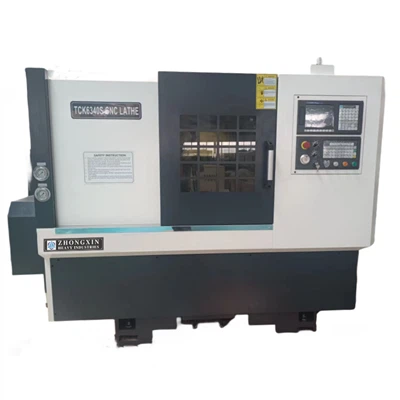
Hey there! As a supplier of Manual Turret Lathes, I often get asked about the maximum feed rate of these machines. It's a crucial aspect that many potential buyers want to know about, so let's dive right in and explore this topic.
First off, let's understand what feed rate means. In the context of a Manual Turret Lathe, the feed rate is the speed at which the cutting tool moves along the workpiece. It's measured in either inches per revolution (IPR) if you're using imperial units, or millimeters per revolution (mm/r) for metric ones. This rate directly affects the efficiency of the machining process, the quality of the finished product, and the wear and tear on the tools.
Now, the maximum feed rate of a Manual Turret Lathe isn't a one - size - fits - all number. It depends on several factors. One of the most significant factors is the size and power of the lathe. Smaller lathes, like the Mini Lathe Machine, usually have lower maximum feed rates compared to larger ones. These mini lathes are great for small - scale projects and intricate work, but their power limitations mean they can't handle super - high feed rates.
For example, a typical Mini Lathe Machine might have a maximum feed rate in the range of 0.002 - 0.005 inches per revolution (or 0.05 - 0.13 mm/r). This is because their motors are less powerful, and the overall structure is designed for more delicate operations. On the other hand, our Manual Turret Lathe, which is built for more heavy - duty work, can achieve much higher feed rates.
The type of material being machined also plays a huge role in determining the maximum feed rate. Softer materials like aluminum or brass can generally tolerate higher feed rates than harder materials such as steel or titanium. When you're cutting a soft material, the cutting tool can move more quickly through the workpiece without causing excessive wear or generating too much heat. For instance, when machining aluminum on a Manual Turret Lathe, you might be able to use a feed rate of up to 0.02 inches per revolution (or 0.5 mm/r) without any major issues. But if you're working with high - strength steel, you'll need to dial that rate back significantly. A reasonable maximum feed rate for machining steel could be around 0.005 - 0.01 inches per revolution (or 0.13 - 0.25 mm/r).
The geometry and sharpness of the cutting tool are other important factors. A well - designed and sharp cutting tool can handle higher feed rates more effectively. Tools with the right rake angle and clearance angle are better at cutting through the material with less resistance. Dull tools, on the contrary, will cause the feed rate to be limited because they can generate a lot of heat and cause poor surface finish. Regularly replacing and sharpening your cutting tools is essential to achieve the best possible feed rates.
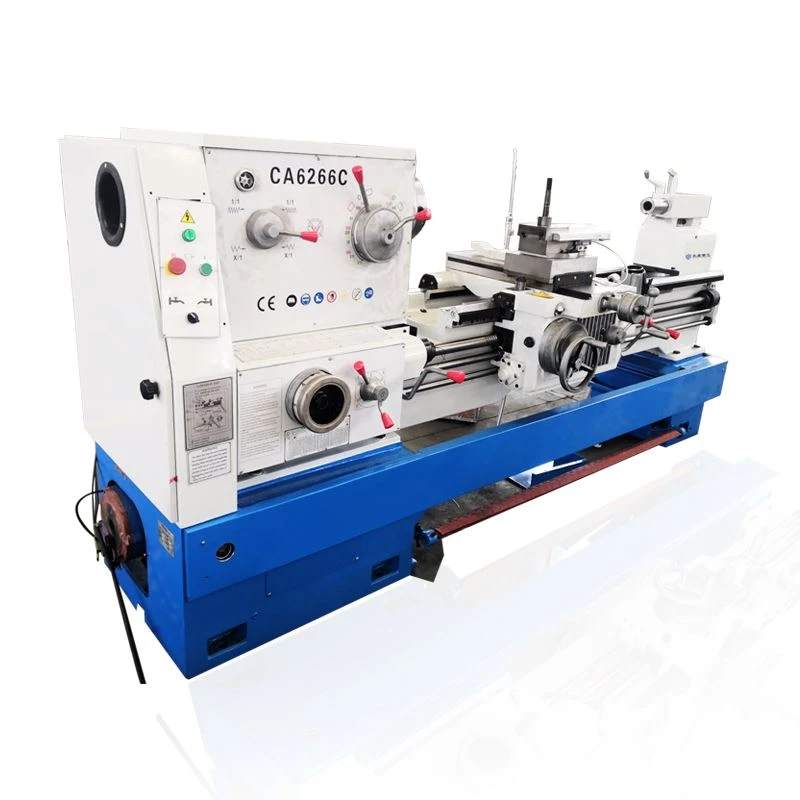

The rigidity of the lathe and its setup also impact the maximum feed rate. If the lathe isn't properly secured to the workbench or if there are loose components, it can lead to vibrations. These vibrations can damage the workpiece, reduce the quality of the cut, and limit the feed rate. To get the most out of your Manual Turret Lathe, make sure it's set up on a stable surface and all the parts are tightened correctly.
Our High Precision Manual Lathe is designed with high - quality materials and precision engineering to provide excellent rigidity. This allows it to handle relatively high feed rates while maintaining accuracy. With this lathe, if you're machining a medium - hardness material and using a good cutting tool, you could potentially reach a maximum feed rate of around 0.015 inches per revolution (or 0.38 mm/r).
Another thing to keep in mind is that running the lathe at or near its maximum feed rate isn't always the best option. While a high feed rate can increase productivity by reducing the machining time, it can also have some drawbacks. For example, it can cause more wear on the cutting tools, which means you'll have to replace them more often. It can also lead to a rougher surface finish on the workpiece, which might not be acceptable for some applications that require high precision. So, it's a balance between getting the job done quickly and maintaining the quality of the finished product.
When you're trying to figure out the best feed rate for your specific project, it's a good idea to start with a conservative rate and then gradually increase it while monitoring the results. Check the surface finish of the workpiece, listen for any unusual noises from the lathe, and observe how the cutting tool is performing. If everything looks good, you can keep increasing the feed rate until you reach the maximum that your lathe, material, and tool can handle.
As a supplier, we offer a wide range of Manual Turret Lathes to suit different needs. Whether you're a hobbyist looking for a small and affordable lathe or a professional machinist in need of a high - performance machine, we've got you covered. Our team is always ready to help you understand the capabilities of our lathes, including the maximum feed rates, and provide advice on how to get the best results for your projects.
If you're interested in purchasing a Manual Turret Lathe or have any questions about our products, don't hesitate to reach out. You can start a conversation with us to discuss your requirements, and we'll work with you to find the perfect machine for your needs. Investing in the right lathe can make a huge difference in your machining operations, so let's make sure you make the best choice.
References:
- "Machining Fundamentals" by an industry - recognized author (actual details would depend on real - world texts).
- Technical specifications provided by the manufacturers of cutting tools and lathe components.